

December 10, 2025
•
5 min read
Top 10 Countries with Best Healthcare for Expats in 2025
Discover the 10 countries with best healthcare for expats. Our guide covers costs, insurance requirements, and how to access top-tier medical care abroad.
Relocating abroad involves countless decisions, but none is more critical than securing reliable healthcare. For expatriates, understanding the intricacies of a new country's medical system, from quality and accessibility to costs and insurance requirements, is paramount for peace of mind. The fear of facing a medical emergency without proper coverage or knowledge can be a significant source of stress, turning a dream move into a logistical nightmare.
This guide demystifies the process by providing a detailed roundup of the countries with best healthcare for expats. We will explore the top destinations, breaking down what makes their systems stand out and how you, as a foreign resident, can effectively navigate them.
You will gain practical, actionable insights on:
- How to enroll in public or private systems.
- What to expect in terms of costs, from consultations to major procedures.
- The key differences between public and private options in each nation.
- Residency and visa requirements tied to healthcare access.
We cut through the complexity to deliver a clear roadmap. Instead of generic advice, you'll find specific details on navigating systems in countries like Germany, Switzerland, Singapore, and Spain. By understanding these frameworks before you move, you can make an informed decision that ensures your health and well-being are prioritized, no matter where your journey takes you. This resource is designed to help you choose a destination not just for its lifestyle, but for the quality and accessibility of its medical care, empowering you to relocate with confidence.
1. Germany - Comprehensive Social Health Insurance System
Germany is frequently listed among the countries with the best healthcare for expats due to its robust, high-quality, and accessible system. Rooted in the principle of social solidarity, it mandates that all residents, including expatriates, have health insurance. This ensures comprehensive coverage through a dual system of public and private options.
The system is renowned for its short waiting times, modern facilities, and extensive network of doctors and specialists. Upon registering their address in Germany (Anmeldung), expats are required to secure health insurance immediately, a crucial step for obtaining a residence permit.
How It Works for Expats
Most expats will enroll in the public statutory health insurance system (Gesetzliche Krankenversicherung, or GKV). Contributions are split between the employer and employee, typically totaling around 14.6% of your gross salary, capped at a certain income level. This covers inpatient care, outpatient treatment, and basic dental services.
Expats earning above a specific threshold (currently €69,300 per year as of 2024) have the option to switch to private health insurance (Private Krankenversicherung, or PKV). PKV can offer more extensive coverage, private rooms in hospitals, and access to a wider range of specialists. A tech worker in Munich, for example, might opt for PKV for its premium benefits and potentially lower costs if they are young and healthy.
Key Insight: The German system's strength lies in its mandatory nature, which creates a large, stable risk pool. This structure keeps costs manageable and quality high, ensuring that even complex treatments at world-class facilities like Berlin's Charité Hospital are accessible to all residents.
Practical Steps for Enrollment and Use
To navigate the system effectively, follow these actionable tips:
- Register Immediately: Upon arrival and registration of your address, sign up with a GKV provider (like AOK, TK, or Barmer) or a PKV insurer. Your employer can often assist with this process.
- Choose a 'Hausarzt': Select a general practitioner (Hausarzt) who will act as your primary point of contact and provide referrals to specialists, coordinating your care efficiently.
- Learn Basic Terminology: While many doctors speak English, understanding basic medical terms in German can be very helpful. Using resources like German language stories can ease adaptation and improve communication with healthcare providers.
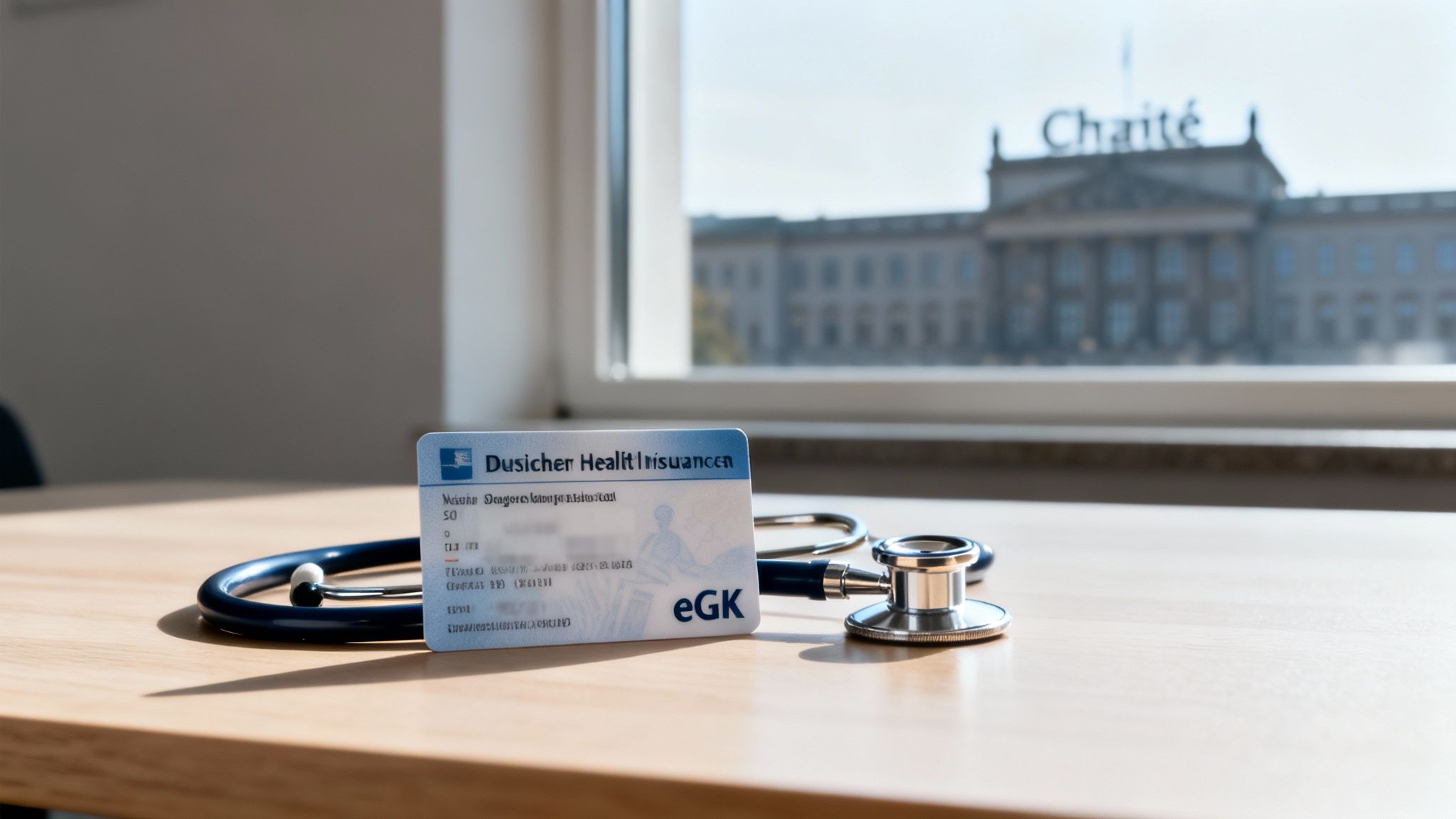
- Keep Your Insurance Card: Always carry your Gesundheitskarte (health insurance card) to appointments, as it is required for billing.
2. Switzerland - Premium Healthcare Excellence
Switzerland is renowned for its world-class healthcare system, consistently ranking among the best globally for quality, innovation, and patient outcomes. It operates on a mandatory, universal private insurance model, ensuring that all residents, including expats, have access to premium care. The system emphasizes freedom of choice, allowing individuals to select their insurer and doctor.
This decentralized system is known for its cutting-edge medical technology, short waiting times, and exceptionally high standards. Expats must secure basic health insurance within three months of arrival, a critical step for legal residency and access to one of the best healthcare networks for expats anywhere in the world.

How It Works for Expats
Upon arrival, expats must choose a government-approved private insurance provider for their mandatory basic health insurance (Grundversicherung or L’assurance de base). Unlike systems where contributions are salary-based, Swiss premiums are fixed monthly amounts that vary by insurer, canton, and chosen deductible level, typically ranging from CHF 350-600.
This basic plan provides comprehensive coverage for illness, accidents, and maternity care. Expats can also purchase supplementary private insurance for enhanced benefits like private hospital rooms or alternative medicine. For example, a professional based in Zurich can access state-of-the-art oncology programs at Universitätsspital Zürich, while an expat in Geneva can receive world-class care at Hôpitaux Universitaires de Genève.
Key Insight: Switzerland's system uniquely blends private competition with universal coverage. The mandatory nature of the insurance creates a stable market, while competition among nearly 60 insurers drives quality and innovation, giving expats extensive choice and access to some of the finest medical facilities on the planet.
Practical Steps for Enrollment and Use
To navigate the Swiss system efficiently, follow these actionable tips:
- Register Within 3 Months: You are legally required to purchase health insurance within three months of registering your residency. Failing to do so can result in penalties and being assigned a provider by the canton, often at a higher premium.
- Choose Your Deductible Wisely: Select an annual deductible (franchise) based on your health needs. A higher deductible lowers your monthly premium but increases out-of-pocket costs, while a lower deductible is better for those anticipating frequent medical care.
- Compare Cantonal Differences: Healthcare regulations and insurance premiums can vary significantly between cantons. Research these differences before deciding where to live to manage your healthcare budget effectively.
- Maintain Pre-existing Condition Records: Keep detailed medical records for any pre-existing conditions. While basic insurance must accept all applicants regardless of health status, these records are crucial for securing supplementary coverage.
3. Netherlands - Efficient Universal Insurance Model
The Netherlands boasts a highly-rated universal healthcare system known for its efficiency, quality, and accessibility, making it one of the countries with the best healthcare for expats. The system is built on a model of managed competition, where all residents are required to purchase a basic health insurance policy (basisverzekering) from private, competing insurance companies.
This structure ensures a high standard of care, short waiting times for general practitioners, and a strong emphasis on preventive medicine. Upon registering with their local municipality (gemeente), expats must secure Dutch health insurance, typically within four months, to avoid penalties and ensure full access to medical services.

How It Works for Expats
All expats living and working in the Netherlands must take out a standard Dutch health insurance policy. The government defines the mandatory coverage of this basic package, which includes GP visits, hospital care, and prescription medication. Premiums average around €150-200 per month, with an annual deductible (eigen risico) that individuals must pay out-of-pocket before insurance covers further costs.
Unlike many systems, insurers cannot refuse applicants based on age or medical history for the basic package. An expat moving to Amsterdam, for instance, can quickly secure coverage from insurers like Zilveren Kruis or CZ. Many companies in Rotterdam's corporate sector help their international employees navigate this process, recommending plans that suit their needs.
Key Insight: The Dutch system's strength is its fusion of private competition with universal mandate. This forces insurers to compete on service and price while guaranteeing that everyone, including expats, has access to the same high-quality care. The GP (huisarts) acts as an effective gatekeeper, ensuring efficient and appropriate use of specialized services.
Practical Steps for Enrollment and Use
To get started with the Dutch healthcare system, follow these actionable tips:
- Enroll Promptly: After receiving your citizen service number (Burgerservicenummer or BSN), you must enroll with an insurer within four months of arrival to avoid a fine.
- Choose a 'Huisarts': Register with a local general practitioner (huisarts) in your neighborhood. This doctor will be your first point of contact for all non-emergency medical issues and will provide referrals to specialists.
- Compare Plans: Use comparison websites like independer.nl to compare basic plans and supplementary coverage (aanvullende verzekering) for services like dental care or physiotherapy.
- Utilize Digital Services: Many Dutch GPs and insurers offer online portals and telemedicine services for booking appointments, requesting prescriptions, and conducting simple consultations.
4. Singapore - Hybrid Public-Private Excellence
Singapore’s healthcare system is globally recognized for its efficiency and quality, making it a top choice for expatriates. It operates on a hybrid model that combines a robust, government-subsidized public system with a world-class private sector. This dual approach provides expats with flexibility and access to excellent medical care, often with very short waiting times.
The system is designed for high performance, utilizing cutting-edge medical technology and attracting top international talent. While all residents, including expats on certain work passes, contribute to a mandatory medical savings account, most non-resident expats rely on private insurance to access the extensive network of private clinics and hospitals.
How It Works for Expats
Most expats are not eligible for the heavily subsidized public healthcare reserved for citizens and permanent residents. Instead, they primarily use the private healthcare system, which is typically covered by comprehensive insurance plans provided by employers. These plans grant access to premier facilities like Raffles Medical Group and Mount Elizabeth Hospital.
For example, a tech professional with a corporate insurance policy can easily see a specialist at a private clinic with minimal delay. Similarly, expat families often choose private hospitals for services like childbirth due to the personalized care, private rooms, and English-speaking staff. The cost is higher than the public system, but the quality and convenience are exceptional.
Key Insight: Singapore’s strength is its seamless integration of public and private sectors, creating a competitive environment that drives up quality across the board. Expats benefit from this by gaining access to some of the world's best medical services, provided their insurance coverage is adequate for the premium costs.
Practical Steps for Enrollment and Use
To navigate the Singaporean healthcare system smoothly, consider these actionable tips:
- Verify Employer Coverage: As soon as you accept a job, review your employer-provided health insurance policy in detail to understand its limits, deductibles, and network of covered providers.
- Secure Supplementary Insurance: If your employer's plan has gaps, especially for family members or specific needs like dental or maternity, purchase a supplementary private insurance plan for comprehensive protection.
- Utilize Telemedicine: For non-urgent consultations, leverage Singapore’s advanced telemedicine platforms like Doctor Anywhere. They provide convenient and quick access to general practitioners. For expats considering a move to Singapore, alongside understanding the healthcare system, exploring opportunities for cultural immersion such as language courses in Singapore can greatly enhance the integration experience.
- Keep Digital Records: Maintain digital copies of your and your family’s medical records. This ensures continuity of care, especially when consulting new specialists or in case of an emergency.
5. Canada - Public Universal System with Private Options
Canada's universal, publicly funded healthcare system, known as Medicare, is a significant draw for expats. It provides comprehensive coverage for medically necessary services, ensuring access to high-quality care for all permanent residents. This system is praised for its accessibility and equity, making it one of the countries with the best healthcare for expats seeking security and peace of mind.
The system is administered provincially, meaning coverage details and eligibility can vary. However, the core principle remains: access to doctors and hospital care is based on need, not the ability to pay. Upon establishing residency, which often involves a waiting period of up to three months, expats can access care just like Canadian citizens.
How It Works for Expats
Once an expat obtains a provincial health card, most essential medical services, such as doctor visits and hospital stays, are covered without direct cost. This system is funded through taxes. However, it's crucial to note that services like dental care, vision, and prescription drugs are generally not covered by Medicare.
For these services, most residents, including expats, rely on supplementary private insurance, often provided by employers. For example, an expat working in Toronto will likely receive a benefits package covering prescriptions and dental cleanings. Similarly, expats in Vancouver can benefit from programs like BC PharmaCare for prescription subsidies once enrolled in the provincial plan.
Key Insight: Canada's model excels at providing equitable access to core medical services. The main challenge for newcomers is navigating the initial waiting period and understanding that supplementary private insurance is essential for comprehensive coverage beyond basic hospital and physician care.
Practical Steps for Enrollment and Use
To effectively navigate Canada's healthcare system, consider these actionable steps:
- Apply Immediately: As soon as you arrive and establish residency in a province, apply for your health insurance card. The waiting period begins from your date of arrival.
- Secure Interim Insurance: Purchase private health insurance to cover you during the mandatory waiting period before your provincial coverage becomes active.
- Find a Family Doctor: Register with a family doctor or general practitioner as soon as possible. They act as your primary healthcare contact and provide referrals to specialists, ensuring continuity of care.
- Utilize Walk-In Clinics: For non-emergency issues, walk-in clinics are a great resource, especially if you haven't found a family doctor yet or need prompt attention without a long wait.
6. Australia - Dual Public-Private Healthcare System
Australia consistently ranks among the countries with the best healthcare for expats, offering a high-quality, dual system that combines universal public coverage with a robust private insurance market. The public system, Medicare, provides access to free or subsidized care in public hospitals and for many medical services, ensuring a strong safety net for all residents.
The system is praised for its excellent clinical outcomes, modern medical facilities, and highly trained professionals. For expats, accessibility depends on their visa status, but many can enroll in Medicare, while others rely on the comprehensive private insurance options available.
How It Works for Expats
Expats from countries with a Reciprocal Health Care Agreement (RHCA) can access medically necessary care through Medicare immediately. Those with permanent residency visas are also eligible to enroll in the public system. Medicare covers costs for public hospital stays and subsidizes visits to general practitioners (GPs) and specialists.
Many expats, even those with Medicare, choose to purchase private health insurance. This provides access to private hospitals, allows them to choose their own doctor, and significantly reduces waiting times for elective surgeries. A professional working in Sydney, for instance, might use Medicare for GP visits but rely on their private cover for a non-urgent knee surgery to avoid the public waiting list.
Key Insight: Australia's hybrid model provides a unique balance of security and choice. The universal foundation of Medicare ensures essential care is never out of reach, while the competitive private market allows expats to customize their coverage for faster access and greater comfort, creating a flexible and reliable healthcare environment.
Practical Steps for Enrollment and Use
To make the most of Australia’s healthcare system, follow these practical tips:
- Register for Medicare: If eligible, enroll in Medicare immediately upon arrival by visiting a service center with your passport and visa documents.
- Compare Private Plans: If you plan to stay for two or more years, consider private health insurance. Use comparison websites like comparethemarket.com.au to find a plan that suits your needs and budget.
- Utilize Telehealth: For non-emergency advice, especially after hours, use national telehealth services like Healthdirect, which offer free guidance from registered nurses.
- Keep Your Receipts: Save all receipts for out-of-pocket medical expenses, as you may be able to claim them as deductions on your annual tax return.
7. Spain - Mediterranean Public Healthcare System
Spain consistently ranks as a top choice for countries with the best healthcare for expats, offering a universal, high-quality public system funded by social security contributions. The Sistema Nacional de Salud (SNS) is renowned for its accessibility, excellent standards of care, and strong emphasis on preventive medicine, leading to some of the highest life expectancies in the world.
The system is highly decentralized, with services managed by each autonomous region. Expats who become legal residents and contribute to the social security system gain full access to this comprehensive care, which includes everything from primary care visits to complex surgeries, all free at the point of service.
How It Works for Expats
Once an expat is a legal resident and registered to work or is a pensioner receiving a state pension, they are entitled to a public health card (Tarjeta Sanitaria). This card grants them access to a local health center (Centro de Salud) and a designated primary care doctor. This system is particularly praised for its exceptional management of chronic diseases and its strong network of public hospitals.
For those who prefer to bypass potential wait times for specialists or non-urgent procedures, a thriving private healthcare sector is available. An expat in Barcelona might use the public Hospital Clínic for its world-class cardiovascular care, while another in Madrid could opt for private insurance for faster access to oncologists at a specialized clinic.
Key Insight: Spain's healthcare strength is its successful integration of a high-quality, tax-funded public system with a robust private alternative. This dual approach provides a safety net for all residents while offering flexibility and choice for those who want it, ensuring comprehensive coverage for everyone.
Practical Steps for Enrollment and Use
To effectively use Spain’s healthcare system, follow these actionable tips:
- Get Your NIE and Register: First, obtain your Foreigner's Identity Number (Número de Identificación de Extranjero or NIE). Then, register with your local town hall (empadronamiento) and the social security system to get your credentials.
- Sign Up at a 'Centro de Salud': Take your residency documents and social security certificate to your nearest local health center to register and receive your health card.
- Consider Private Insurance: If you need faster access to specialists or are not yet eligible for the public system, consider policies from providers like Sanitas, Axa, or Mapfre. You can learn more about health insurance for Spain to see if this option fits your needs.
- Know Where to Go for Urgent Care: For after-hours or non-emergency urgent needs, use a local Centro de Atención Continuada to avoid overcrowding hospital emergency rooms.
8. Costa Rica - Excellent Value Healthcare for Expats
Costa Rica is consistently ranked among the countries with the best healthcare for expats, offering a unique blend of high-quality care and remarkable affordability. The country provides universal healthcare through its public system, known as the Caja Costarricense de Seguro Social (CAJA), alongside an excellent and growing network of private clinics and hospitals. This dual system provides expats with flexible and accessible options.
The nation's healthcare outcomes often rival those of more developed countries but at a fraction of the cost, making it a particularly attractive destination for retirees and digital nomads. Modern facilities, many with English-speaking doctors, are concentrated in the Central Valley, especially around the capital, San José.
How It Works for Expats
Legal residents, including expats with a residency visa like the pensionado visa, are required to join the CAJA system. Contributions are based on a percentage of declared monthly income, providing comprehensive coverage with no deductibles or co-pays for everything from check-ups to major surgeries.
Many expats choose to supplement their CAJA coverage with private insurance. This gives them access to private clinics like CIMA Hospital or Clínica Bíblica, which offer shorter wait times, private rooms, and more personalized service. For instance, a retiree in Escazú might use CAJA for regular prescriptions and a private plan for elective procedures or specialist consultations. You can learn more about the medical costs in Costa Rica compared to the US to understand the value proposition.
Key Insight: Costa Rica's strength is its value proposition. The ability to combine the low-cost, comprehensive coverage of the public CAJA system with the speed and convenience of affordable private care gives expats a best-of-both-worlds scenario that is difficult to find elsewhere.
Practical Steps for Enrollment and Use
To make the most of Costa Rica's healthcare system, consider these actionable steps:
- Secure Private Insurance Early: Purchase private or international health insurance upon arrival to ensure coverage while you are applying for legal residency and waiting for CAJA eligibility.
- Start the Residency Process: To access the public system, you must become a legal resident. Research visa options like the pensioner or investor programs well in advance.
- Research Local Clinics: Before moving, identify the top-rated private clinics and hospitals in your chosen area. Expat forums and community groups are excellent resources for recommendations.
- Leverage Dental Tourism: Costa Rica is a major hub for dental tourism. Plan major procedures like crowns, implants, or veneers here to take advantage of high-quality care at significantly lower prices.
9. Mexico - Affordable Modern Healthcare
Mexico has become a leading destination for expats seeking high-quality, affordable healthcare, distinguishing itself through a strong private sector that rivals facilities in the U.S. and Europe. The country offers a compelling combination of modern medical infrastructure, well-trained, often bilingual doctors, and significantly lower costs, making it a prime choice for retirees, remote workers, and medical tourists alike.
The system is particularly attractive because expats can easily access world-class private care without the long waiting periods or high premiums found elsewhere. Cities like Mexico City, Guadalajara, and Monterrey are home to internationally accredited hospitals equipped with the latest technology, attracting patients from around the world.
How It Works for Expats
While Mexico has a public healthcare system (IMSS and INSABI), most expats opt for the private system due to its convenience, English-speaking staff, and superior amenities. Private healthcare operates on a fee-for-service basis or through private insurance plans. Costs for consultations, procedures, and medications are often a fraction of what they would be in the United States.
For example, a retiree in Guadalajara can secure comprehensive private insurance for a few hundred dollars a month, covering everything from routine check-ups to major surgeries at top-tier facilities like Hospital Angeles. Similarly, an expat in Mexico City can walk into a specialist clinic for a consultation that costs as little as $40-$60 USD. To understand the differences more deeply, you can read about the public vs. private healthcare systems in Mexico.
Key Insight: Mexico’s strength lies in the accessibility and affordability of its private healthcare sector. The prevalence of medical tourism has driven standards up and kept prices competitive, allowing expats to receive exceptional care without the financial burden common in other developed nations.
Practical Steps for Enrollment and Use
To get the most out of Mexico’s healthcare system, consider these actionable tips:
- Secure Private Insurance: Purchase a private health insurance policy either before you move or immediately upon arrival. This provides a safety net for major medical events.
- Research Facilities: Before seeking treatment, research the reputation of local hospitals and clinics. Major hospital groups like Angeles, Star Médica, and ABC Medical Center are known for their high standards.
- Negotiate and Pay Directly: For minor treatments or consultations, it's common to pay out-of-pocket. Don't hesitate to ask for the price beforehand, as negotiation is sometimes possible.
- Build a Network: Ask for recommendations from other expats to find trusted English-speaking doctors, dentists, and specialists in your area.
- Plan for Major Procedures: For significant medical procedures, consider traveling to major hubs like Mexico City or Guadalajara to access the best specialists and facilities.
10. Portugal - Affordable EU Healthcare Access
Portugal is gaining recognition as one of the countries with the best healthcare for expats, largely due to its highly accessible and affordable public system, the Serviço Nacional de Saúde (SNS). The system offers universal health coverage to all legal residents, including expatriates, combining high-quality care with remarkably low costs. This has made it a particularly attractive destination for retirees and digital nomads.
The SNS is known for its comprehensive services and network of public hospitals and local health centers (Centros de Saúde). Once an expat becomes a legal resident, they can register with the SNS and gain access to care that is largely free at the point of use, aside from small co-payments (taxas moderadoras) for certain services.
How It Works for Expats
Legal residents, which includes expats holding a residence permit, are entitled to register for and use the SNS. Registration grants you a user number (número de utente), which is your key to accessing the public system. The system is primarily funded through general taxation, so there are no direct monthly contributions deducted from your salary as in some other European countries.
For those seeking faster access to specialists or more elective procedures, a robust private healthcare sector exists alongside the public system. Many expats, such as a remote worker living in Lisbon, might supplement their public coverage with an affordable private insurance plan from providers like Médis or Multicare. This allows them to use modern private facilities like the Hospital da Luz or Lusíadas network for non-urgent care, often with minimal waiting times.
Key Insight: Portugal's strength is its dual-access model. Expats can rely on the tax-funded, high-quality public SNS for most needs while using inexpensive private insurance to "top-up" their coverage for enhanced convenience and speed. This blend of affordability and choice makes its healthcare system uniquely appealing.
Practical Steps for Enrollment and Use
To get the most out of Portugal's healthcare system, follow these practical steps:
- Register with Your Local Health Center: After obtaining your residence permit and Número de Identificação Fiscal (NIF), visit your local Centro de Saúde with your documents to register for your SNS number.
- Obtain Supplementary Private Insurance: Consider purchasing a low-cost private health insurance plan to cover gaps, reduce waiting times for specialists, and access private hospitals.
- Use Your EU Health Card (EHIC): If you are an EU citizen, your EHIC can provide temporary coverage for necessary medical care before you are officially registered as a resident in the SNS.
- Learn Key Portuguese Phrases: Knowing basic medical terms in Portuguese can significantly improve communication with healthcare staff, especially in more rural areas.
Top 10 Expat Healthcare Comparison
| Country | Implementation complexity | Resource requirements | Expected outcomes | Ideal use cases | Key advantages |
|---|---|---|---|---|---|
| Germany - Comprehensive Social Health Insurance System | Medium–high: mandatory enrollment, public/private choice, bureaucratic processes | Moderate: payroll-based contributions (~8–9% salary plus employer share) | High-quality, comprehensive care with strong specialist access | Employed expats seeking broad coverage and preventive care | World-class facilities, affordable via employer contributions, strong preventive services |
| Switzerland - Premium Healthcare Excellence | High: mandatory private purchase, cantonal variation, complex choices | Very high: substantial premiums and deductibles (budget CHF 350–600+/mo) | Excellent outcomes, minimal waiting times, top-tier research & tech | High-income expats wanting fastest, highest-quality care | Best global outcomes, rapid access, leading medical innovation |
| Netherlands - Efficient Universal Insurance Model | Medium: mandatory regulated private plans, GP gatekeeping | Moderate: monthly premiums (~€150–200) plus possible deductibles | Efficient, high-quality care with strong primary care coordination | Expats valuing efficient digital services and primary-care-led system | Affordable premiums, excellent digital/e-health services, preventive focus |
| Singapore - Hybrid Public-Private Excellence | Low–medium: mixed public subsidies, Medisave rules and private options | Moderate: Medisave + private insurance for many expats; employer plans common | Excellent outcomes, short waits, high efficiency | Expats with employer benefits seeking fast private care and regional hub access | Very efficient system, English widely used, rapid appointments and strong private network |
| Canada - Public Universal System with Private Options | Low–medium: provincial enrollment required, tax-funded public system | Moderate: funded by taxes; supplementary private insurance for extras | Good quality public care; longer waits for non-urgent procedures | Long-term residents seeking universal safety net; those using supplemental private plans | Free at point-of-service for core care, equitable access, strong physician training |
| Australia - Dual Public-Private Healthcare System | Medium: Medicare enrollment + optional private insurance with incentives | Moderate–high: tax-funded Medicare; private premiums eligible for rebates | High-quality care; public wait times longer for elective procedures | Expats planning mid/long-term stay who want public coverage plus private speed | Universal safety net, strong outcomes, private options to reduce waits |
| Spain - Mediterranean Public Healthcare System | Medium: SNS registration bureaucracy and regional variance | Low–moderate: tax-funded public care; inexpensive private supplements (€50–150/mo) | Good outcomes, strong chronic disease management | Retirees and residents seeking low-cost EU public care with private options | Affordable high-quality public care, good preventive programs, low private premiums |
| Costa Rica - Excellent Value Healthcare for Expats | Low–medium: CAJA residency requirements for full access; private available | Low: very affordable private insurance ($100–300/mo); lower clinical costs | High value: outcomes comparable to developed nations in many areas | Retirees/digital nomads seeking affordable, quality care and medical tourism | Low-cost care, many English-speaking doctors, strong private clinic options |
| Mexico - Affordable Modern Healthcare | Medium: public systems limited for non-residents; private straightforward | Low–moderate: private insurance ($150–400/mo); out-of-pocket common | Good outcomes in private sector; variability by region | Cost-conscious expats seeking private care and medical tourism | Very affordable private care, minimal waits, many English-speaking providers |
| Portugal - Affordable EU Healthcare Access | Medium: SNS registration, EU documentation useful; regional differences | Low–moderate: tax-funded public care; cheap private supplements (€50–150/mo) | Good and improving outcomes; strong preventive emphasis | Digital nomads and retirees wanting affordable EU healthcare | Very affordable EU access, improving services, EHIC portability for EU citizens |
Making the Right Choice for Your Health Abroad
Navigating the world of international healthcare can seem daunting, but as we've explored, a wealth of excellent options exists. From the robust, publicly funded systems of Germany and Canada to the high-value, private-centric models in Costa Rica and Mexico, your ideal health destination is out there. This journey has shown that there is no one-size-fits-all answer; the "best" system is deeply personal and depends entirely on your unique circumstances.
The core takeaway is that your decision should be a calculated balance of several key factors. Your personal health profile, including any pre-existing conditions, will heavily influence which systems are most accommodating. Similarly, your budget will determine whether a country with a mandatory, high-premium private model like Switzerland is feasible, or if an affordable public system supplemented by private insurance, as seen in Spain or Portugal, is a better fit.
Key Takeaways for Your Healthcare Journey
As you weigh your options among the countries with the best healthcare for expats, keep these critical insights at the forefront of your planning:
- Public vs. Private is a Spectrum, Not a Binary Choice: Nearly every country on our list features a hybrid system. Even in nations with world-class public healthcare like the Netherlands or Australia, a supplementary private plan can be invaluable for accessing specialized care faster, enjoying private rooms, and covering services like extensive dental or vision care.
- Residency is the Gateway: Access to most public healthcare systems is tied directly to your legal residency status. Don't assume you can arrive on a tourist visa and enroll. Your visa type dictates your eligibility, and this process can take months. Plan accordingly and secure comprehensive travel or short-term insurance to bridge any gaps.
- Cost is More Than Just Premiums: When evaluating affordability, look beyond the monthly insurance premium. Consider deductibles, co-pays for appointments and prescriptions, and out-of-pocket maximums. A low premium might hide high usage costs, making a seemingly cheaper system more expensive in the long run if you require frequent medical attention.
Actionable Next Steps for Aspiring Expats
Making a confident decision requires diligent research and proactive planning. Here’s a simple framework to guide your next steps:
- Conduct a Personal Health Audit: List all your known health needs, regular medications, and any chronic conditions. This will be your primary filter when comparing what each country’s system covers effectively.
- Create a Healthcare Budget: Estimate what you can comfortably afford for monthly premiums, co-pays, and potential out-of-pocket expenses. This will help you narrow down your list of potential countries.
- Investigate Visa and Residency Pathways: For your top two or three countries, research the specific visa requirements and the timeline for becoming a resident. Understand exactly when and how you would become eligible for the local healthcare system.
- Consult with an Insurance Expert: The single most effective step you can take is to speak with a professional who specializes in international health insurance. They can provide tailored quotes and clarify the intricate rules of engagement in your target country.
Key Insight: Your health security abroad isn't just about choosing the right country; it's about building the right strategy. A successful strategy often involves layering solutions: leveraging a public system for baseline care while using a robust international private plan for emergencies, specialized treatments, and global portability.
Ultimately, proactively managing your health coverage is one of the most important investments you can make in your new life abroad. It provides not just a financial safety net, but also profound peace of mind. Knowing you are protected against the unexpected allows you to fully immerse yourself in the adventure of expatriate life, from exploring new cultures to building new communities, without the lingering worry of "what if?" This foresight transforms healthcare from a potential source of stress into a cornerstone of your global success and well-being.
Navigating the complexities of international health insurance is a challenge, but you don't have to do it alone. The expert advisors at Expat Insurance specialize in helping expats find the perfect coverage by comparing plans from leading global insurers to match your specific needs and destination. To get personalized advice and a free quote, visit Expat Insurance and ensure your health is protected, no matter where your journey takes you.
