

November 29, 2025
•
5 min read
Dual Citizenship in the Philippines: A Quick Guide
Discover dual citizenship philippines: a full guide to RA 9225, eligibility, benefits, and steps to reclaim Filipino heritage.
For many Filipinos who've built lives abroad, dual citizenship is more than just a legal status—it's a powerful bridge back to their roots. It allows former natural-born Filipinos, who later became citizens of another country, to reclaim their Filipino nationality without having to give up their current one.
What Is Dual Citizenship and Who Can Apply
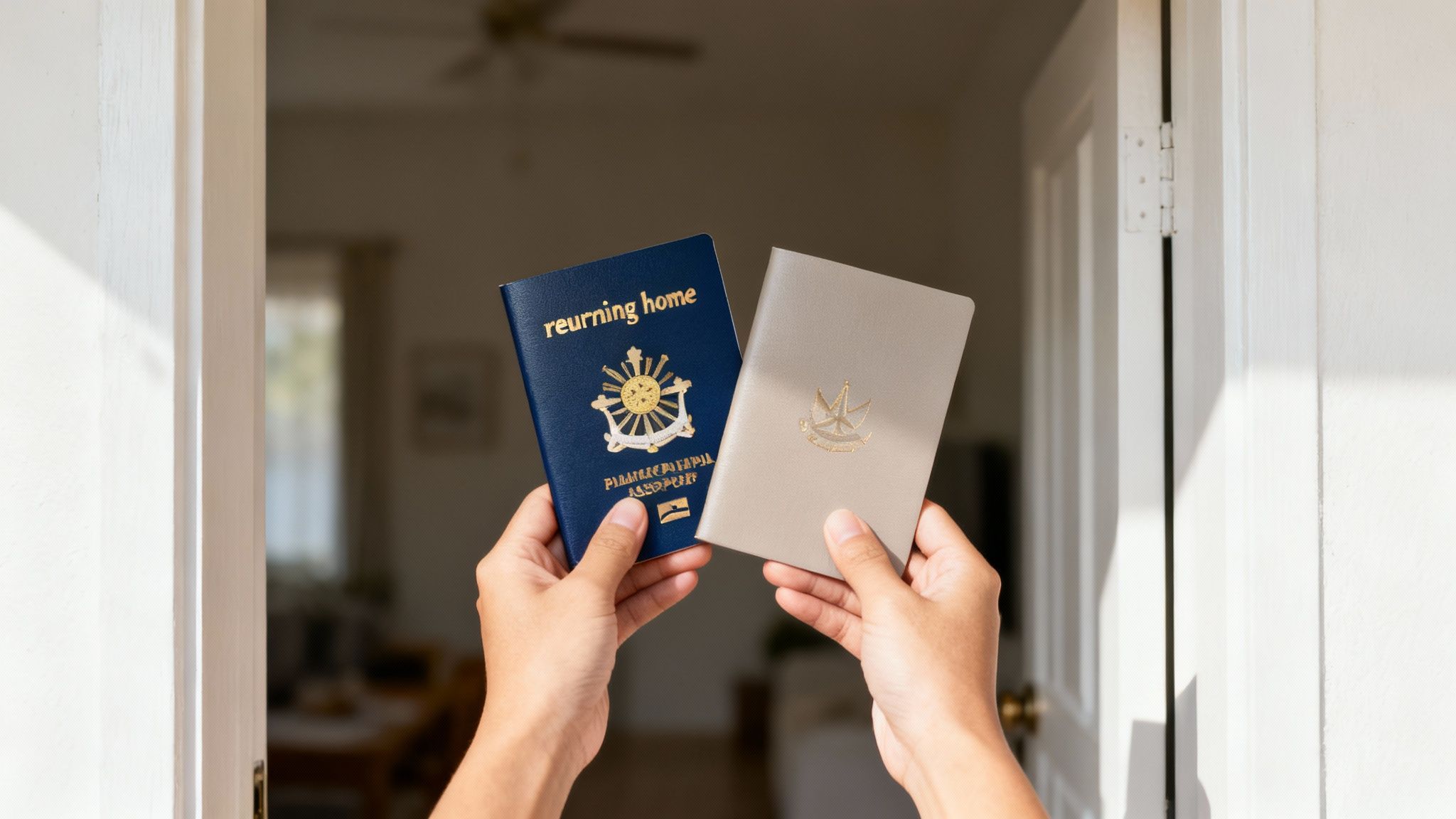
Think of it like having a key to your childhood home. Even after you've moved out and have a key to a new place, that original key still holds a special meaning. Philippine dual citizenship is the government's way of saying you can legally hold keys to both houses. You get to carry two passports and enjoy the rights that come with both, never having to choose between your ancestral home and your current one.
This fantastic opportunity exists thanks to a landmark piece of legislation: Republic Act No. 9225, better known as the Citizenship Retention and Re-acquisition Act of 2003. This law was a game-changer, allowing natural-born Filipinos who lost their citizenship—often to pursue careers or family life abroad—to get it back. It effectively reconnected millions of people to their homeland. You can learn more about the legal basis of this act on losangelespcg.org.
Who Counts as a Natural-Born Filipino?
The whole process hinges on one critical term: "natural-born" Filipino. This isn't just about the location of your birth; it's all about your lineage. The exact definition shifts slightly depending on when you were born.
- Born on or after January 17, 1973: You're considered natural-born if at least one of your parents was a Filipino citizen when you were born. Simple as that.
- Born before January 17, 1973: You're natural-born if your father was a Filipino citizen. If only your mother was Filipino, you had to have formally elected Philippine citizenship when you came of age.
Getting this distinction right is crucial. It's the first and most important box you need to tick to even start the application.
RA 9225 Eligibility at a Glance
Confused about whether you qualify? This quick summary should help you see if you meet the core requirements for reacquiring your Philippine citizenship.
| Eligibility Requirement | Explanation | Example Scenario |
|---|---|---|
| Must Be Natural-Born | You were a Filipino citizen from birth, not through naturalization. | Your parents were Filipino citizens when you were born in Cebu. |
| Lost Citizenship by Naturalization | You became a citizen of a foreign country, which caused you to lose your Filipino status. | You moved to Canada for work and became a Canadian citizen in the 1990s. |
| No Renunciation Due to Allegiance | You did not lose citizenship by swearing allegiance to a foreign country in a military context. | You became a UK citizen for civilian employment, not by joining the British Army. |
Meeting these conditions means the path to dual citizenship is likely open to you.
Real-World Eligibility Examples
Let's ground this in reality. Picture a nurse born and raised in Manila. She moved to the United States for her career and eventually became a U.S. citizen to get better opportunities. Under RA 9225, she is the perfect candidate to reacquire her Philippine citizenship because she was a natural-born Filipino before she ever held an American passport.
It's important to understand this is a unique path. It's completely different from, say, the process outlined in our guide on how to become a US citizen through marriage, which has an entirely separate set of rules.
The core principle is restoration. You are not applying for new citizenship; you are reawakening a status you held by birth.
On the flip side, a foreign national who married a Filipino and has lived in the Philippines for years wouldn't qualify under this specific law. Their route to citizenship would be through the standard naturalization process, not reacquisition.
For Filipinos working globally, especially on online job platforms like Onlinejobsph, understanding your citizenship status is vital. This law is specifically designed for one group: those who were Filipino from birth and later took on a new nationality.
The Law That Makes It All Possible: RA 9225
To really get what Philippine dual citizenship is all about, we have to talk about its legal backbone: Republic Act 9225, officially known as the Citizenship Retention and Re-acquisition Act of 2003. It's a game-changer. Before this law came along, if you became a citizen of another country, your Filipino citizenship was gone—poof. Just like that.
RA 9225 flipped the script entirely. It created a clear, legal path for natural-born Filipinos to reclaim their heritage without having to cut ties with their new home country.
At its heart, the law is about reconnection. It's a recognition that millions of Filipinos moved abroad for work, family, or a new chapter in life, not because they wanted to turn their backs on their roots. This act restores all the rights and privileges that come with being Filipino, from owning land to having a say in national elections.
Retention vs. Reacquisition: What's the Difference?
The wording in RA 9225 can sound a little dense, but the ideas behind it are pretty simple. The law covers two slightly different scenarios: "retention" and "re-acquisition." Figuring out which one applies to you is the first step.
-
Citizenship Retention: This is for natural-born Filipinos who became foreign citizens after RA 9225 was passed in 2003. From the law's perspective, your Filipino citizenship was never truly lost—it was just waiting to be formally recognized again by taking an Oath of Allegiance.
-
Citizenship Re-acquisition: This applies to those who naturalized in another country before the law was enacted in 2003. By taking the Oath, you are formally re-acquiring the citizenship that you had previously lost under the old rules.
Honestly, don't get too hung up on the terms. Both paths lead to the exact same place: becoming a fully recognized dual citizen. The only difference is the timing of when you naturalized. The process and the end result are identical for both.
Let's Bust a Few Dual Citizenship Myths
One of the biggest things that holds people back is bad information. There are a lot of myths floating around, especially about how other countries see dual citizenship. A classic one, particularly among Filipino-Americans, is that the U.S. government doesn't like it or might even penalize you for it.
That's just not true.
The legal framework is crystal clear: RA 9225 does not require you to renounce your foreign citizenship. The whole point of the law is to let you hold both passports at the same time. This creates a dual nationality status that is respected by both countries.
Despite the persistent rumors, both the United States and the Philippines officially recognize dual citizenship. In fact, Philippine embassies and consulates have gone out of their way to clarify that no U.S. law stops an American from also being a citizen of another country. You can explore the official clarifications about this policy to see for yourself. This gives you a rock-solid legal foundation to stand on.
What This Law Means for You Today
The passing of RA 9225 was a huge moment for the global Filipino community. It transformed what was once a one-way street of emigration into a two-way bridge, opening up a free-flowing exchange of culture, investment, and family ties.
For you, this means the path to reclaiming your Filipino heritage is not some loophole or temporary fix. It's a fundamental right written into Philippine law. That legal stability should give you the confidence to start the process, knowing your status as a dual citizen will be protected and recognized. It all starts with understanding this one foundational law.
Navigating Your Application Step by Step
Embarking on the journey to reacquire your Philippine citizenship can feel like preparing for a big trip. You need a clear destination, a good map, and all the right documents packed and ready. This guide is your roadmap, breaking down the entire process into clear, manageable steps to ensure your application goes off without a hitch.
The first and most critical phase is gathering your paperwork. Think of this as collecting all the puzzle pieces that prove your identity and eligibility under RA 9225. Getting this part right from the start will save you from frustrating delays and headaches down the road.

Assembling Your Essential Documents
Before you even think about booking an appointment, you'll need to compile a specific set of documents. Each one tells a part of your story—from your birth as a Filipino to your naturalization as a foreign citizen.
The table below outlines the core documents you'll need. Always remember to double-check the website of the specific embassy, consulate, or Bureau of Immigration office you're applying to, as requirements can sometimes have slight variations.
Dual Citizenship Application Document Checklist
| Document Type | Required For | Where to Obtain | Key Tip |
|---|---|---|---|
| Completed Application Form | All applicants | Download from the embassy/consulate website | Fill it out digitally if possible to ensure it's neat and legible. Print and sign. |
| PSA Birth Certificate | Proving natural-born status | Philippine Statistics Authority (PSA) | A recent copy is best. While older NSO copies are sometimes accepted, a fresh PSA certificate avoids potential issues. |
| Foreign Naturalization Certificate | Proof of foreign citizenship | Issuing country's immigration authority | This is the key document proving you lost your Philippine citizenship due to acquiring another. Make sure you have the original. |
| Valid Foreign Passport | Proof of current identity | Your adopted country's passport agency | A clear photocopy of the bio page is usually required, but bring the original passport to your appointment. |
| Recent 2x2 Photos | Identification | Any professional photo service | Most consulates require three (3) photos with a plain white background. Don't try to take these yourself; photo guidelines are strict. |
| PSA Marriage Certificate | If you changed your name | Philippine Statistics Authority (PSA) | Required if your current name on your foreign passport doesn't match your birth certificate. |
Having these documents organized and ready will make the rest of the process feel much smoother.
Choosing Your Application Venue
Once your documents are in order, you face a key decision: where to apply? You have two primary options, each with its own pros and cons. Your choice will likely depend on where you live, your travel plans, and how quickly you need it done.
Option 1: Philippine Embassy or Consulate Abroad
This is the go-to route for most people living outside the Philippines. It's convenient and lets you handle everything right in your country of residence.
- Pros: You don't need to fly to the Philippines. The process is typically very structured, and you can book appointments online.
- Cons: In places with large Filipino communities, appointment slots can be scarce and book up months in advance. You have to be patient.
One of the best things to look out for are the consular outreach missions that embassies often conduct. These events bring the services directly to communities, and they are incredibly efficient.
For example, a mission in Orlando, Florida, in October 2025 was a massive success. In just four days, the Philippine Embassy administered the Oath of Allegiance to 226 Filipinos and processed 86 new dual citizenship petitions. It's a powerful reminder of the high demand and how accessible the process can be when these events are organized. You can read more about this successful consular outreach effort on philippineembassy-dc.org.
Option 2: Bureau of Immigration (BI) in the Philippines
If you're already planning a trip back home or spend a good amount of time there, applying directly at the Bureau of Immigration Main Office in Manila is a solid choice.
- Pros: Processing can sometimes be quicker, and you're dealing directly with the main government agency responsible for these petitions.
- Cons: This requires you to be physically in the Philippines. It also means navigating a large, busy government office, which can be a bit intimidating if you're not used to it.
The Final Steps to Reclaiming Your Citizenship
After you've submitted your application and all your documents have been verified, you reach the final, most meaningful step: the Oath of Allegiance.
This is a short but solemn ceremony where you formally pledge your allegiance to the Republic of the Philippines. It's the exact moment your dual citizenship becomes official. It's a pretty powerful experience.
Following the oath, you will be issued your official documents:
- Order of Approval
- Identification Certificate
Guard these documents carefully. They are your official proof of reacquired Philippine citizenship and you'll need them for everything that comes next, especially applying for your Philippine passport.
While the process of getting dual citizenship in the Philippines has its own unique steps, it shares a universal theme with other countries' programs—the absolute need for meticulous preparation. For those exploring different paths, our guide on how to get Mexican citizenship offers a look into a different, yet equally structured, journey.
Understanding Your Rights and Responsibilities
Reclaiming your Filipino heritage is about far more than just getting a new passport. It's like being handed the keys back to your ancestral home. You're not just a visitor anymore; you're unlocking a life filled with new opportunities and restoring the full civil, economic, and political rights you held by birth.
But just like getting the keys to a house, you also accept the responsibilities that come with it. It's a balanced deal. Getting a firm grip on both sides of this coin—the exciting privileges and the serious obligations—is the key to making the most of your restored status without any nasty surprises down the road.
The Privileges of Being a Filipino Again
Once you take that Oath of Allegiance, you're back in. It's not a "lite" version of citizenship; it's the real deal. You immediately regain the same rights as any other Filipino citizen.
Here are some of the biggest game-changers you'll enjoy:
- Full Property Ownership: While former natural-born Filipinos can own limited land, dual citizens face no such restrictions. You can buy, sell, and inherit land and property just like any local—a massive advantage for anyone looking to invest or build a family home.
- Engage in Business and Commerce: The doors to entrepreneurship swing wide open. You gain the right to own and run a business in the Philippines without the hurdles and limitations placed on foreign investors.
- Practice Your Profession: If you're a doctor, engineer, accountant, or hold another professional license, you can practice your career back home. You'll just need to meet the requirements set by the Professional Regulation Commission (PRC).
- The Right to Vote: Your voice matters. You can participate in national elections for president, vice-president, senators, and party-list representatives, even while living abroad.
- Indefinite Stay: Forget visa runs. You can live in the Philippines for as long as you want without needing a visa. When traveling on your foreign passport, just show your dual citizenship documents to immigration for an indefinite stay.
Your Obligations as a Dual Citizen
With these powerful rights come equally important responsibilities. For most expats and global professionals, the big one is taxes. But don't panic—the rules are actually quite favorable for those who don't live in the country.
As a dual citizen living abroad, Philippine tax law is primarily concerned with income generated from sources within the Philippines. Your salary from a job in the US, Canada, or Europe, or income from a foreign business, is generally not subject to Philippine income tax.
This territorial approach to taxation is a huge relief. It's designed to prevent you from being double-taxed on your primary foreign income. However, if you own a rental property in Manila or have local investments that earn dividends, that specific income is taxable by the Philippine government.
It's also crucial to remember this is a two-way street. The United States, for instance, taxes its citizens on their worldwide income, no matter where they live. This can create a tangled web where you have to navigate two very different tax systems. For some, the complexity leads them to explore drastic measures, like understanding how to renounce US citizenship, just to simplify their financial lives.
A Closer Look at Tax Scenarios
| Your Situation | Is Income Taxable by the Philippines? | Why? |
|---|---|---|
| You live in Australia and work for an Australian company. | No | Your income is earned entirely outside of the Philippines. |
| You live in the UK but own a condo in Cebu that you rent out. | Yes | The rental income is generated from a Philippine source. |
| You live in the Philippines for eight months and work remotely for a US company. | Yes | As a resident, your income may become subject to Philippine tax laws. |
Navigating this requires a bit of foresight. I always recommend sitting down with a tax advisor who knows the ins and outs of both Philippine regulations and the tax laws of your other country. A proactive chat like this can save you a world of financial and legal headaches, letting you fully enjoy the benefits of being home again.
Common Application Mistakes to Avoid
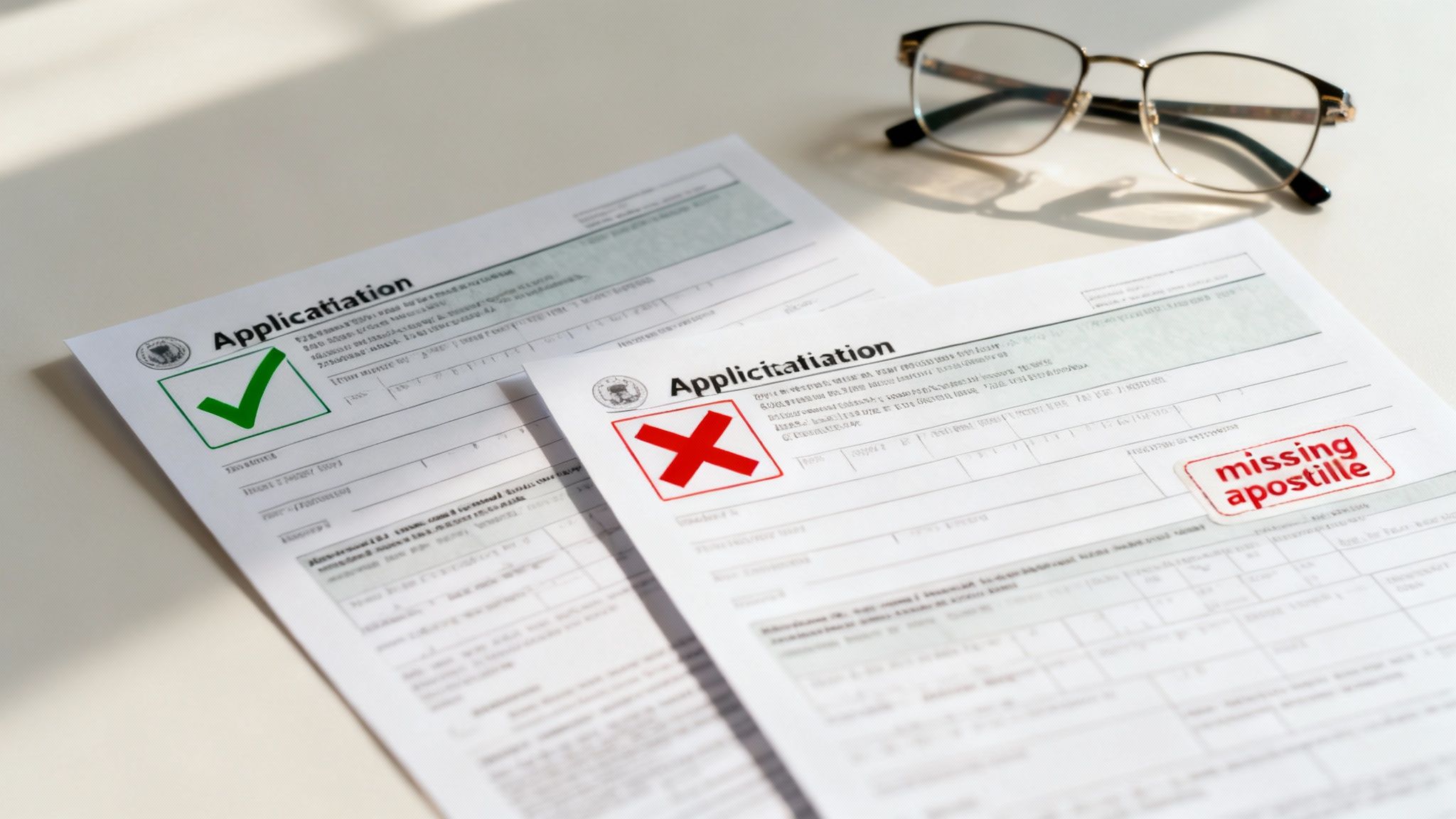
The road to reclaiming your Filipino citizenship is pretty straightforward, but it's loaded with tiny details where a small slip-up can cause massive delays. If you want a smooth ride, you have to sidestep the common traps that snag so many other applicants. Knowing what to watch out for is half the battle.
One of the most common hangups? Birth certificates. It's easy to grab that old, faded copy issued by the National Statistics Office (NSO) or even a local civil registrar. While they're perfectly authentic, most Philippine embassies and consulates now demand a recent copy issued by the Philippine Statistics Authority (PSA). For many processing officers, this isn't just a preference—it's a hard requirement.
Submitting Incorrect or Incomplete Documents
Mismatched documents are another huge headache. Picture this: you show up with a pristine PSA birth certificate, but your foreign passport has your married name. If you don't have a PSA-issued marriage certificate to connect the dots between the two names, your application gets parked right there.
This problem pops up with all sorts of paperwork. Here are some of the most frequent document-related blunders I've seen:
- Wrong Birth Certificate Version: Handing over an old NSO or local copy instead of the modern PSA certificate is an easy way to get your application stalled right out of the gate.
- Missing Name-Change Documents: Forgetting the marriage certificate or other legal proof of a name change creates a glaring inconsistency between your birth records and your current ID.
- Insufficient Photographs: It sounds simple, but showing up with too few 2x2 photos—or photos that don't meet the strict background and size rules—is a classic mistake.
The fix is simple. Make a master checklist from your specific consulate's website and triple-check every single document for consistency. Pay close attention to names and dates before you even think about booking that appointment.
Misunderstanding International Document Rules
A lot of applicants, especially those from countries in the Hague Convention, have never heard the word apostille. They'll submit a foreign naturalization certificate as is, having no idea it needs this special international certification to be valid in the Philippines. Forgetting this step means the document is automatically rejected.
A classic scenario is an applicant from a non-Hague country who just gets their documents notarized. They only find out later that they need a far more complicated "authentication" from their country's foreign affairs department and the Philippine embassy, adding months to their timeline.
Finally, there's a genuinely heartbreaking mistake I see all too often: messing up the paperwork for children. Parents sometimes think their minor kids are automatically covered without submitting separate documents like the child's birth certificate and foreign passport. For derivative citizenship to work, each child's eligibility needs its own proof. Gathering these documents from the start ensures your whole family's application for dual citizenship philippines goes through as one seamless package.
What to Do After Your Approval
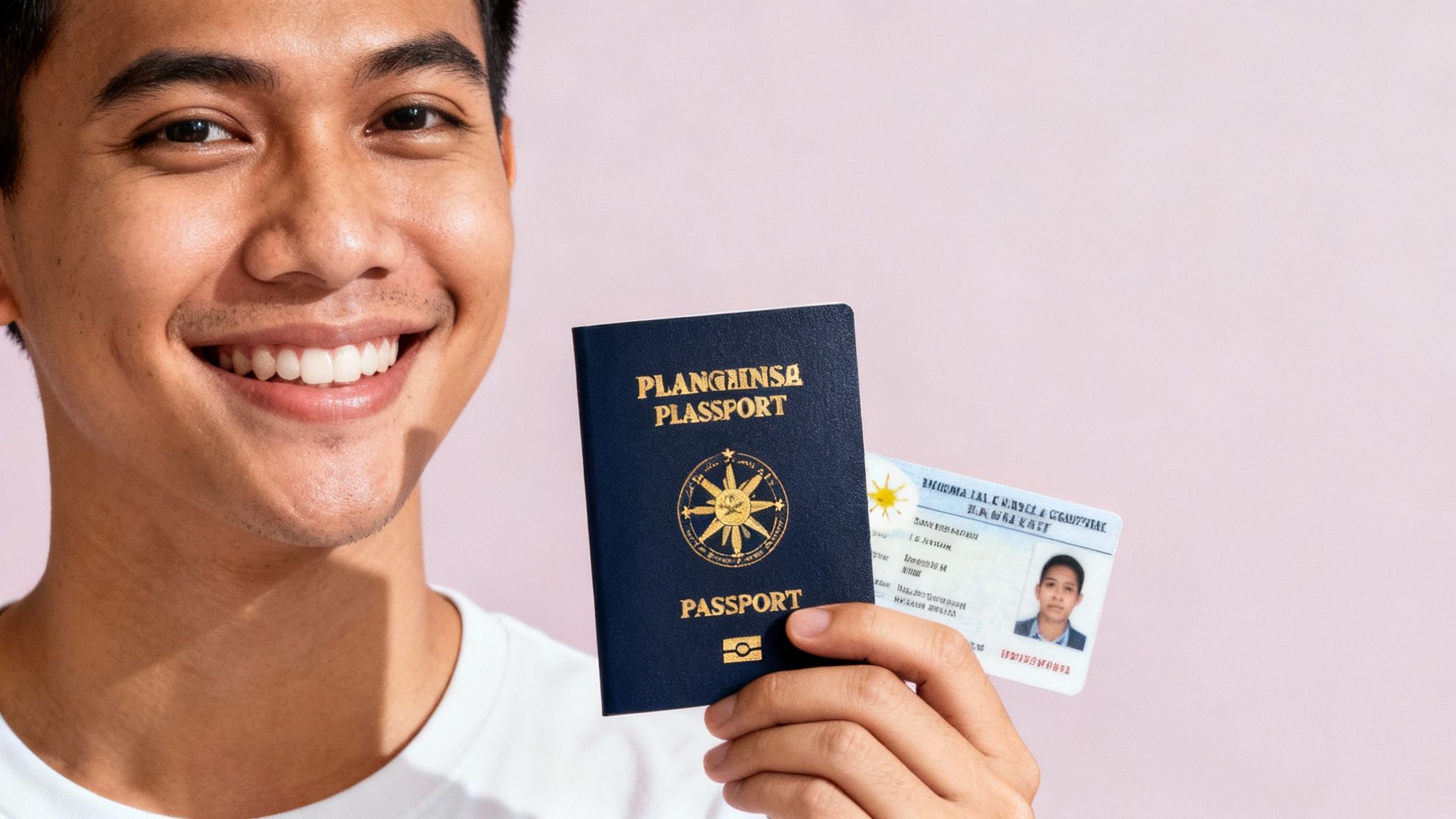
Taking the Oath of Allegiance is a huge moment, but your journey isn't quite over. Think of it like graduating—you have the diploma, but now you need to put it to work to unlock all the new opportunities waiting for you. The next steps are all about turning your approved status into practical, usable documents that bring your rights as a Filipino citizen to life.
First thing's first: secure the official paperwork you received right after taking your oath. These documents are the bedrock of your reacquired citizenship and you'll need them for pretty much everything that comes next.
- Order of Approval: This is the formal decision that green-lit your petition.
- Identification Certificate (IC): This crucial document clearly states your name and confirms you have officially reacquired your citizenship under RA 9225.
Guard these originals as if they were your birth certificate. You'll be asked for them for nearly every official transaction you make as a new dual citizen, especially when it's time to get your passport.
Getting Your Philippine Passport
While it's not technically mandatory, getting a Philippine passport is probably the most important thing you can do next. It's far more than just a travel document; it's the ultimate proof of your Filipino identity and your ticket to seamless travel to and within the Philippines. Without it, you'll have to present your foreign passport along with your dual citizenship papers every single time you enter the country.
A Philippine passport is your all-in-one proof of citizenship and is way more convenient than carrying around your Identification Certificate. It's also a universally accepted ID for business in the Philippines and gets you visa-free entry to neighboring hotspots like Singapore, Thailand, Vietnam, and Indonesia.
To get one, you'll need to book a separate passport appointment at the same embassy or consulate. This is a totally different process from your dual citizenship application and has its own set of requirements, which will definitely include your original IC and Order of Approval.
Activating Your Civil and Political Rights
With your new status in hand, you can now fully dive into Filipino society. This means tackling a few practical tasks that solidify your connection to the country and let you start using your restored privileges.
Key Post-Approval Actions
- Register to Vote: As a dual citizen, you have the right to vote in national elections for president, vice president, senators, and party-list representatives. You can register as an overseas voter at the nearest Philippine embassy or consulate, making sure your voice is heard no matter where you live.
- Update Land Titles: If you own property in the Philippines, updating the title to reflect your Filipino citizenship is a game-changer. It removes the old ownership restrictions placed on foreigners, which is a critical step for securing your real estate investments.
- Secure Local IDs: Once you're in the Philippines, you can apply for all sorts of government-issued IDs, like a driver's license, UMID card, or the National ID (PhilSys). These are invaluable for daily life, from opening a bank account to dealing with local agencies.
Completing these actions transforms your dual citizenship philippines status from a legal concept into a lived reality, empowering you to fully embrace your Filipino heritage.
Got questions? You're not alone. The journey to regaining your Filipino citizenship often brings up a few common queries. Let's tackle some of the most frequent ones people ask about family, legal status, and taxes.
Can My Foreign-Born Children Also Become Filipino Citizens?
Yes, and this is one of the most rewarding parts of the process. If your kids are under 18 years old when you reacquire your citizenship, they can ride on your application through something called derivative citizenship.
All you have to do is include their original birth certificates and foreign passports with your own paperwork. Once your petition gets the green light, they become Filipino citizens right alongside you—no separate application needed. Just remember, if your children are already 18 or older, this route won't work for them; they'll have to look into other paths to citizenship.
Do I Have to Give Up My Other Citizenship?
Absolutely not. That's the whole point of the law, officially known as Republic Act 9225. It's designed specifically to let you hold both citizenships at the same time.
You will take an Oath of Allegiance to the Philippines, but don't let that worry you. This is a standard part of the Philippine legal process and doesn't jeopardize your status in countries that are fine with dual nationality, like the United States, Canada, or the United Kingdom.
The core idea here is retention and re-acquisition, not renunciation. You're simply adding your Filipino citizenship back into the mix, not swapping one passport for another. It's about enjoying the rights and perks of both nations.
Will I Have to Pay Philippine Taxes on My Income Earned Abroad?
For the vast majority of dual citizens living overseas, the answer is a clear no. The Philippine tax system is what's known as "territorial." In simple terms, this means you are generally only taxed on income that comes from sources within the Philippines.
Think of it this way: if you have a rental property in Cebu or a local business, that income is taxable. But your salary from a job in London or profits from your online business based in Austin? That's not subject to Philippine income tax as long as you're living outside the country. Of course, tax laws can get tricky, so getting a bit of advice from a professional who knows the rules for both your countries is always a smart move.
Navigating the complexities of life abroad requires more than just the right passport; it requires the right protection. At Expat Insurance, we specialize in finding the perfect international health insurance plan to safeguard you and your family, no matter where your journey takes you. Get your free quote today and secure your peace of mind.
