

December 26, 2025
•
5 min read
7 Best International Health Insurance Plans for Expats in 2025
Searching for the best international health insurance? We compare 7 top providers for expats, nomads, and retirees to help you find the right global coverage.
Embarking on a life abroad is a thrilling prospect, but securing reliable healthcare in a new country can feel complex and overwhelming. Choosing the right international health insurance is a critical step, acting as your global safety net for everything from routine check-ups to unexpected emergencies. With a vast market of providers offering customizable plans, deductibles, and coverage areas, finding the perfect fit can be a significant challenge. This is where a clear, comparative guide becomes essential.
This article is designed to cut through the noise and simplify your decision-making process. We have researched and curated a comprehensive roundup of the best international health insurance providers for 2025. We will analyze the top 7 platforms, including major players like Cigna Global, Allianz Care, and GeoBlue, as well as specialized brokers like Expat Insurance and International Citizens Insurance. Our goal is to provide you with the direct, actionable information you need to make an informed choice.
For each provider on our list, you will find a detailed breakdown of their core offerings, ideal user profiles, and key strengths. We will highlight what makes each unique, whether it's their extensive network, flexible plan structures for digital nomads, or comprehensive coverage for families and retirees. Each review includes direct links to their websites, allowing you to get tailored quotes and explore options effortlessly. This guide provides a strategic framework to help you compare plans confidently, ensuring your health and financial well-being are protected, no matter where your journey takes you.
1. Expat Insurance: Best for Personalized Broker Guidance
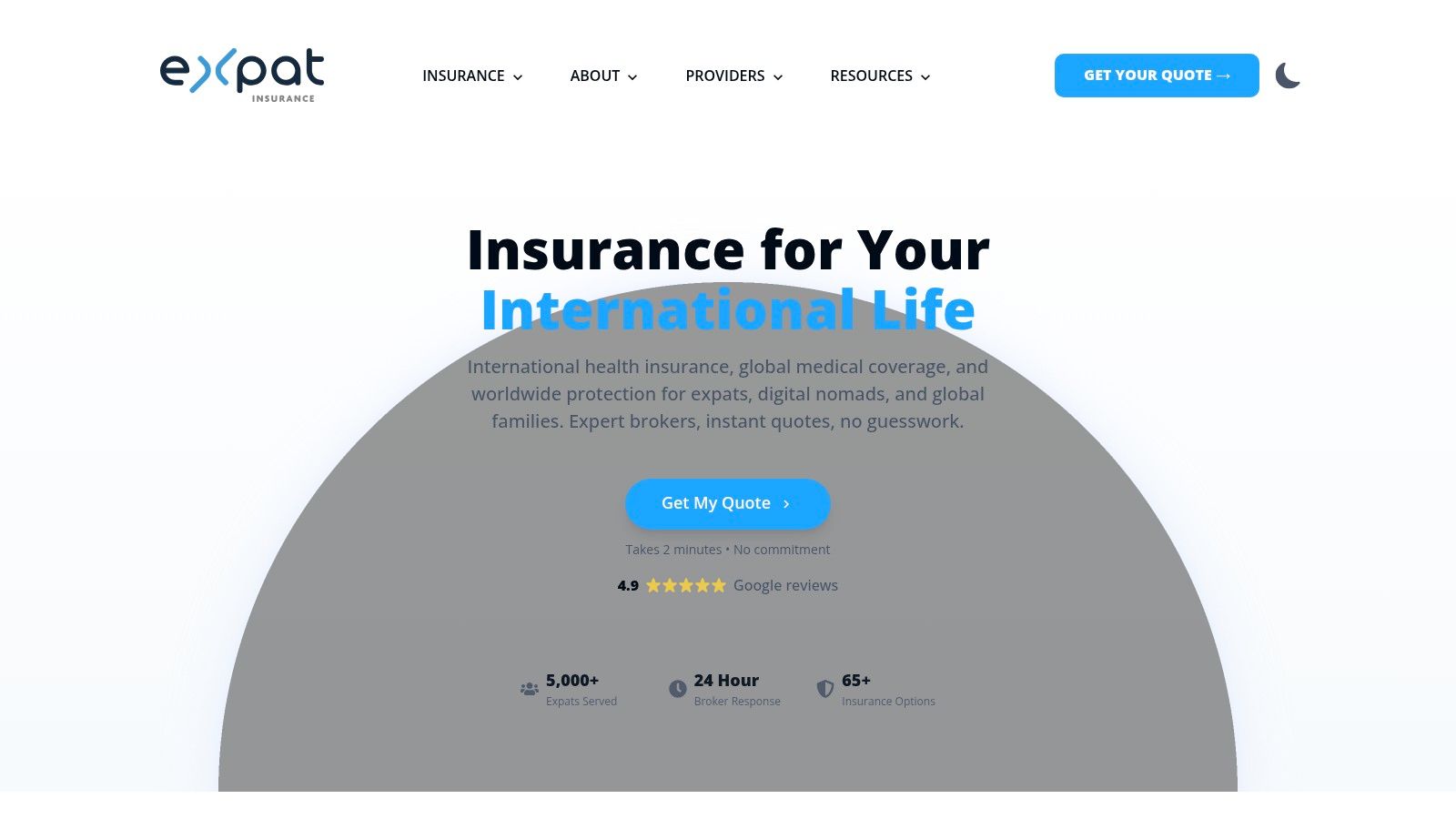
Finding the best international health insurance can feel like navigating a maze of unfamiliar terms, hidden clauses, and overwhelming choices. Expat Insurance distinguishes itself by acting not as an insurer, but as your dedicated, expert guide through this complexity. It operates as a specialist brokerage, leveraging its industry connections and deep expertise to connect you with a plan that genuinely aligns with your personal circumstances, destination, and health needs.
Rather than forcing you to sift through endless comparison charts, Expat Insurance provides a high-touch, consultative service. Their team, many of whom are expats themselves, offers invaluable real-world insights that go beyond policy documents. This model is exceptionally beneficial for those with complex requirements, such as securing coverage with pre-existing conditions, finding a suitable plan for retirement abroad, or insuring a family in a less-common destination. They transform a potentially stressful process into a clear, supported, and efficient experience.
Why It Stands Out: The Power of a Specialist Broker
The core advantage of using Expat Insurance is the combination of broad market access and unbiased, personalized advice. Instead of being limited to a single carrier's offerings, you gain access to a curated selection from over 65+ insurance options. This ensures the recommendations you receive are based on what's best for you, not what's best for a particular insurance company.
Their process is built around efficiency and expertise. After submitting a request, you can expect to receive tailored quotes within 24 hours. A dedicated adviser then works with you to compare the fine print, explain coverage nuances, and answer critical questions. This human-centric approach provides a level of clarity and confidence that automated comparison tools simply cannot match. For a foundational understanding of what these policies entail, you can explore their detailed guide on what international health insurance is and how it works.
Comprehensive Feature Analysis
| Feature | Description & Practical Benefit |
|---|---|
| Broad Market Access | Compares plans from multiple top insurers across 180+ countries. Benefit: This significantly increases your chances of finding a competitively priced plan with the exact coverage you need, from high-deductible catastrophic plans to comprehensive policies with dental and vision. |
| Personalized Service | A dedicated broker provides one-on-one guidance from the initial quote through the claims process. Benefit: You have a single point of contact and an advocate on your side, which is invaluable when dealing with underwriting, pre-authorizations, or claim disputes. |
| Specialist Expertise | Advisers have deep knowledge of the expatriate landscape, including common healthcare challenges in different regions. Benefit: They can provide practical advice on navigating local healthcare systems, managing pre-existing conditions, and choosing the right network for your destination. |
| Wide Product Range | Offers international health, travel medical, life insurance, and specialized corporate or group plans. Benefit: Serves as a one-stop shop for various expat insurance needs, simplifying management for individuals, families, and businesses. |
| Proven Track Record | With highly rated reviews, their reputation for excellent service is well-established. Benefit: This social proof provides peace of mind that you are working with a trusted and reliable partner for your health and safety abroad. |
Pros:
- Vast Selection: Access to plans from dozens of top-tier global insurers.
- Expert Guidance: Personalized support from advisers with real expat experience.
- Time-Saving: They do the research and comparison shopping for you, presenting only the most relevant options.
- Advocacy: Your broker acts as your advocate during enrollment and if issues arise later.
Cons:
- Indirect Model: Policies are underwritten by third-party insurers, meaning claims processes and network access will vary by the final carrier you choose.
- No Upfront Pricing: You must request a quote to see costs, as prices are not published directly on the site.
Website: https://www.expatinsurance.com
2. Cigna Global
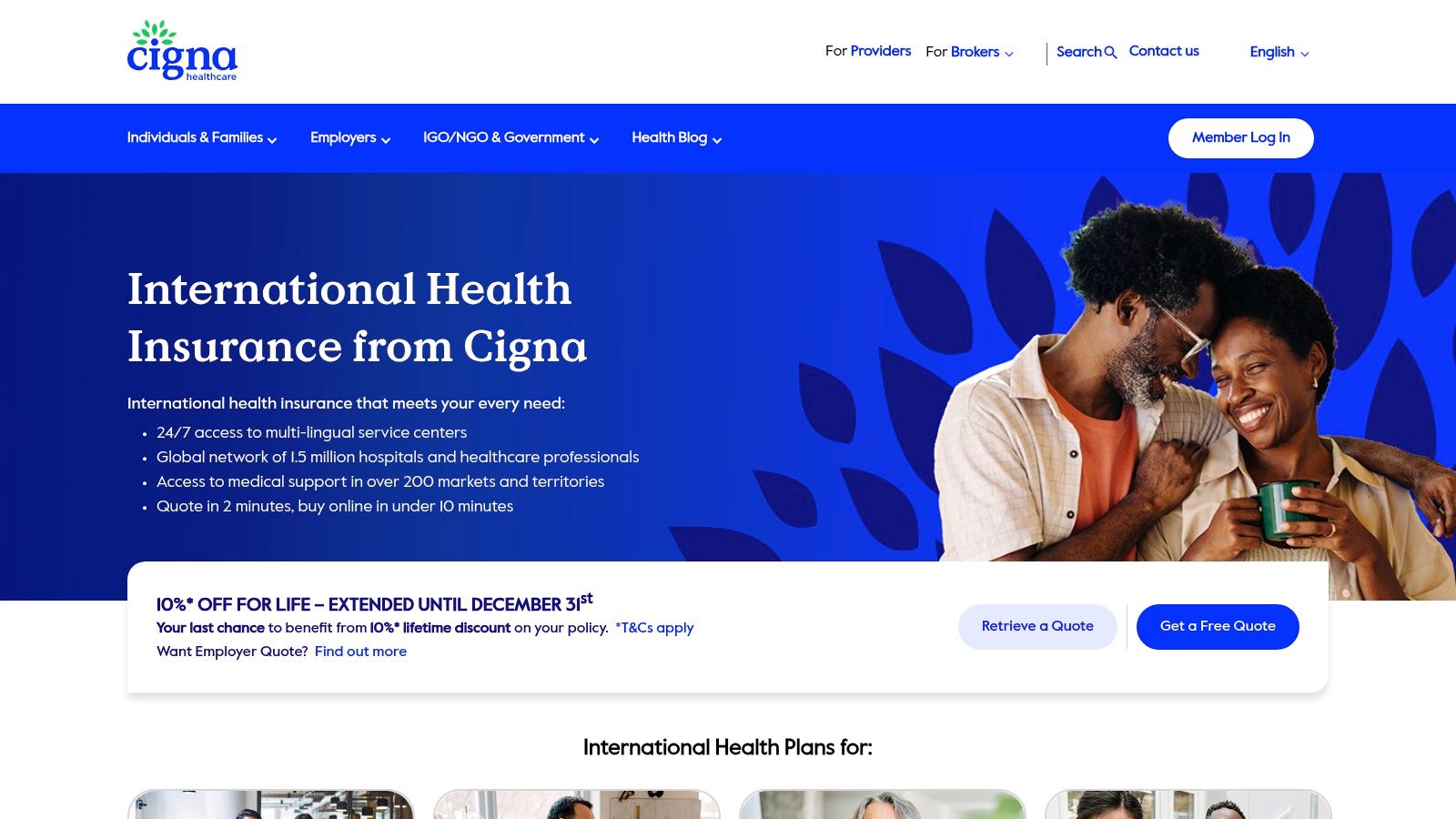
Cigna Global stands out in the international health insurance market for its highly modular plan structure and robust online platform. It empowers expats, families, and digital nomads to build a customized policy from the ground up, allowing for precise control over coverage and cost. This approach is ideal for those who want to avoid paying for benefits they don't need while ensuring they have strong core protection.
The user experience on the Cigna Global website is streamlined for immediate action. Visitors can generate a detailed quote in minutes by selecting a core plan, choosing a coverage area, and then adding or removing optional benefit modules. This transparency makes it one of the top contenders for the best international health insurance for those who value self-service and clarity.
Key Features and Plan Structure
Cigna Global's plans are built around three core tiers, making it easy to understand the primary differences in coverage limits. This structure allows you to find a balance between premium cost and the maximum annual benefit.
| Plan Tier | Annual Maximum Benefit | Key Inclusions |
|---|---|---|
| Silver | $1,000,000 | Inpatient and daypatient care, cancer care, mental health (limited). |
| Gold | $2,000,000 | Higher limits, adds maternity care after a waiting period. |
| Platinum | Paid in full | Comprehensive coverage with unlimited annual benefits. |
From there, customization is key. You can select your area of coverage (Worldwide or Worldwide excluding the USA) and then layer on optional modules:
- International Outpatient: Covers consultations, prescriptions, and physiotherapy.
- International Health and Wellbeing: Proactive care like health screenings and physicals.
- International Vision and Dental: Routine and major dental/vision care.
- International Medical Evacuation: Covers transport during emergencies.
This modularity is a significant advantage, but it requires careful review. For example, the Silver plan does not automatically include outpatient care; it must be added as a separate module. Understanding these details is crucial for building the right plan. When considering coverage, especially with existing health concerns, it's important to understand how providers handle them. You can find more information about how international insurance handles pre-existing conditions to better inform your decision.
Who is Cigna Global Best For?
Cigna Global is an excellent choice for experienced expats and meticulous planners who want direct control over their policy's components and cost. The platform's direct-to-consumer model, with instant online quotes and enrollment, appeals to those comfortable managing their insurance online. With a vast network of over 2 million providers and 24/7 multilingual support, it provides the security of a major global insurer combined with the flexibility of a modern, digital-first service.
Website: https://www.cignaglobal.com/
3. Allianz Care
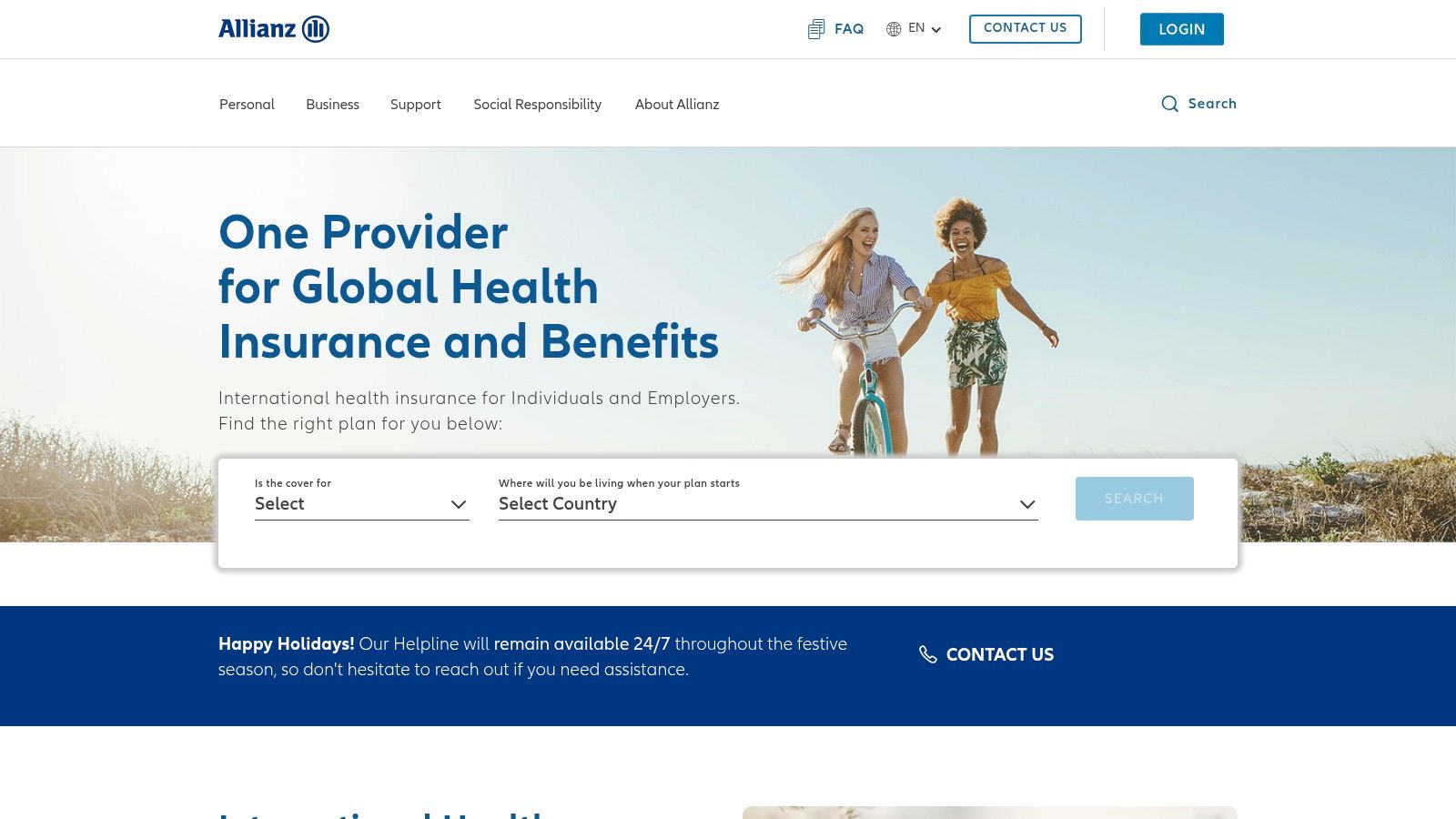
Allianz Care, a part of the global Allianz Partners group, brings the security of a major financial institution to the international health insurance market. Its offerings are geared toward expats, families, and global citizens who prioritize brand reputation, comprehensive benefits, and a clear, well-supported digital experience. The platform is designed for those seeking straightforward plan structures backed by robust support services like telehealth and expat assistance programs.
The user journey on the Allianz Care website is built for clarity and efficiency. Prospective clients can easily navigate to the online quote tool, which guides them through plan selection and customization. The site provides transparent access to benefit schedules and policy documents, allowing users to make informed decisions. This focus on digital self-service combined with the availability of expert callbacks makes it a strong contender for the best international health insurance for those who value both convenience and comprehensive support.
Key Features and Plan Structure
Allianz Care has simplified its offering into three primary plan tiers, making it easier for individuals and families to select the right level of coverage. Each plan comes with core inpatient benefits, with higher tiers adding more extensive outpatient and wellness features. Note that specific limits may vary by region.
| Plan Tier | Annual Maximum Benefit | Key Inclusions |
|---|---|---|
| Base | $1,350,000 | Inpatient care, cancer treatment, emergency evacuation, and telehealth. |
| Enhanced | Higher limits | Adds outpatient care (consultations, prescriptions) and wellness benefits. |
| Signature | $5,000,000 | Comprehensive coverage including maternity, dental, and higher benefit limits. |
Customization primarily involves choosing a geographic area of coverage and deciding on deductibles. A key feature is the ability to include or exclude the USA from the policy, which significantly impacts the premium. Allianz also provides valuable built-in services across its plans:
- Expat Assistance Programme: 24/7 confidential support for legal, financial, and personal issues.
- Telehealth Services: Access to medical professionals via phone or video call.
- Digital Wellness Tools: Resources to help manage physical and mental wellbeing.
It's important to note that while the structure is clear, regional regulations can affect plan availability and features. For a deeper understanding of what to look for, you can learn more about how to compare international health insurance plans to ensure you choose the right options.
Who is Allianz Care Best For?
Allianz Care is an ideal choice for expats, retirees, and families who want the peace of mind that comes with a globally recognized and financially strong insurer. Its simplified plan structure appeals to those who prefer a less modular, more all-in-one approach to coverage. With a vast direct billing network and robust digital tools for managing claims and accessing health resources, it is well-suited for individuals who expect a high level of service and digital integration from their insurance provider.
Website: https://www.allianzcare.com/
4. GeoBlue
GeoBlue (now rebranded as Blue Cross Blue Shield Global Solutions as of October 2025) specializes in providing international health insurance with a strong U.S. focus, making it a standout choice for American citizens abroad or international citizens who require frequent access to care in the United States. As an independent licensee of the Blue Cross Blue Shield Association, it leverages the extensive BCBS PPO network, offering a seamless healthcare experience for members returning to the U.S. for treatment.
The website provides clear pathways for different types of travelers, including expats, students, and missionaries, guiding them toward the most suitable plan. While comprehensive plan details and quotes are often facilitated through brokers, the platform effectively outlines its core offerings and value proposition. This makes GeoBlue a top contender for the best international health insurance for those who prioritize robust U.S. coverage alongside their global plan.
Key Features and Plan Structure
GeoBlue's primary long-term plan, Xplorer, is designed for expats and their families. It is built to provide comprehensive global benefits with the significant advantage of access to the Blue Cross Blue Shield network within the U.S., a feature that sets it apart from many competitors.
| Plan Feature | GeoBlue Xplorer Essential | GeoBlue Xplorer Premier |
|---|---|---|
| Annual Maximum | Unlimited | Unlimited |
| U.S. Network Access | Blue Cross Blue Shield PPO Network | Blue Cross Blue Shield PPO Network |
| Deductible | Options from $0 to $10,000 | Options from $0 to $10,000 |
| Key Inclusions | Inpatient/outpatient care, medical evacuation, prescriptions. | Broader coverage including preventive care and higher limits. |
Beyond the main expat plans, GeoBlue offers tailored products for specific needs:
- Navigator Plans: Designed for students, faculty, and missionaries requiring long-term international coverage.
- Voyager Plans: Short-term travel medical insurance for single trips.
- Group Plans: Customizable solutions for businesses with employees working abroad.
A key operational detail is the requirement for pre-certification for certain procedures, particularly within the U.S. This means members must get approval before undergoing specific treatments to ensure coverage. While this adds an administrative step, it is a standard practice for managing care within the U.S. healthcare system.
Who is GeoBlue Best For?
GeoBlue is the ideal choice for U.S. citizens living abroad who want the security of their familiar home healthcare network. It is also an excellent option for non-U.S. citizens who anticipate needing significant medical care in the United States. The direct access to the BCBS network eliminates many of the out-of-network challenges faced with other insurers, providing a more predictable and streamlined experience for U.S.-based treatment. With 24/7 global assistance and a vetted international provider network, it delivers comprehensive support for expats with strong ties to the United States.
Website: https://www.geo-blue.com/
5. IMG (International Medical Group)
IMG (International Medical Group) is a long-standing and respected name in the global insurance landscape, offering comprehensive annually renewable plans designed for individuals and families living abroad. Their Global Medical Insurance (GMI) is particularly well-suited for expats who need reliable, long-term coverage with clear structures and access to extensive provider networks, including a PPO network within the United States.
The IMG website functions as a central resource hub, providing detailed eligibility rules, application processing timeframes, and access to provider directories. While the information can be spread across multiple documents, the platform excels at offering clear guidance for specific demographics, such as U.S. citizens living abroad, making it a strong contender for the best international health insurance for those who value tradition and thorough documentation.
Key Features and Plan Structure
IMG's Global Medical Insurance is built on a multi-tier system that allows users to select a plan that aligns with their budget and healthcare needs. The structure is straightforward, with increasing benefit limits and more inclusive coverage at higher tiers.
| Plan Tier | Lifetime Maximum | Key Inclusions |
|---|---|---|
| Bronze | $1,000,000 | Core inpatient benefits with some outpatient limitations. |
| Silver | $5,000,000 | Inpatient, outpatient, and mental health coverage. |
| Gold | $5,000,000 | Higher limits, dental, vision, and maternity add-ons. |
| Platinum | $8,000,000 | Most comprehensive benefits, including higher limits for all services. |
Beyond the core plans, IMG offers several key features that appeal to expats:
- Coverage Area Options: You can choose between Worldwide and Worldwide excluding the USA, Canada, China, Hong Kong, Japan, Macau, Singapore, and Taiwan to significantly adjust your premium.
- US PPO Network: For those who will spend time in the US, IMG provides access to a large PPO network for easier claims processing and direct billing.
- Clear Policies: The website details its 15-day review window for refunds after acceptance, providing a clear cancellation policy.
- Add-On Riders: Optional riders for dental, vision, term life, and political evacuation allow for further customization.
One critical aspect to note is IMG's requirement for precertification on certain procedures. Failing to follow these utilization review rules can impact reimbursements, so it's essential to read the plan documents carefully and understand the claims process before receiving non-emergency care.
Who is IMG Best For?
IMG is an excellent choice for long-term expats, especially U.S. citizens, who want a robust, traditional insurance plan from an established provider. The strong PPO access within the U.S. is a major draw for those who travel back frequently. While its online experience is less centralized than some newer platforms, its thorough documentation, extensive provider network, and reliable coverage make it a trusted option for individuals and families seeking stable, long-term international health protection.
Website: https://www.imglobal.com/
6. William Russell
William Russell offers a straightforward, specialist approach to international health insurance, making it an excellent choice for individuals and families who prefer clear, structured benefit tiers over complex modular plans. The company focuses on transparency and simplicity, presenting its plans in a way that allows for easy comparison and confident decision-making. This approach is ideal for those who want comprehensive protection without the need to build a policy from scratch.
The user experience on the William Russell website is designed for clarity. Visitors can quickly compare the four main plan levels, understand the key differences, and generate a quote based on their age, family size, and desired coverage area. This transparent layout helps it secure a spot as one of the best international health insurance providers for those who value well-defined, easy-to-understand policies.
Key Features and Plan Structure
William Russell's plans are organized into four distinct tiers, providing a clear progression of benefits and annual limits. This structure helps you easily identify which level of coverage aligns with your needs and budget.
| Plan Tier | Annual Maximum Benefit | Key Inclusions |
|---|---|---|
| Bronze | $1,500,000 | Core inpatient and daypatient care, including cancer treatment. |
| SilverLite | $1,500,000 | Similar limits to Bronze with limited outpatient coverage. |
| Silver | $2,500,000 | Adds outpatient care, routine maternity, and mental health cover. |
| Gold | $5,000,000 | Comprehensive coverage with higher limits, plus dental and vision. |
A key feature of William Russell is its structured approach to optional benefits. Unlike modular plans where you add everything separately, benefits like outpatient care, maternity, and mental health are automatically included in the higher-tier Silver and Gold plans. This simplifies the selection process significantly. Customization is still available through two main choices:
- Area of Coverage: Choose between worldwide coverage or worldwide excluding the USA, with the latter offering a significant premium reduction.
- Deductibles: Select a deductible to manage your annual premium cost.
It is important to note that many benefits, particularly in the Silver and Gold plans, come with waiting periods. For instance, maternity and routine dental care require you to be on the plan for a specified time before you can claim. This is a crucial detail for anyone planning to use these specific services soon after enrolling.
Who is William Russell Best For?
William Russell is an excellent fit for families and expatriates who value simplicity and predictability in their health insurance. The tiered plan structure removes the guesswork from policy building, ensuring that essential benefits are bundled together logically. Their transparent plan comparisons and competitive regional pricing make it a strong contender for anyone seeking robust, well-defined coverage without the complexity of a fully modular system. With clear communication and a focus on essential benefits, it provides a reliable and straightforward insurance solution.
Website: https://www.william-russell.com/
7. International Citizens Insurance (InternationalInsurance.com)
International Citizens Insurance serves as a vital comparison hub and brokerage, simplifying the often-overwhelming process of selecting the right global medical plan. Instead of offering its own policies, the platform allows users to compare plans from multiple top-tier insurers like Cigna, GeoBlue, Allianz, and IMG side-by-side. This approach is invaluable for expats who want a comprehensive market overview without visiting numerous individual provider websites.
The user experience is centered on education and personalized guidance. Visitors can access a wealth of free resources, including cost guides and articles, before requesting a tailored quote. The platform's real strength lies in connecting users with licensed advisors who can help navigate complex situations, making it a top contender for the best international health insurance resource for those who value expert advice and comparison shopping.
Key Features and Plan Structure
As a broker, International Citizens Insurance doesn't have its own plan tiers. Instead, it presents the structures of its partner insurers, allowing for direct and transparent comparisons of benefits, deductibles, and premiums.
| Feature | Description | How It Helps Users |
|---|---|---|
| Multi-Insurer Comparison | View quotes and plan details from various leading providers in one place. | Saves time and highlights key differences in coverage and cost. |
| Licensed Advisor Support | Access to expert agents who provide personalized recommendations at no cost. | Ideal for navigating pre-existing conditions or complex family needs. |
| Educational Resources | Offers extensive guides, plan selection tips, and insurer reviews. | Empowers users to make a well-informed decision. |
| Tailored Quote Engine | Submit your specific needs and receive customized plan options. | Helps filter out irrelevant plans and focuses on the best matches. |
The primary benefit of this model is efficiency and clarity. For example, a user can instantly see how Cigna's modular plans stack up against Allianz's more inclusive packages or GeoBlue's strong U.S. network access. This comparison is crucial for understanding the nuanced differences that might not be obvious when viewing a single insurer's website. The platform is free to use, as brokers are compensated by the insurance providers, not the clients.
Who is International Citizens Insurance Best For?
International Citizens Insurance is the perfect starting point for anyone new to global health insurance or for those with specific needs, like managing pre-existing conditions. It's particularly useful for U.S. citizens moving abroad who need help navigating plan options from multiple carriers. By combining a powerful comparison tool with free, expert human guidance, the platform removes much of the guesswork from finding the best international health insurance plan, ensuring you get comprehensive coverage that aligns perfectly with your budget and lifestyle.
Website: https://www.internationalinsurance.com/
Top 7 International Health Insurance Comparison
| Provider | Implementation complexity | Resource requirements | Expected outcomes | Ideal use cases | Key advantages |
|---|---|---|---|---|---|
| Expat Insurance | Low — broker-led matching; client consults broker | Broker consultation, personal/medical details, time to request quote (no online prices) | Curated options from multiple insurers, broker support through enrollment & claims | Aspiring/established expats, digital nomads, retirees, corporate expat teams | Broad market access; fast personalized service; 24/7 dedicated broker support |
| Cigna Global | Low — online build-and-buy with instant quotes | Online configuration of modules/add-ons, budget for chosen tiers | Highly customizable plans with large global network and telehealth | Buyers wanting self-serve customization and quick enrollment | Modular plans; transparent tier limits; instant quoting; vast provider network |
| Allianz Care | Moderate — simplified plan lineup with online quotes/callbacks | Online application, possible surcharges, annual contract considerations | Financially stable insurer with clear maximums and expat assistance tools | Buyers seeking strong financial backing and straightforward options | Strong financial backing; clear published limits; digital wellness & expat support |
| GeoBlue | Moderate — US-centric rules, some broker involvement | US residency details, precertification for certain US procedures, broker help | US PPO access plus vetted international provider network and evacuation support | U.S. residents/citizens needing US provider access while abroad (students/missionaries) | Access to BCBS PPO in US; tailored student/missionary plans; global assistance |
| IMG (International Medical Group) | Moderate — annual renewals, eligibility checks | Eligibility documentation, understanding precert/UR rules, possible broker use | Established international coverage with US PPO/direct-billing options | Expats wanting established global medical plans with US access | Multi-tier plans; in-network US direct billing; clear guidance for US citizens |
| William Russell | Low — online quotes and clear tier comparisons | Online enrollment, region/currency selection, consider US cost impact | Clear structured benefits by tier, family-friendly options | Families and buyers preferring transparent, tiered benefits | Transparent comparisons; competitive regional pricing; straightforward tiers |
| International Citizens Insurance | Low–Moderate — comparison hub with advisor support | Provide details for multiple quotes, licensed advisor engagement | Multiple insurer quotes tailored to budget/needs; educational guidance | Shoppers wanting side-by-side comparisons and adviser help | One-stop comparison; licensed agents; educational resources and cost guides |
How to Choose the Right Plan and Take the Next Step
Navigating the landscape of global health coverage can feel overwhelming, but making an informed decision is entirely within your reach. This article has explored top-tier providers like Cigna Global, Allianz Care, and GeoBlue, each offering distinct advantages for different expat profiles. The key takeaway is that the "best international health insurance" is not a one-size-fits-all product; it is the plan that aligns perfectly with your unique life abroad.
Your journey to securing peace of mind starts with a clear assessment of your needs. By breaking down the decision into manageable components, you can move from uncertainty to confident action.
A Framework for Your Final Decision
To find the plan that fits you like a glove, revisit the core factors that will define your coverage requirements. Use this checklist as your final guide before you request quotes, ensuring you haven't overlooked any critical details.
-
1. Recalibrate Your Area of Coverage: Think about your travel patterns for the next year. Will you truly need worldwide coverage including the U.S., which often carries the highest premium? Or would a policy excluding the U.S. or offering limited home country coverage suffice and provide significant savings? Be realistic about your plans.
-
2. Match the Plan to Your Profile: A digital nomad in Southeast Asia has vastly different needs than a family of four moving to Dubai or a retiree in Costa Rica. If you're a nomad, a flexible plan from IMG might be ideal. For families, the robust maternity and wellness benefits from a provider like Allianz Care could be non-negotiable. Retirees should prioritize plans with strong coverage for pre-existing and chronic conditions, an area where Cigna Global often excels.
-
3. Balance Your Budget and Risk: Your premium is just one part of the financial equation. A lower monthly premium often means a higher deductible or co-payment. Consider your risk tolerance. Would you prefer predictable, slightly higher monthly costs, or are you comfortable paying more out-of-pocket if a medical issue arises? Review the annual limits to ensure they provide a sufficient safety net for a worst-case scenario.
-
4. Scrutinize Pre-existing Condition Clauses: This is the most critical step for many. Honesty on your application is paramount. Providers have different underwriting philosophies; some may offer coverage with a surcharge, while others might exclude a specific condition entirely. Working with an expert who understands these nuances can be the difference between getting comprehensive coverage and facing an unexpected rejection or coverage gap.
Taking Action: From Research to Reassurance
Once you have clarity on these factors, your next step is to gather personalized information. While you can approach providers like William Russell or GeoBlue directly, using a specialized broker offers a strategic advantage. An independent broker like Expat Insurance or International Citizens Insurance can compare multiple policies from the entire market on your behalf, saving you immense time and effort. They act as your advocate, helping you decipher complex policy language and ensuring you secure the most appropriate and cost-effective plan.
Remember that securing your health insurance is just one piece of your global mobility puzzle. Your relocation journey will involve numerous administrative tasks. For instance, if your move involves the United States, understanding specific U.S. immigration requirements is another essential step to ensure a smooth transition. Proactive planning across all fronts is key to a successful international life.
Ultimately, choosing the best international health insurance is an investment in your well-being and security. By taking a methodical approach, you can confidently select a plan that lets you embrace your global adventures without worrying about the "what ifs."
Ready to find the perfect international health insurance plan without the hassle? The experts at Expat Insurance provide personalized advice and compare top plans from leading global insurers to find the best fit for your needs and budget. Get your free, no-obligation quote today and let a dedicated advisor simplify your search.
