

November 23, 2025
•
5 min read
Your Essential Guide to Live in Mexico City
Thinking you want to live in Mexico City? Our guide covers cost of living, neighborhoods, safety, and visas to help you start your new life in CDMX.
Deciding to live in Mexico City is a move that rarely disappoints. It's a fantastic choice for anyone chasing vibrant culture, unbelievable food, and a surprisingly wallet-friendly lifestyle. This is a city of incredible contrasts, offering a dynamic rhythm of life that pulls in expats, digital nomads, and families alike. For many, the energy is simply magnetic.
Why Mexico City Captures Hearts and Minds
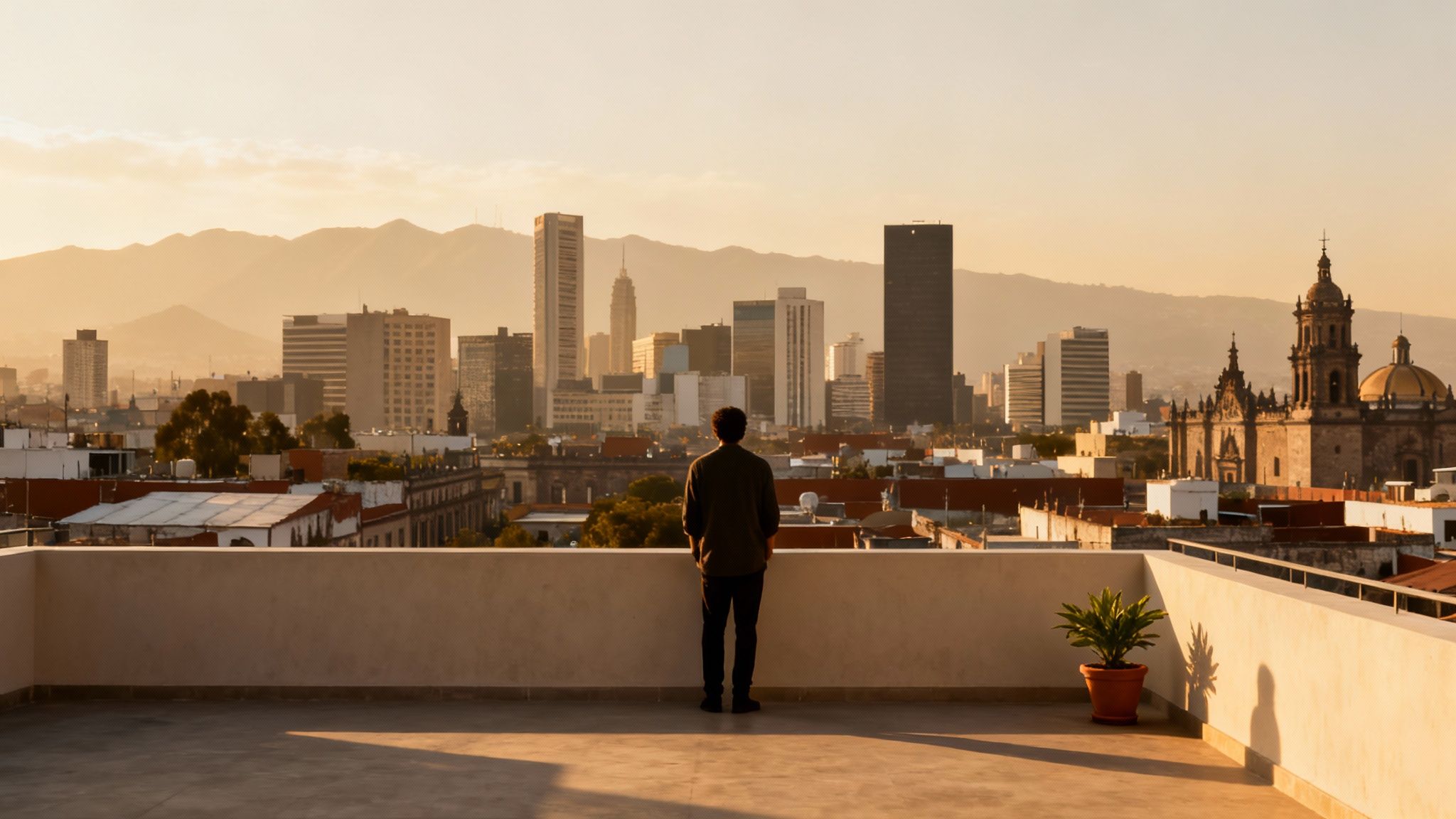
Mexico City—or CDMX, as you'll quickly learn to call it—isn't just a place to live; it's an experience. The city pulses with a unique rhythm, blending ancient history with a modern, forward-thinking vibe.
Imagine this: you start your morning with a fantastic coffee from a trendy Roma Norte café, spend the afternoon wandering through ancient Aztec ruins, and cap it all off with a world-class dinner in Polanco. It's this seamless mix of old and new that makes the city so endlessly fascinating.
Life here is incredibly social and energetic. The parks are always full of people, street markets are buzzing with activity, and it feels like there's always a new art gallery opening or a cultural festival to check out. It's a massive city that invites you to jump in and be a part of it, not just watch from the sidelines.
A City of Scale and Opportunity
Choosing to make your home in Mexico City means becoming part of a massive, thriving metropolis. The entire metro area is projected to hold around 22.75 million people by 2025, making it the biggest in all of Latin America.
That immense scale brings with it endless opportunities for career growth, networking, and cultural immersion that few other global cities can offer. For a closer look at the numbers, you can dive into the latest demographic data.
Of course, a city this big has its challenges. The traffic can be intense, and just getting your bearings in such a sprawling place takes a minute. Safety is a common question for newcomers, but most expats find that with some common sense and awareness, day-to-day life feels perfectly secure. We cover this in much more detail in our guide on what to know about safety in Mexico.
The true appeal of Mexico City lies in its balance. It offers the amenities of a global megacity—top-tier dining, international airports, diverse communities—at a cost of living that remains accessible for many.
To give you a clearer picture, it helps to weigh the good against the not-so-good. Here's a straightforward look at the city's key advantages and the challenges you might face.
Pros and Cons of Living in Mexico City at a Glance
This table breaks down the key trade-offs you'll want to consider. It's a quick way to see if the city's unique character aligns with what you're looking for.
| Aspect | Pros (The Upside) | Cons (The Challenges) |
|---|---|---|
| Cost of Living | Highly affordable compared to major US/European cities. | Can be higher than other parts of Mexico; popular expat areas see rising rents. |
| Culture & Lifestyle | Rich history, world-class museums, vibrant art scenes, and endless events. | The fast pace and noise level of a megacity can be overwhelming for some. |
| Career Potential | Growing hub for startups, tech, and creative industries with strong networking opportunities. | Navigating the job market and work visas can be complex for foreigners. |
| Food Scene | One of the world's best food destinations, from street tacos to Michelin-starred restaurants. | Adjusting to local food and water requires initial caution. |
| Community | Large, welcoming community of expats and digital nomads, making it easy to connect. | A language barrier exists if you don't speak Spanish, limiting deep cultural integration. |
| Travel Hub | Excellent international airport with direct flights across the Americas and Europe. | Significant traffic congestion and crowded public transportation during peak hours. |
Ultimately, Mexico City is a place of incredible depth and energy. While it has its complexities, the rewards—from the cultural riches to the amazing food and friendly people—are more than worth it for those who take the leap.
Finding Your Perfect Mexico City Neighborhood
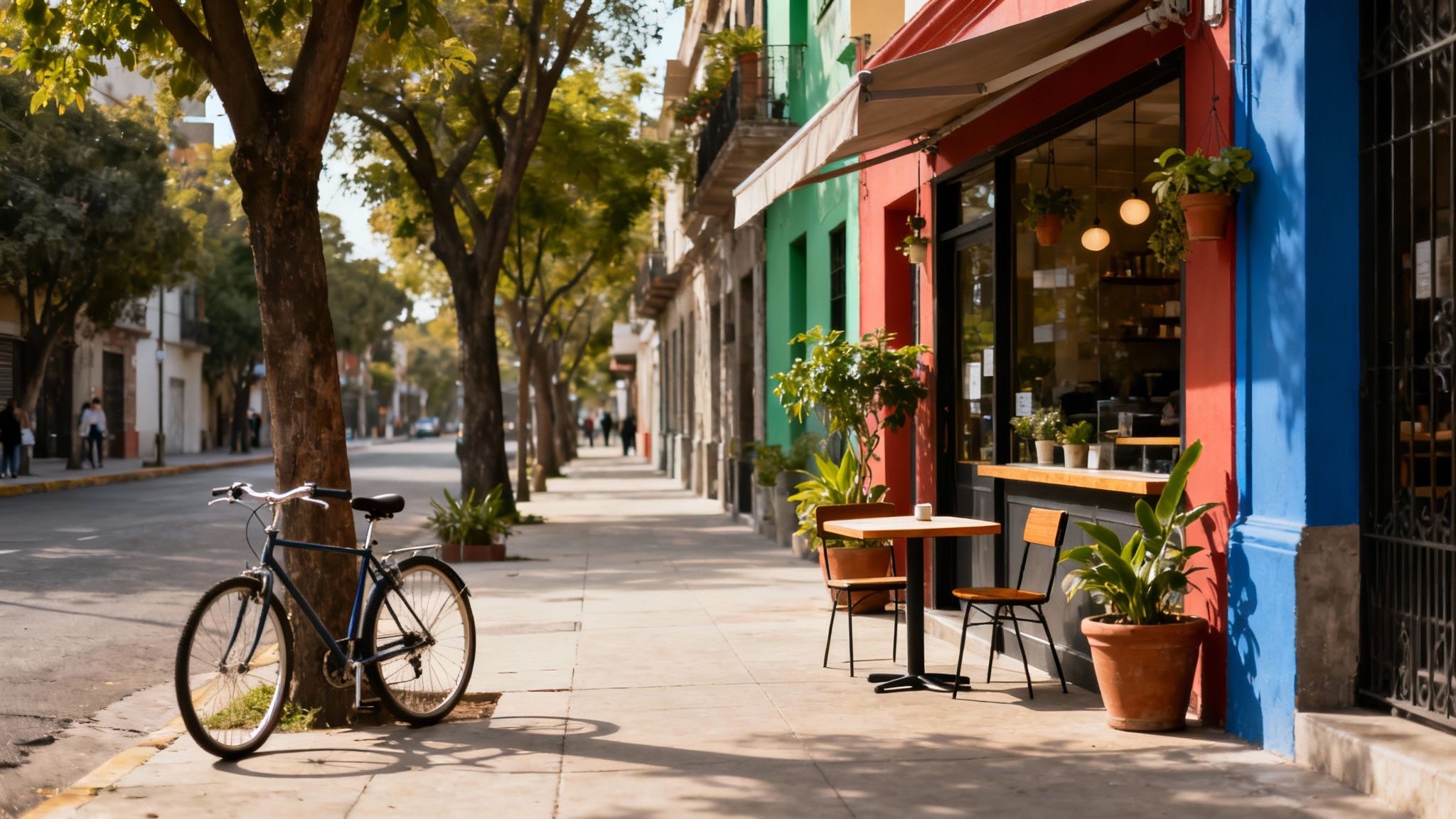
Picking where to live in Mexico City is a bit like choosing a personality for your new life. Every colonia (neighborhood) has a completely different rhythm, a unique daily experience, and its own distinct atmosphere. Nailing this choice is probably the single most important thing you can do to feel at home in this sprawling, incredible city.
Think about it: the neighborhood you settle in will define your morning coffee run, your go-to taco spot, and the community you end up building. It's so much more than just finding a place to sleep—it's about finding a lifestyle that clicks. Let's walk through some of the most popular neighborhoods for expats and see which one sounds like you.
Condesa: The Green Oasis for Active Lifestyles
If your perfect afternoon involves a long walk with your dog through a leafy park, followed by a casual drink at a sidewalk café, then Condesa is calling your name. This neighborhood is built around its two gorgeous parks, Parque México and Parque España, which truly feel like the area's green heart.
The vibe here is relaxed, chic, and incredibly dog-friendly. You'll find quiet, tree-canopied streets lined with stunning Art Deco architecture, creating a peaceful escape from the city's usual hustle. It's just the spot for anyone who values being able to walk everywhere and loves having green space on their doorstep.
- Vibe: Calm, green, and sophisticated with a strong European feel.
- Best for: Dog owners, active people, and anyone who loves park life.
- Rent Expectations: Mid-to-high range. It's a desirable area, so expect to pay a premium for apartments with park views.
Roma Norte: The Artistic and Culinary Heartbeat
Right next door to Condesa, Roma Norte pulses with a more bohemian and eclectic energy. This is the creative soul of the city, absolutely packed with independent art galleries, avant-garde boutiques, and some of the most talked-about restaurants and bars in North America.
This is where you go to get inspired. The streets are a vibrant mix of historic mansions and bold, modern street art. If your ideal weekend involves browsing a design market, discovering a new tasting menu, and maybe catching an indie film, you'll fit right in. It's less about quiet relaxation and more about creative energy and culinary adventures.
Roma Norte is for the explorer at heart. Every corner reveals something new—a hidden courtyard restaurant, a tiny mezcal bar, or a vibrant mural that wasn't there last week. It's a neighborhood that rewards curiosity.
Polanco: The Epitome of Luxury and Exclusivity
For those after a more upscale, polished living experience, Polanco is the undisputed choice. This is Mexico City's most exclusive neighborhood, home to high-end designer stores on Avenida Presidente Masaryk (often called the Rodeo Drive of Mexico), Michelin-starred restaurants, and foreign embassies.
Life in Polanco is sophisticated and buttoned-up. The streets are pristine, world-class museums like the Museo Soumaya are just a stone's throw away, and there's a high level of security. It tends to attract corporate executives, diplomats, and families looking for top-tier amenities. While the city's demographic is predominantly mestizo, Polanco showcases its cosmopolitan side with a significant number of European descendants and a growing international community. You can learn more about the city's rich demographic makeup and its historical context.
- Walkability: Excellent. Everything you need is within a few blocks.
- Safety: Considered one of the safest areas in the city.
- Rent: The highest in Mexico City, a direct reflection of its luxury status.
Coyoacán: The Colorful and Historic Escape
If you dream of living somewhere steeped in history and authentic charm, Coyoacán offers a magical, village-like experience. Famous for its cobblestone streets, colonial-era architecture, and bustling plazas, this neighborhood feels like a step back in time. It was famously home to Frida Kahlo, and her spirit of artistic rebellion and vibrant culture is still palpable everywhere you look.
Coyoacán is perfect for anyone who wants a quieter, more traditional Mexican lifestyle while still being connected to the city's core. It's a place for lazy Sunday strolls through vibrant markets, sipping coffee in a historic square, and just soaking in the rich cultural heritage that makes Mexico City so special.
Understanding the Real Cost of Living
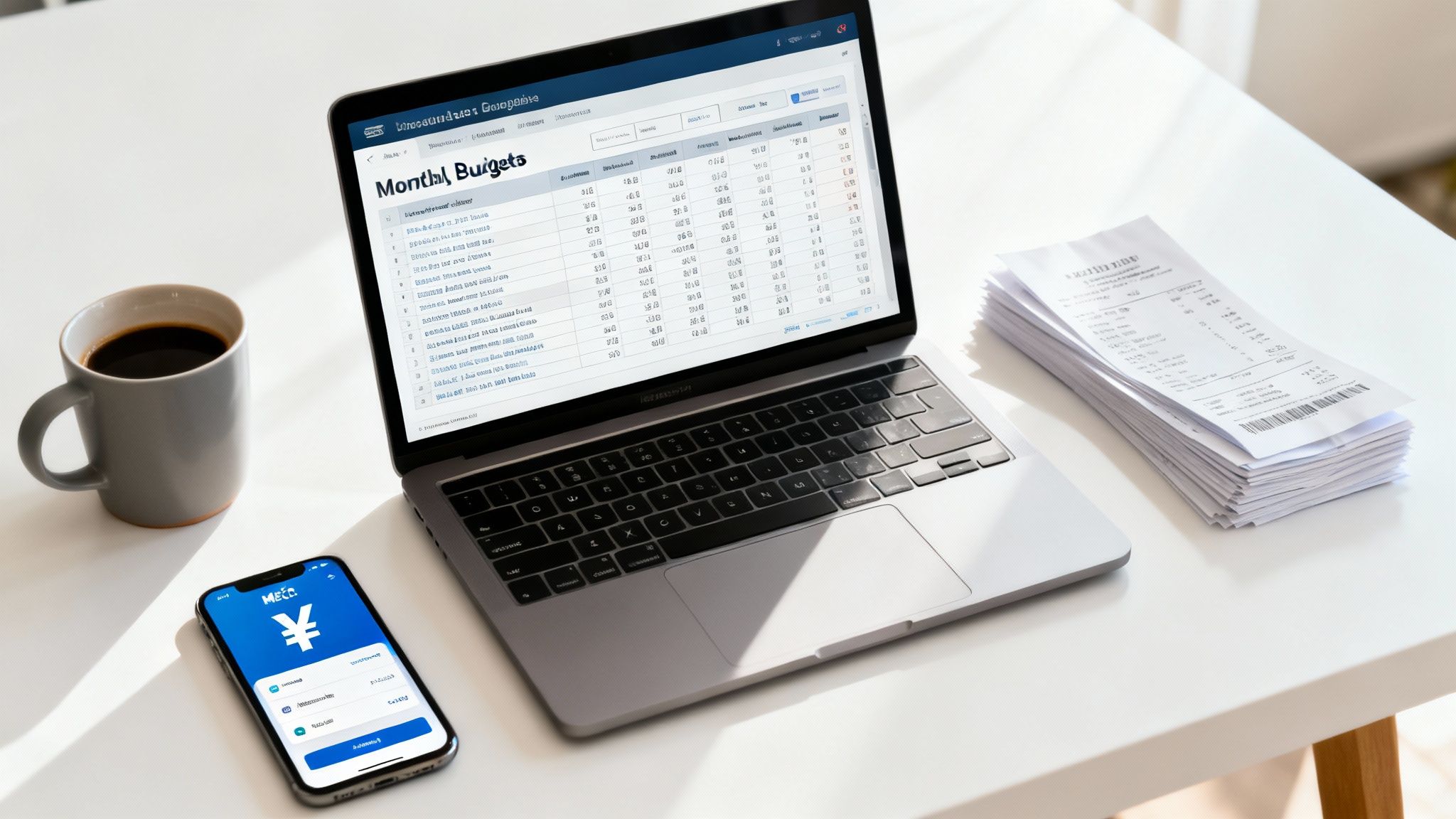
One of the biggest draws for people looking to live in Mexico City is its affordability, but "affordable" means something different to everyone. Getting past vague estimates is the first step toward feeling financially secure here. To do that, we need to dig into the actual day-to-day and month-to-month expenses you'll face.
Mexico City is an economic powerhouse. Its gross domestic product was estimated at approximately $180 billion USD in 2022, making it one of the top metropolitan economies in Latin America. You can see how CDMX stacks up against other hubs by exploring data on Latin America's largest metropolitan economies.
This economic engine supports an incredible range of services and amenities, but it also drives up costs, especially in the most popular neighborhoods. Let's break down the core pieces of your monthly spending so you can build a budget that actually fits your life.
Housing and Utilities Breakdown
Rent will almost certainly be your biggest monthly expense, and it varies wildly depending on the colonia (neighborhood). A stylish one-bedroom apartment in a sought-after area like Condesa or Roma Norte will likely run you $700 to $1,200 USD per month.
But if you look at comfortable, safe apartments in slightly less central but still well-connected neighborhoods, you could find great options for between $470 and $700 USD.
Once you've found your place, you'll need to budget for utilities. The good news is they are generally quite reasonable compared to what you might be used to in the U.S. or Europe.
- Electricity (Luz): For a standard apartment, plan on around $20-$40 USD per month. This can creep up if you rely heavily on air conditioning or space heaters.
- Gas (Gas): Used for your stove and water heater, a typical monthly bill is just $10-$20 USD.
- Water (Agua): Often a small, fixed fee, water service is very inexpensive—usually under $10 USD a month.
- High-Speed Internet: Reliable fiber optic internet from providers like Telmex or Izzi is widely available. A solid plan will cost about $25-$50 USD monthly.
Daily Life and Discretionary Spending
Beyond your fixed costs, your daily habits and choices are what truly shape the rest of your budget. This is where you have the most control and can really tailor your spending to what you value most.
Groceries are a perfect example. You can eat incredibly well and save a ton by shopping for fresh produce at local mercados. On the other hand, if you frequent upscale supermarkets like City Market, expect your bill to be much higher. A single person can easily stick to a grocery budget of $200-$300 USD a month.
Transportation is another key area. The city's Metro and Metrobús systems are remarkably efficient and cheap, with rides costing just a few pesos. If you find yourself relying on ride-sharing apps like Uber or Didi for all your travel, however, you could easily spend $100-$200 USD or more each month.
Dining out is one of the city's great pleasures and offers incredible value. You can grab a delicious three-course lunch, known as a comida corrida, for as little as $4-$7 USD. Even a nice dinner at a trendy mid-range restaurant in Roma might only set you back $25-$40 USD per person.
To bring it all together, let's look at what these numbers actually mean for different lifestyles. The following table gives you a realistic snapshot of monthly expenses to help you build a clearer financial picture.
Sample Monthly Budgets in Mexico City
| Expense Category | Budget Nomad (Single) | Mid-Range Professional (Couple) | Comfortable Family (of 4) |
|---|---|---|---|
| Rent (1-3 Bedroom) | $700 USD | $1,500 USD | $2,500 USD |
| Utilities & Internet | $70 USD | $100 USD | $150 USD |
| Groceries | $250 USD | $500 USD | $800 USD |
| Transportation | $50 USD | $150 USD | $250 USD |
| Dining & Entertainment | $300 USD | $600 USD | $900 USD |
| Health Insurance | $80 USD | $200 USD | $400 USD |
| Estimated Total | $1,450 USD | $3,050 USD | $5,000 USD |
Of course, these are just starting points. Your actual spending will depend entirely on your personal choices, but this breakdown should give you a solid foundation for planning your own move to this incredible city.
Navigating Visas and Residency Requirements
Getting the legal side of your move sorted is a critical first step to successfully live in Mexico City. Don't worry—the process is more straightforward than it might look. The key is understanding the different permits and visas so you can pick the right one for your plans.
For most people, the journey starts with the FMM (Forma Migratoria Múltiple). This is basically the standard tourist permit you get when you fly into the country, usually good for up to 180 days. Think of it as your trial run, giving you plenty of time to explore and figure out if a longer stay is in the cards.
If you fall in love with the city and decide to stay longer than six months, you'll need to level up to a residency visa. Here's the most important thing to know: you have to apply for this from a Mexican consulate in your home country before you move. You can't just switch from a tourist permit to a resident visa while you're in Mexico.
Your Two Main Residency Options
When you're ready to make a longer commitment, you'll generally be looking at two main pathways. Each is built for different long-term goals and comes with its own financial requirements.
-
Temporary Resident Visa (Residente Temporal): This is the go-to starting point for most expats. It's typically issued for one year to start and can be renewed for up to three more. With this visa, you can live in Mexico, open a local bank account, and even get a work permit if a Mexican company hires you.
-
Permanent Resident Visa (Residente Permanente): As the name suggests, this one is for people who plan to make Mexico their forever home. It never expires and gives you almost all the rights of a Mexican citizen, short of voting in elections. The financial bar for this visa is quite a bit higher than for temporary residency.
To get approved for either visa, you'll need to demonstrate economic solvency. This just means proving you have a steady monthly income or a certain amount of money in savings or investments. These financial thresholds change, so always check the latest numbers on your local Mexican consulate's website before you start gathering your documents.
The Application Process Step by Step
The process can feel a bit bureaucratic, but it's completely manageable if you take it one step at a time. While the finer details might differ between consulates, the big steps are pretty much the same everywhere.
First, you'll book an appointment at the Mexican consulate in your home country. You'll need to show up with a stack of documents, which usually includes:
- Your completed visa application form
- A valid passport
- Passport-style photos that meet their specific requirements
- Proof of economic solvency (like bank statements, investment account records, or pension letters)
- Payment for the application fee
Once you've had your interview and they've reviewed your paperwork, a visa sticker will be placed in your passport if you're approved. This is your ticket in. After you arrive in Mexico, you have 30 days to go to an INM (Instituto Nacional de Migración) office to finish the process. This final step is called canje, where you'll trade in your visa sticker for your official resident card—your new official ID in Mexico.
Taking the time to understand the rules is crucial. You can dive deeper into the overarching Mexican immigration law and its policies. A little patience and solid preparation will make your transition to your new life a whole lot smoother.
Getting Settled: Your Essential First Steps
Once your visa is stamped and in your passport, the real adventure begins: turning your new place into a home. This next chapter is all about setting up the services that make daily life tick. Getting this "life admin" sorted out early is the secret to a smooth transition, helping you fall into a comfortable routine as you start to live in Mexico City.
Think of these first few weeks as building your personal infrastructure. A local bank account, a Mexican phone number, and solid home internet are your foundational pieces. Without them, even simple things like ordering dinner or paying your bills can turn into a headache. This checklist will walk you through getting connected and feeling settled.
Setting Up Banking and Connectivity
For most newcomers, opening a Mexican bank account is priority number one. While you can get by with an international account for a bit, a local account just makes everything easier, from paying rent to getting paid locally. Banks like BBVA, Citibanamex, and Santander are all popular and familiar choices for expats. To get an account opened, you'll generally need:
- Your passport
- Your Temporary or Permanent Resident card
- Proof of address (a recent utility bill works perfectly)
Next up: your phone and internet. For mobile service, Telcel is the undisputed king, with the best coverage across the country. It's the go-to for reliability. AT&T is another solid option, often with great data plans. The easiest way to get started is to grab a prepaid SIM card at any OXXO convenience store for a few bucks. You'll be online in minutes.
For your home internet, companies like Telmex (which is often bundled with Telcel) and Izzi offer fast fiber optic plans in most of the central neighborhoods. You'll usually need your residency card and proof of address to sign up.
Key Takeaway: Make finalizing your residency card at an INM office your first major task upon arrival. This little piece of plastic is the master key that unlocks your ability to open bank accounts, sign leases, and set up just about every essential service in Mexico.
Navigating Healthcare and Insurance
Getting your head around healthcare options isn't just important—it's non-negotiable. Mexico has two parallel systems: the public system, known as IMSS (Instituto Mexicano del Seguro Social), and a very strong private healthcare network. While legal residents can join IMSS, the system can be bureaucratic with long waits.
Because of this, the vast majority of expats stick to the private system. The private hospitals and clinics in Mexico City are fantastic, staffed with English-speaking doctors and offering top-notch care for a fraction of what you'd pay in the U.S.
To make the private system affordable, having the right insurance is critical. Most expats go one of two routes: either a comprehensive international health plan that covers you globally, or a local Mexican private insurance policy. Your long-term plans, health needs, and how often you travel will determine which is the better fit for you.
On a similar note, if you're planning to drive, Mexican auto insurance is mandatory—your policy from back home won't cut it here. And if you're bringing a furry family member, you'll want to do your homework. For anyone relocating with their four-legged friends, this comprehensive guide on how to travel with pets is packed with valuable advice for a smooth journey.
From touching down at the airport to activating that first local SIM card, every step helps you build your new life from the ground up. For more detailed advice on starting your journey, check out our tips for navigating Mexico City's airport.
Embracing Daily Life in Mexico City
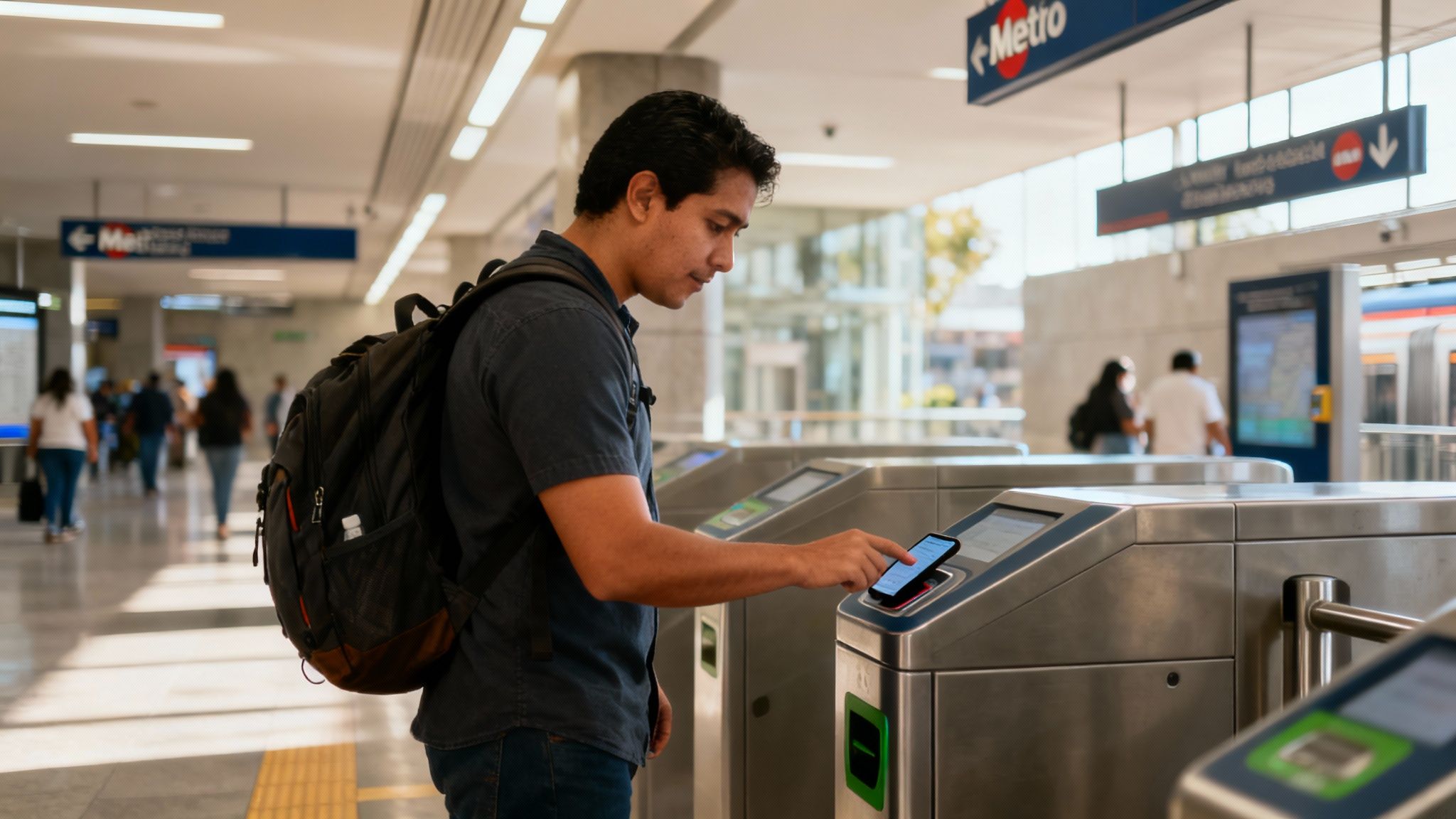
Once you've sorted out the apartment and visa, the real adventure begins. This is where you move past the logistics and start to actually live in Mexico City—settling into the rhythm of the place, figuring out how to get around, and understanding the local culture. It's about building that quiet confidence to navigate the city like you belong here, not just like you're passing through.
The first thing to get a handle on is the city's pulse, which is its transportation network. At first glance, CDMX feels overwhelmingly massive, but its public transit is a surprisingly well-oiled machine. The Metro (subway) and the Metrobús (a bus system with its own dedicated lanes) are the absolute lifelines for getting around without breaking the bank.
Your golden ticket is the rechargeable Movilidad Integrada card. It works for both systems, making transfers and trips seamless. For just a handful of pesos per ride, you can traverse this enormous city. A word to the wise: avoid rush hour if you can. The trains and buses get packed to the gills, so always keep a close watch on your wallet and phone.
Smart Transportation and Personal Safety
While public transport is fantastic for daily commutes, ride-sharing apps like Uber and Didi are indispensable. They're perfect for those late nights, direct trips across town, or when you're hauling luggage. The pricing is upfront and they are generally much safer and more reliable than hailing a random taxi on the street.
A critical safety habit to get into: always, always double-check the license plate and driver's name on the app before you even open the car door. Use the "share my trip" feature to send your live location to a friend—it's a simple click that adds a huge layer of security.
Now, let's talk about safety in CDMX. It's a topic that requires nuance. The key is awareness, not fear. Just like any global metropolis, some neighborhoods demand more caution than others, particularly after dark. Stick to streets that are well-lit and busy, and try not to flash expensive jewelry or wads of cash.
Pickpocketing can be a nuisance in crowded spots like markets, festivals, or on a packed Metro car. The best defense is to blend in. Be mindful of your surroundings without looking like a nervous tourist. Honestly, most expats find that with a bit of basic city sense, they feel perfectly safe going about their day.
Understanding Cultural Norms
Truly embracing daily life here means getting in sync with local etiquette. Tipping, known as propina, is a huge part of the service culture. In restaurants, a 10-15% tip for good service is the standard and very much expected. For smaller gestures—the person who bags your groceries at the supermarket or the valet who brings your car—a few pesos is a nice way to show your appreciation.
And finally, a little bit of Spanish goes an incredibly long way. You don't need to be fluent overnight, but simple things like a cheerful "Buenos días" in the morning or a sincere "Gracias" can completely change the tone of your daily interactions. It shows respect and a genuine desire to connect with your new home, and people really appreciate the effort.
A Few More Things You're Probably Wondering About CDMX
Even after you've sorted out the big stuff, there are always those little, nagging questions that pop into your head when planning a move. Let's tackle some of the most common ones I hear from people getting ready to live in Mexico City. These are the final pieces of the puzzle that will help you move with total confidence.
Can I Drink the Tap Water in Mexico City?
I'll make this easy: no. It's a hard and fast rule that every single local and expat follows.
While the city's water treatment plants do their job, the water travels through a very old, complex network of pipes to get to your apartment. By the time it comes out of your faucet, it's just not safe to drink. Ignoring this isn't a rookie mistake you want to make; it's a surefire way to get sick.
So, how does a city of millions stay hydrated? You'll quickly get to know the garrafón system. These are the big, 20-liter jugs of purified water you'll see everywhere. You can grab one from any corner store, or do what most people do: set up a delivery service that drops off fresh ones at your door and hauls the empties away. For cooking, you'll want to either boil tap water first or just use water from your garrafón.
Getting into the garrafón rhythm is one of the first true "I live in Mexico City now" habits you'll pick up. It seems odd at first, but it quickly becomes a simple, normal part of your weekly routine.
How Much Spanish Do I Really Need to Know?
You can definitely survive in the main expat-heavy neighborhoods like Condesa, Roma, and Polanco with just English. But "surviving" and "thriving" are two very different things. Your quality of life will improve tenfold if you learn at least some basic Spanish.
You don't need to be fluent overnight, but making a genuine effort unlocks the city in ways you can't imagine.
Just a few key phrases will help you:
- Handle daily life: Chatting with the guy at the local tiendita, your building's security guard, or an Uber driver becomes a breeze instead of a chore.
- Show a little respect: Locals really appreciate it when you try. It's a small gesture that leads to warmer, friendlier interactions every time.
- Actually explore: It gives you the confidence to wander beyond the usual bubbles and discover the incredible, authentic side of the city that many foreigners miss.
What's the Job Market Like for Foreigners?
This is a tricky one. Finding a local job as a foreigner can be a challenge, but it's not impossible. The biggest hurdle is that a Mexican company has to sponsor your work visa, and to do that, they have to prove that no Mexican citizen was qualified to do the job. This usually means you need a highly specialized skill set or a lot of experience in an in-demand field.
Your best bets are often in the tech, finance, or large multinational corporate sectors, which are more accustomed to hiring international talent. But honestly, the remote work boom has completely changed the game. The vast majority of expats and digital nomads I know live in Mexico City while working for companies back in the U.S., Canada, or Europe. It's a path that lets you enjoy the city without navigating the complexities of the local job market.
Figuring out the ins and outs of a new country is so much easier when you have the right people in your corner. When it comes to something as vital as your health, you don't want to leave anything to chance. Expat Insurance is an expert at finding the perfect international health insurance plan for your life in Mexico City, making sure you have access to excellent private healthcare without the headache. You can find your ideal coverage at https://www.expatinsurance.com.
