

February 13, 2026
•
5 min read
Migrating to Mexico From the USA: A Practical How-To Guide
Planning on migrating to Mexico from the USA? This guide breaks down visas, healthcare, banking, and logistics into clear, actionable steps for your move.
Justin Barsketis
Insurance Expert
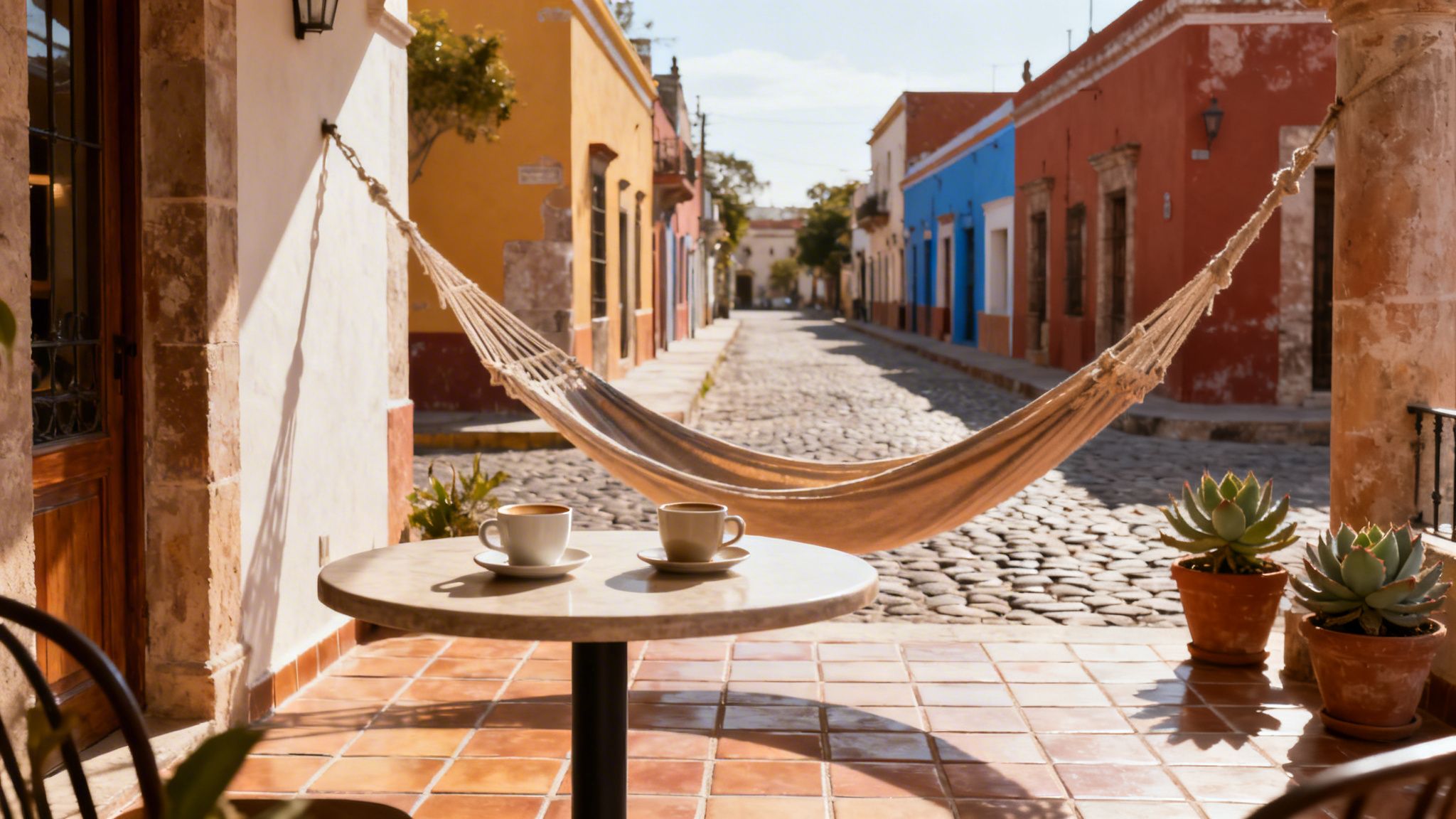
Tired of the daily grind? Fantasizing about trading rush hour traffic for leisurely afternoons soaking in a vibrant new culture? You're definitely not the only one. More and more Americans are migrating to Mexico from the USA, lured by a dramatically lower cost of living, fantastic weather, and a much more relaxed pace of life. If you're ready to stop dreaming and start planning, this guide is for you.
Your First Look at Life South of the Border
The idea of moving to Mexico usually brings to mind postcard images of sunny beaches and colonial plazas, but the real pull goes much deeper. For many people, it's a genuinely practical move toward a better quality of life.
The biggest driver is almost always financial. Your day-to-day expenses, from rent and utilities to groceries, can be 50-70% lower than back in the States. That kind of savings makes retirement funds and personal savings stretch a whole lot further.
This trend is a fascinating reversal of historical migration patterns. For generations, the flow was almost entirely from Mexico to the US. Now, a growing number of U.S. citizens are flipping that script. As the Migration Policy Institute has noted, while the Mexican-born population in the US has ebbed and flowed, the number of Americans choosing to live in Mexico has steadily climbed to over a million people. You can dig into the data yourself and explore more about North American migration trends on migrationpolicy.org.
Before we dive into the nuts and bolts, here's a quick snapshot of what you need to start thinking about.
Mexico Migration Snapshot: Key Considerations
| Factor | Key Information | What You Need to Know |
|---|---|---|
| Visa & Residency | Multiple options: Tourist visa, Temporary, Permanent | You must start the residency process at a Mexican consulate in the U.S. before you move. |
| Cost of Living | 50-70% lower than in major U.S. cities | This is the biggest draw. Your dollar goes much further for housing, food, and services. |
| Healthcare | High-quality public (IMSS) & private systems available | Most expats opt for private care and supplement with international or expat-specific insurance. |
| Housing | Diverse options from modern condos to traditional homes | Established expat communities often have robust real estate markets and rental opportunities. |
| Banking & Taxes | U.S. citizens still have U.S. tax obligations | Opening a local bank account is key. You'll need to understand the Foreign Earned Income Exclusion. |
| Culture & Language | Spanish is the official language, but English is common in expat areas | Learning basic Spanish will dramatically improve your experience and open up new friendships. |
This table gives you a bird's-eye view, but the details of your new life south of the border are what really matter.
Beyond the Financial Benefits
While saving money is a huge plus, the lifestyle is what truly hooks people. Expats I talk to constantly rave about a less stressful, more community-focused way of living. This isn't just about taking more siestas; it's about rediscovering simple pleasures and embracing a culture that puts a high value on family, friends, and social time.
Here are a few of the biggest lifestyle upgrades people find:
- Affordable Healthcare: Mexico has an excellent private healthcare system that costs a fraction of what you'd pay in the U.S. Quality care is surprisingly accessible.
- Welcoming Communities: Places like San Miguel de Allende, Lake Chapala, and Mérida are well-known expat hubs with built-in social networks and support systems from day one.
- Cultural Richness: Life in Mexico is a daily immersion in incredible history, art, music, and of course, world-famous food. There's always something new to explore.
The decision to move isn't just about changing your address; it's about redesigning your daily life. It's a chance to trade a high-pressure environment for one that values time, community, and well-being.
Setting Realistic Expectations
Of course, migrating to Mexico from the USA isn't something you do on a whim. It's a major life change that demands serious planning. This guide is built to walk you through every critical step, from the first piece of paperwork to finally settling into your new home. The goal is to give you a clear-eyed view of the entire journey so you can make your move with confidence.
You're not just packing boxes. You'll need to get a handle on visa requirements, figure out the healthcare system, manage your finances across borders, and deal with the logistics of an international move. We've broken it all down into small, manageable steps below.
Mexican Visas and Residency: What You Need to Know
Getting your legal status sorted out is the first, and most critical, hurdle when you decide to move to Mexico from the US. It can seem like a mountain of paperwork, but the process is surprisingly logical once you break it down.
The most important thing to understand from the get-go is this: you must begin your residency application at a Mexican consulate in the United States. You can't just show up in Mexico on a tourist permit and decide to stay long-term.
The standard tourist entry allows you to stay for up to 180 days. (Note: Mexico has been transitioning from the paper-based FMM form to a digital immigration system, so the process at the border may look a little different than it used to, but the 180-day allowance remains the same.) A tourist permit is perfect for a vacation, but it doesn't give you the right to live here, get a job, or truly set up a home. For a real move, you're looking at two main pathways to legal residency.
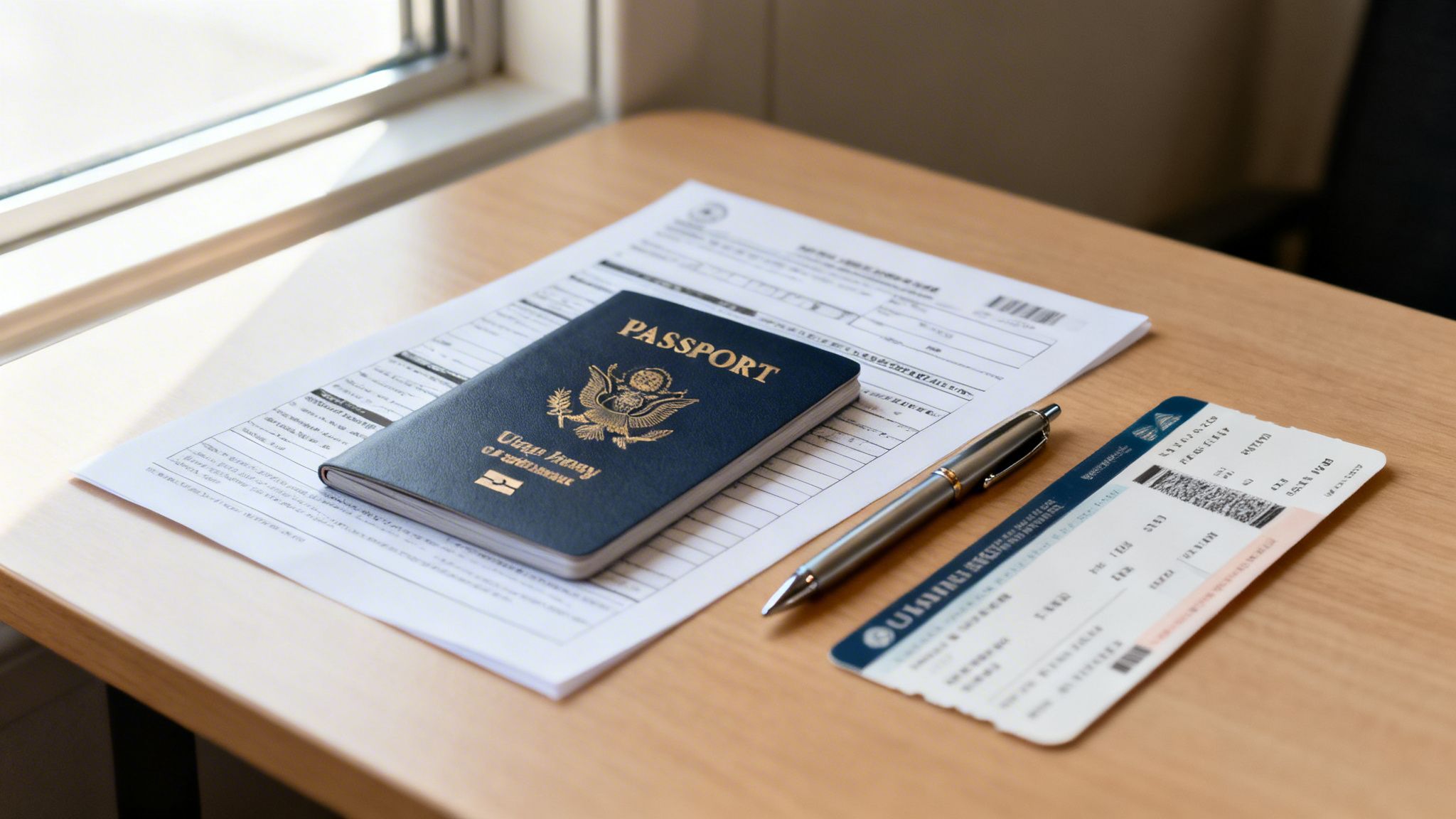
For most U.S. citizens, the long-term options boil down to the Temporary Resident Visa (Residente Temporal) and the Permanent Resident Visa (Residente Permanente). Your eligibility for either one hinges almost entirely on proving you can support yourself financially without needing to find a job in Mexico.
Understanding the Temporary Resident Visa
The Residente Temporal is the most common starting point for new expats. Think of it as the standard entry-level residency. It's usually granted for one year to start, and you can then renew it for up to three more years. After four continuous years as a temporary resident, you can apply to become a permanent one.
To qualify, you'll have to meet specific financial requirements. These numbers are updated periodically based on Mexico's economic indicators, so always confirm the current thresholds with your nearest Mexican consulate. As a general baseline:
- Monthly Income: Show a steady income of around $3,200 to $4,500 USD each month for the last six months. This could be from a pension, Social Security, or a remote job.
- Savings/Investments: Alternatively, you can show a bank or investment account with a balance of roughly $54,000 to $74,000 USD that you've maintained for the past twelve months.
This visa is perfect for retirees, digital nomads working for U.S. companies, or anyone who wants a long-term base in Mexico without immediately committing to permanent status.
Aiming for the Permanent Resident Visa
If you're dead-set on making Mexico your forever home and you meet the higher financial bar, the Residente Permanente is the way to go. This visa is a one-and-done deal - it doesn't expire and never needs to be renewed, which offers incredible peace of mind.
As you'd expect, the financial requirements are quite a bit steeper:
- Monthly Income: You'll need to prove a consistent monthly income of about $5,400 to $7,400 USD.
- Savings/Investments: The other option is showing a savings or investment balance of around $215,000 to $295,000 USD.
Choosing this path means you get to skip the annual renewal appointments and paperwork that temporary residents deal with, simplifying your life in Mexico from day one.
The Application Process Step by Step
No matter which visa you're aiming for, the initial journey is the same. It's a two-part process that starts in the U.S. and finishes after you've landed in Mexico.
- Schedule a Consulate Appointment: Your first move is booking an interview at the Mexican consulate nearest to your home. These appointments can be snatched up months in advance, so don't wait until the last minute.
- Gather Your Documents: You'll need a stack of paperwork, which always includes your passport, visa application form, passport-sized photos, and, most importantly, your proof of financial solvency (bank statements, investment portfolio statements, pension letters, etc.).
- The Consulate Interview: At your appointment, a consular officer will go over your documents, ask some basic questions about your plans, and hopefully approve your application. If everything checks out, they'll place a large visa sticker in your passport.
This sticker in your passport is not your residency card. It's a temporary authorization that allows you to enter Mexico for the sole purpose of finalizing your residency. You have 180 days from the issue date to use it.
Finalizing Your Residency in Mexico
Once you arrive in Mexico with that visa in your passport, a new clock starts. You have just 30 days to start the final step, known as canje (which means "exchange"), at a local National Immigration Institute (INM) office. This is where you'll trade that visa sticker for your official residency card.
This last leg involves a bit more paperwork, getting your fingerprints and photo taken, but it's the final hurdle. After your canje is complete, you'll be handed your Residente Temporal or Residente Permanente card, and you are officially a legal resident of Mexico.
Understanding this two-part structure - consulate approval in the U.S., then INM processing in Mexico - is the key to a stress-free move. If you want to take a deeper dive into the legal details, we cover the full legal framework in our detailed article on Mexico's immigration policy. You can also read our step-by-step guide on how to get Mexican residency.
Protecting Your Health and Well-Being in Mexico
Let's talk about one of the most important parts of your move: healthcare. The good news is that Mexico has a fantastic, two-tiered system that offers excellent medical care, often for a tiny fraction of what you'd pay back in the States. Getting a handle on your options is the key to making sure you're covered no matter what life throws at you.

The system is split into two tracks: the public system, run by the Instituto Mexicano del Seguro Social (IMSS), and a booming private network of hospitals, clinics, and specialists. Each has its own pros and cons, and they really cater to different needs.
Mexico Public Healthcare: The IMSS System
Once you're a legal resident, you can sign up for the IMSS program. It's shockingly affordable - we're talking annual premiums that often run just a few hundred U.S. dollars. That low price gets you coverage for doctor visits, surgeries, hospital stays, and prescriptions.
But there's a flip side. Wait times for specialist appointments and procedures can be long, the facilities are often crowded, and finding English-speaking staff is far from guaranteed. On top of that, IMSS has some pretty strict rules about pre-existing conditions, which can be a deal-breaker for many retirees.
The Private Healthcare Alternative
This is the route most American expats take, and for good reason. Mexico's private healthcare system is top-notch, with modern hospitals, cutting-edge technology, and access to English-speaking doctors who were often trained in the U.S. You can usually get a same-day appointment with a specialist, and the personalized care is incredible.
While it's way cheaper than U.S. healthcare, paying for private care entirely out-of-pocket can get expensive fast, especially in an emergency. A major surgery or an unexpected hospital stay could easily set you back tens of thousands of dollars. This is exactly why a solid insurance plan isn't a "nice-to-have" - it's a non-negotiable safety net.
For the vast majority of expats, relying solely on the public system or paying out-of-pocket for private care is a risky strategy. The ideal solution lies in securing a comprehensive international health insurance plan that gives you access to the best private facilities without financial strain.
Why International Health Insurance is Essential
International health insurance, which you'll often hear called "expat insurance," is built from the ground up for people living outside their home country. These plans are the perfect bridge, giving you peace of mind and access to the best private doctors and hospitals in Mexico - and often around the world.
Think about these real-world scenarios where this coverage becomes critical:
- A retiree with a managed pre-existing condition. An international plan can be designed to cover ongoing care, which IMSS might flat-out refuse.
- A family wanting quick access to an English-speaking pediatrician. Private insurance means you see the doctor you want, right when you need to, without a language barrier.
- A digital nomad who needs emergency evacuation coverage. Many plans include the option to be flown back to the U.S. for critical care if the situation calls for it.
It's estimated that over 1.6 million U.S. citizens are now living in Mexico, pulled in by living costs that are, on average, 50-70% lower than in the U.S. Healthcare, in particular, can be 40-50% cheaper. But the health risks can be different, too - certain diseases like hepatitis A are significantly more common than in the U.S., which really underscores the need for solid medical coverage.
This is where a service like Expat Insurance is invaluable. We can help you get quotes from over 65 different insurers to find a plan that covers the gaps in the IMSS system or gives you full access to private hospitals.
Deciding on the right healthcare coverage can feel overwhelming, but it's hands-down one of the most important decisions you'll make for your new life in Mexico. To help you weigh your options, here's a quick comparison.
Comparing Healthcare Options for Expats in Mexico
This table breaks down the public, private, and international insurance options to help you choose the right coverage for your situation.
| Healthcare Option | Best For | Typical Cost | Key Considerations |
|---|---|---|---|
| Public (IMSS) | Healthy, budget-conscious residents fluent in Spanish who don't mind longer wait times. | $ (Low annual premiums) | - Excludes many pre-existing conditions - Long waits for specialists - Crowded facilities, rare to find English-speaking staff |
| Private (Pay-as-you-go) | Minor, non-emergency care like check-ups or dental work. Not recommended for major medical needs. | $$$ (Can be very high for emergencies) | - High-quality, immediate care - No financial protection for major illness or accidents - Can become extremely expensive quickly |
| International Insurance | Most U.S. expats, especially those with pre-existing conditions or families. | $$ (Varies based on coverage) | - Access to the best private hospitals - Coverage for pre-existing conditions - Plans can include U.S. coverage & medical evacuation |
Ultimately, having a dedicated international insurance plan gives you the freedom to choose the best care available without worrying about the cost.
Choosing the Right Expat Insurance Plan
Trying to sort through international insurance plans on your own can be confusing. The smartest move is to work with a specialized broker who lives and breathes the needs of expats moving from the USA to Mexico. A good broker will help you compare plans apples-to-apples to find the perfect fit.
They'll ask the right questions to dial in your coverage:
- Where do you need coverage? Just in Mexico, or do you need a plan that covers trips back to the U.S.?
- What's your budget? They can help you find the sweet spot between monthly premiums and deductibles.
- Do you have pre-existing conditions? An experienced broker knows exactly which insurers are best for specific health histories.
- What level of care do you want? From basic inpatient coverage to comprehensive plans with dental, vision, and wellness, you can customize it completely.
Making the right choice for your health is the foundation of a happy life in Mexico. Taking the time now to understand the system and lock in a great insurance plan will let you relax and enjoy your new adventure with total confidence.
For a more detailed breakdown, check out our guide on public vs. private health insurance in Mexico. You may also want to read our article on expat health insurance in Mexico for a closer look at your plan options.
Managing Your Finances: Taxes and Banking
A smooth financial transition is the bedrock of a stress-free move to Mexico. Honestly, getting your banking and tax situation sorted out early prevents some major headaches down the road and lets you focus on the important stuff - like enjoying your new life. This is the practical advice every expat wishes they had from day one.
The first thing on your list should be opening a Mexican bank account. Sure, you can survive for a while using your U.S. accounts and credit cards, but you'll quickly find that local banking is essential for paying bills, setting up utilities, and - most importantly - avoiding those relentless international transaction fees. It just makes daily life infinitely simpler. For a broader overview, check out our guide on banking in Mexico.
To open an account, you will need to be physically present at the bank branch. There's no getting around this one.
What You Need to Open a Bank Account
While the specific requirements can vary a little between major banks like BBVA, Banorte, or Santander, they all ask for a standard set of documents. Having these ready to go will make the whole process much smoother.
- Your Residency Card: This is non-negotiable. You can't open a real bank account with just a tourist permit. You must have either your Residente Temporal or Residente Permanente card in hand.
- Proof of Address: A recent utility bill (comprobante de domicilio) is the standard here. Think of your electricity (CFE) or water bill. If you're renting and the bills are in your landlord's name, you might need them to provide a letter for you.
- RFC Number: Your Registro Federal de Contribuyentes is Mexico's tax ID number. It's become a standard requirement for opening new accounts at most banks.
- Passport: Always bring your valid U.S. passport. It's your primary form of identification.
Pro Tip: Don't expect this process to be as quick as it is back in the U.S. Set aside a few hours for your bank visit, bring all your original documents plus a set of copies, and be patient. A little politeness and a smile really do go a long way.
Moving Money Between Countries
Once your Mexican account is up and running, you'll need an efficient way to get money into it from your U.S. bank. Direct wire transfers from American banks can be surprisingly expensive, hitting you with high fees and less-than-great exchange rates.
Luckily, there are much better options.
Services like Wise (what used to be TransferWise) or Remitly are incredibly popular among expats for a reason. They offer competitive exchange rates and transparent, low fees, making them way more cost-effective for regular transfers. Many of us set up recurring transfers to move our monthly budget over automatically.
Your Cross-Border Tax Obligations
Taxes. This is often the most intimidating financial topic for Americans moving abroad. The single most important thing to remember is this: U.S. citizens are taxed on their worldwide income, regardless of where they live. Your move to Mexico does not get you out of filing with the IRS every year.
At the same time, if you become a tax resident in Mexico - which typically happens after spending more than 183 days a year there - you'll also have obligations to the Mexican government, known as the SAT (Servicio de Administración Tributaria). This dual-filing requirement can feel complicated, but there are systems in place to prevent you from being taxed twice on the same income.
The Foreign Earned Income Exclusion (FEIE) can be a huge help, allowing you to exclude a significant chunk of your foreign-earned income from U.S. taxes. (The exclusion amount is adjusted upward for inflation each year, so check the current IRS guidelines for the latest figure.) The catch? It only applies to earned income, not passive income like pensions, Social Security, or investment returns.
Because of all the nuances involved, working with a tax professional who truly understands both U.S. and Mexican tax law isn't just a good idea - it's essential. Look for a CPA or tax advisor who specializes in cross-border situations for U.S. expats. For a deeper dive into this critical topic, check out our expat tax guide for U.S. citizens in Mexico. Getting expert advice from the start ensures you stay compliant and take advantage of all the credits and deductions you're entitled to.
Handling the Logistics of Your Move
Alright, with your residency and finances lined up, the abstract parts of your move are sorted. Now for the real fun: getting yourself, your stuff, and maybe even your pets from the United States to your new home in Mexico. This is where the daydream of living in Mexico bumps up against the reality of cardboard boxes, customs forms, and figuring out where you're going to sleep.

The first big question is where you'll land. For most newcomers, renting is the smartest play right out of the gate. It gives you the wiggle room to really get to know a neighborhood - or an entire city - before taking the much more permanent step of buying a home. If you're not sure where to start, take a look at our roundup of the best places to live in Mexico.
Many expats end up planting deep roots and eventually buying property after they've lived in Mexico for a couple of years. This is especially true for retirees who love being close to world-class, affordable healthcare. This is where having solid Expat Insurance becomes non-negotiable, offering global medical plans that can cover evacuations to U.S. hospitals if needed, not to mention Mexico-specific auto and home insurance. For a closer look at what daily expenses actually look like, read our article on the cost of living in Mexico.
Deciding What to Bring
Once you've got a loose housing plan, you have to decide what to fill it with. This choice will have a massive impact on your budget and your moving timeline. You've really got two main paths: ship your household goods or start over from scratch.
Bringing everything you own means hiring an international moving company. Be prepared - this is a complex ordeal involving itemized inventories, customs brokers, and potentially steep costs. It's really only the right call if you have heirloom furniture or sentimental things you just can't imagine leaving behind. Make sure you get tracking information from your moving company so you have visibility into where your belongings are at every step.
Pro Tip: When you're getting quotes from international movers, get super specific. Ask them point-blank if the price includes customs duties (the menaje de casa), port fees, and final delivery to your actual doorstep. Those hidden costs can sneak up on you fast.
On the other hand, a lot of expats decide to sell most of their big stuff in the U.S. and just travel light. This approach simplifies the move immensely. You can furnish your new place affordably at local department stores like Liverpool or Coppel, or discover one-of-a-kind pieces at the local mercados and artisan shops.
Moving with Your Furry Family Members
For so many of us, it isn't home without our pets. The good news is that bringing your dog or cat to Mexico is a relatively painless process, as long as you play by the rules set by the Mexican agricultural agency, SENASICA.
You'll need to coordinate with your vet in the U.S. to get all the right paperwork in order just before you travel. Here's a quick rundown of what you'll likely need to show at the border crossing or airport:
- An Official Health Certificate: This has to be issued by an accredited vet within 15 days of your entry into Mexico. It needs to confirm your pet is healthy and parasite-free.
- Proof of Vaccinations: You'll need up-to-date records for rabies and distemper shots.
- Parasite Treatment: The certificate must also show that your pet recently received treatment for both internal and external parasites.
When you arrive, a SENASICA official will give your pet a quick, gentle inspection. They'll glance over your paperwork and check on your furry friend. As long as everything is in order, the whole thing is usually quick and low-stress for both of you. It's just one small bureaucratic hurdle to clear for their safe and happy arrival in their new home. For more details on traveling with animals, check out our guide on flying internationally with your dog.
Your Top Questions About Moving to Mexico, Answered
Even after you've mapped out the big picture, a move like this always comes with those nagging little questions. To wrap things up, I want to tackle the most common queries I hear from Americans getting ready to head south. Getting these details ironed out can make all the difference in feeling truly prepared for what's ahead.
How Much Money Do I Realistically Need to Move to Mexico?
This is the big one, and the honest answer is: it depends entirely on your visa and your lifestyle.
First, you have to qualify financially. For a Temporary Resident visa, the Mexican government wants to see a steady monthly income of around $3,200 USD or a savings account with about $54,000 USD. If you're aiming for Permanent Residency right off the bat, the bar is higher - think closer to a $5,400 USD monthly income or a nest egg of $215,000 USD. (Remember, these thresholds are updated periodically, so always confirm with your consulate.)
That's just to get your foot in the door. Your actual day-to-day budget is a whole other conversation. Many expats find they can live quite comfortably on $1,500-$2,500 a month. Of course, that number can creep up if you're living in a high-demand beach town or a trendy neighborhood in Mexico City.
Then there are the one-time moving costs. It's smart to have a separate fund of $5,000-$10,000 tucked away for the initial hit. This will cover things like:
- Visa applications and lawyer fees
- Your flights down
- First month's rent and a security deposit on your new place
- Shipping your belongings, if you choose to
Can I Work in Mexico as a US Citizen?
Yes, but you can't just show up and start applying for jobs. Your standard resident visa doesn't automatically come with the right to work for a Mexican company.
If your plan is to get hired by a local business, that employer has to sponsor a specific work permit for you. It's a whole separate process that ties your residency status directly to that job.
The far more common route for Americans is remote work. Thousands of expats continue working for their U.S. companies online, earning their paychecks from a U.S. source. This is generally fine under a Temporary Resident visa, but don't take the tax side of it lightly. It's absolutely crucial to talk to an immigration lawyer and a cross-border tax specialist to make sure you're playing by the rules in both countries. For more on this topic, check out our article on working remotely from another country.
Key takeaway: Earning money from a Mexican company requires a work permit. Earning money from a U.S. company while living in Mexico is a different ballgame, but one with its own set of important tax rules.
Is Mexico Safe for Americans?
Just like in the United States, safety in Mexico is all about location, location, location. The scary headlines you see on the news rarely paint an accurate picture of life on the ground in the places where expats actually settle. For peace of mind, always check the current U.S. State Department travel advisories for specific regions before you go.
Established expat havens like Lake Chapala, San Miguel de Allende, Mérida, and Puerto Vallarta are home to huge American communities and are widely considered very safe. For a deeper look, read our full guide on safety in Mexico for expats.
Staying safe really just comes down to common sense, the same kind you'd use anywhere else.
- Pay attention to your surroundings.
- Don't flash expensive watches or wads of cash.
- Make sure your home has good locks.
- Get to know your neighbors and learn the local rhythm of life.
Honestly, one of the best things you can do is join a few Facebook or online forums for the city you're considering. You'll get real-time advice from people already living there, which is infinitely more valuable than a generalized news report.
Do I Have to Speak Spanish to Live in Mexico?
In some of the bigger expat-heavy areas, you can definitely get by with English. In towns like Ajijic or parts of San Miguel de Allende, you'll find plenty of English-speaking doctors, real estate agents, and shopkeepers.
But let's be real: to truly feel at home and handle your life without constant stress, learning Spanish is non-negotiable. Everything from a trip to the local market to an appointment at the immigration office becomes so much easier when you can communicate.
More than that, speaking the language is your ticket to a richer experience. It's how you build genuine friendships with your Mexican neighbors and truly understand the culture. It shows respect, and it opens up a world beyond the "expat bubble." Luckily, Mexico is full of affordable and excellent language schools, so you can dive in the moment you arrive.
Starting your new life abroad is an adventure, and having the right support system is crucial. For your health and peace of mind, Expat Insurance offers specialized guidance to help you find the perfect international health insurance plan. Compare options from over 65 insurers to get the coverage you need for your new life in Mexico. Get your free quote today at https://www.expatinsurance.com.
Justin Barsketis
Insurance Expert & Writer
Justin is an insurance guru that loves digital marketing. As our founder Justin manages our business development programs and MGA network. Please don’t hesitate to contact him if you are not getting the attention you deserve.
