

February 2, 2026
•
5 min read
A Practical Guide to Sustainable Expatriation
Learn how to live abroad responsibly with practical tips on eco-friendly habits, genuine community integration, and supporting the local economy as an expat.
Justin Barsketis
Insurance Expert
So, what does it mean to be a "sustainable expat"?
It's a shift in mindset, really. It's about moving past the idea of being a temporary visitor and instead becoming a thoughtful, responsible member of your new community. This means balancing the personal adventure of living abroad with making a positive environmental, social, and economic impact on your chosen home. It's about leaving behind a tourist mentality for one of active, conscious participation.
What Sustainable Expatriation Really Means

Here's what it really boils down to. Sustainable expatriation asks one simple question: How can you live abroad in a way that enriches both your own life and the community you're joining? This is a big departure from the old-school expat model, which often meant building isolated bubbles that were just little pockets of home. This newer approach is all about forging a deeper, more responsible connection to your new surroundings.
Think of it this way: are you a hotel guest or a community gardener? A guest uses the facilities and then leaves, maybe without making much of an impression. A gardener, on the other hand, actively nurtures the soil, plants seeds that benefit everyone, and becomes part of the local ecosystem. This simple shift in perspective changes your role from a passive consumer to an active contributor.
The Growing Need for a Conscious Approach
Living abroad isn't some niche lifestyle anymore. According to UN International Migrant Stock data, the global expat population has ballooned to roughly 300-304 million as of mid-2024, making up about 3.7% of the world's population. That's a massive jump from just 84 million back in 1970, and it signals a major global shift toward people building long-term lives in other countries.
This explosion in global mobility makes a sustainable approach more crucial than ever. When millions of people are on the move, their collective impact, for better or worse, is immense. This guide is your practical roadmap for making sure that impact is a positive one.
Sustainable expatriation isn't about sacrificing the adventure of living abroad. It's about making it better by building real connections and leaving a place better than you found it. It's the difference between just seeing a country and truly becoming part of its story.
Who Is This Guide For?
It doesn't matter if you're a digital nomad plotting your next move, a family getting ready for a corporate assignment, or a retiree starting a new chapter. These principles apply to everyone. We're going to dig into how you can build a life abroad that's fulfilling, rewarding, and globally conscious by focusing on three core pillars:
- Environmental Responsibility: How to minimize your carbon footprint and support local ecosystems.
- Social Integration: Ways to respect cultural norms and build authentic ties within your community.
- Economic Contribution: How to support local businesses and contribute fairly to the local economy.
This framework is designed to help you move beyond just existing in a new country and start truly thriving in it.
Understanding the Three Pillars of Sustainability

If we're going to talk about sustainable expatriation, we need a framework that goes beyond just recycling or buying a carbon offset for your flight. Real, meaningful sustainability stands on three interconnected pillars: Environmental, Social, and Economic. If you neglect one, the whole structure gets wobbly.
Think of it like a three-legged stool. If one leg is shorter or weaker than the others, the stool is useless. It's the same with living abroad; you need a healthy environment, genuine community connections, and a fair economic footprint to create a balanced, positive presence long-term.
Getting this balance right is what shifts you from being a temporary visitor to a truly integrated member of the community. It's how you ensure your adventure abroad leaves a legacy of mutual respect and shared prosperity, not just a collection of passport stamps.
The Environmental Pillar
When most people hear "sustainability," their minds jump straight to the environment, and with good reason. Your move and your lifestyle abroad have a very real impact on the local and global ecosystem. This pillar is all about treading lightly and making choices that protect natural resources for everyone.
It all boils down to conscious consumption. This means getting curious about where your stuff comes from, how it's made, and where it goes when you're done with it. The goal is to ditch the old "take-make-dispose" habit and embrace a circular approach where things are reused and waste is kept to a minimum.
Here are a few practical ways to put the environmental pillar into action:
- Low-Impact Housing: Look for homes with good insulation, energy-efficient appliances, or even access to renewable energy. Living in a neighborhood where you can walk or take public transit makes a massive difference by reducing your dependence on a car.
- Mindful Consumption: Hit up local farmers' markets for seasonal food. It drastically cuts down on "food miles." And please, avoid single-use plastics. Carry your own reusable bags, water bottle, and coffee cup.
- Waste Reduction: Get to know the local recycling and composting rules. Before you buy something new, check out secondhand shops or community exchange groups for furniture and other household goods.
These aren't huge, dramatic gestures. They're small, daily habits that, when added up, massively reduce your environmental strain and help preserve the natural beauty of your new home.
The Social Pillar
This one is arguably the most personal and rewarding piece of the puzzle. The social pillar is about building real, human connections and becoming a respectful, contributing member of your new community. It's about moving beyond surface-level chatter and truly immersing yourself in the local culture.
That means putting in the time and effort to understand the local history, values, and social norms. It's about listening more than you speak. Social sustainability is built on a foundation of humility and a genuine curiosity to connect with people on their own terms.
True integration isn't about changing who you are; it's about expanding your perspective to respectfully participate in the culture of your new home. It's the active choice to be a neighbor, not just a resident.
To build strong social roots, you can focus on a few key areas:
- Language and Culture: Make a real effort to learn the local language, even if it's just the basics. It's a huge sign of respect and unlocks conversations and connections that would otherwise be impossible.
- Community Engagement: Volunteer for a local cause, join a club, or just show up to community events. Getting involved in local life helps you build relationships and understand what really matters to your neighbors.
- Respectful Interaction: Learn the local customs, from how people greet each other to table manners. Being aware of these little things helps you avoid accidentally causing offense and builds rapport much faster.
When you prioritize social integration, you're not just having a more authentic experience for yourself. You're actively strengthening the social fabric of the community.
The Economic Pillar
Finally, we have the economic pillar. This is all about how your money impacts the local economy. A sustainable expat ensures their spending supports local prosperity and contributes to fair, equitable systems. It's about being a positive economic force, not an extractive one.
Simply put, it means deliberately sending your dollars toward local businesses, artisans, and service providers instead of faceless multinational chains. Every euro, peso, or baht you spend is a vote for the kind of economy you want to support.
Here are the key actions for economic sustainability:
- Shop Local: Get your groceries from the neighborhood market, grab your coffee from the independent café on the corner, and buy souvenirs directly from the people who made them. This keeps money circulating where it matters most, in the community.
- Hire Fairly: If you hire any local help, a cleaner, a tutor, a gardener, make sure you're paying a fair, living wage and following all local labor laws.
- Pay Your Dues: Understand and comply with your tax obligations in your host country. Your taxes fund the essential public services like roads, schools, and healthcare that everyone, including you, relies on.
By making these deliberate economic choices, you help build a more resilient local economy and ensure your financial presence is a benefit, not a burden.
To make this all a bit clearer, here's a quick summary of how these three pillars work together.
The Three Pillars of Sustainable Expatriation at a Glance
| Pillar | Core Principle | Practical Actions |
|---|---|---|
| Environmental | Minimize your ecological footprint and protect natural resources. | Choose eco-friendly housing, reduce waste, and consume mindfully by supporting local and seasonal producers. |
| Social | Build genuine connections and contribute positively to the community. | Learn the local language, volunteer, participate in community events, and respect cultural customs. |
| Economic | Support the local economy and ensure your financial activity is fair and beneficial. | Shop at local businesses, hire local services at fair wages, and comply with all tax obligations. |
Taken together, these three pillars provide a powerful and comprehensive framework for living a more fulfilling, responsible, and impactful life abroad.
Designing Your Sustainable Relocation Plan

A responsible move abroad starts way before you even think about packing a box. A truly sustainable expat journey is built on thoughtful planning, which can transform the often-chaotic process of moving into a series of conscious, positive choices. Think of this as your blueprint for a move that aligns with your values from day one.
Consider your relocation not as a single, stressful event, but as the first big step in your new, sustainable life. Every decision, from what you pack to how you get there, sets the tone. By planning ahead, you can slash your waste, lower your carbon footprint, and start making a positive impact before you even land.
Declutter With Purpose, Not Haste
The first step for anyone moving is deciding what to bring. Instead of just defaulting to massive shipping containers, take this as a chance to embrace some intentional minimalism. Shipping your entire life across the world carries a heavy environmental price tag, not to mention a financial one.
Here's a simple rule to live by: pack for the life you want, not the one you're leaving. This forces you to really think about your possessions.
- Keep: Only what's absolutely essential, irreplaceable, or would be a nightmare to find in your new country.
- Sell: Use online marketplaces or local consignment shops to find new homes for good-quality furniture, electronics, and clothes.
- Donate: Give gently used items to local charities and community centers where they can directly help someone else.
- Recycle: Properly get rid of old electronics, batteries, and anything else that can't be donated.
This kind of purposeful decluttering doesn't just lighten your physical load. It keeps perfectly good items out of a landfill, making it a powerful first move in your sustainable relocation.
Choosing Your Moving and Travel Partners
Once you've streamlined your belongings, it's time to figure out how to get them, and yourself, to your new home. Not all moving and travel companies are created equal, especially when it comes to their green credentials. A detailed moving abroad checklist can be a lifesaver for keeping all these moving parts organized.
When you're looking at movers, hunt for companies that are open about their commitment to sustainability. This could mean they use recycled packing materials, optimize shipping routes to burn less fuel, or offer shared shipping options. Don't be shy. Ask them directly about their environmental policies before signing anything.
For your own travel, think about the journey's carbon impact. Flying is often the only real option for an international move, but you can still make greener choices.
Choosing a direct flight over one with multiple layovers can significantly cut your carbon emissions. Why? Because takeoffs and landings are the most fuel-guzzling parts of a flight. Packing lighter also helps, since a lighter plane is a more fuel-efficient plane.
For those of us with furry family members, a solid plan also has to account for the complexities of international pet travel to make sure the transition is smooth for everyone.
Finding Your Sustainable Sanctuary
Your choice of housing is one of the biggest long-term decisions you'll make. A sustainable home is so much more than just four walls and a roof; it's a hub that can drastically shrink your daily environmental footprint.
Try to prioritize finding a home in a walkable or transit-friendly neighborhood. This one choice cuts your reliance on a car, which means fewer emissions and more money in your pocket. Plus, it encourages you to get out and connect with your new community on foot or by bike.
Look for these key features when you're house-hunting:
- Energy Efficiency: Keep an eye out for places with good insulation, double-paned windows, and energy-efficient appliances.
- Local Materials: Ask if the home was built using locally sourced or sustainable materials. This reduces the carbon footprint tied to construction.
- Access to Green Space: Being close to parks and green areas is not just good for your well-being; it connects you to the local environment.
By making these factors a non-negotiable part of your housing search, you ensure your new home supports a sustainable lifestyle from the moment you move in.
Living Sustainably in Your New Community
You've arrived. The boxes are finally unpacked, the mountain of paperwork is conquered, and the chaos of the move is behind you. Now, the real adventure of sustainable expatriation can begin, and it's all about weaving new habits into your daily life to connect with the community and environment of your new home. This part of the journey is less about ticking off checklists and more about conscious living.
It really comes down to integrating sustainability into your everyday routine, from how you get around town to what you eat and how you connect with your neighbors. This is the moment you shift from being a newcomer to becoming a genuine, contributing member of the local ecosystem.
Adopting Daily Green Habits
Your daily choices, no matter how small they seem, have a powerful ripple effect. By consciously adopting simple, eco-friendly habits, you can seriously reduce your environmental footprint and live more in tune with your surroundings. A great place to start is by looking at your consumption patterns with fresh eyes.
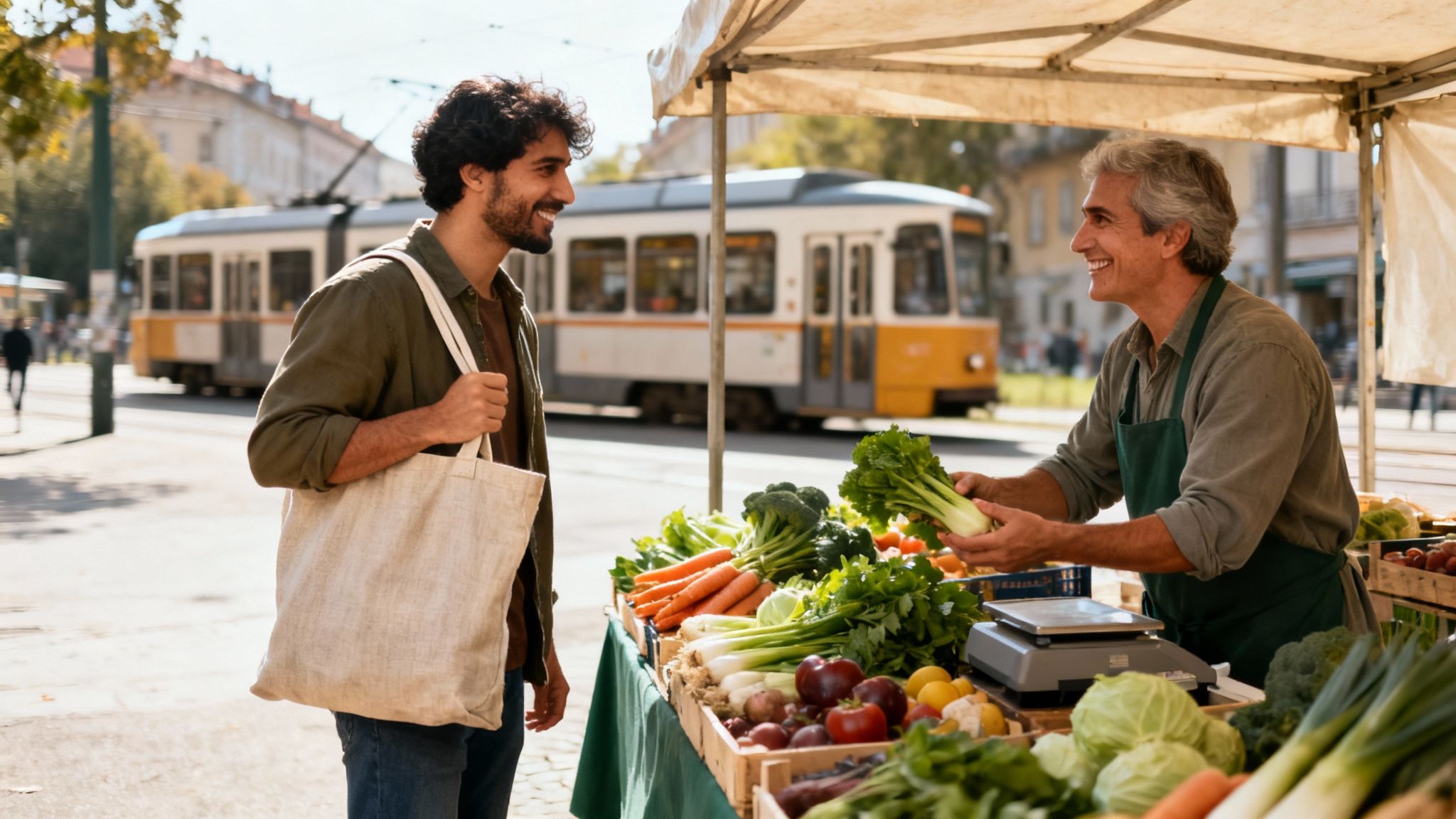
Think local first. Instead of defaulting to a big supermarket chain, why not make the local farmers' market your go-to for fresh produce? This simple switch supports local agriculture, shrinks your "food miles," and often means you're getting healthier, seasonal food. It's a win for you, and a win for the local economy.
Here are a few other impactful daily habits to try:
- Master Public Transit: Spend a little time getting familiar with the local bus, tram, or train schedules. Leaning on public transportation is one of the single most effective ways to lower your carbon footprint.
- Embrace the Circular Economy: Before you buy something new, check out the local secondhand shops, flea markets, or online community groups. You can find everything from furniture to clothing.
- Minimize Household Waste: Pay close attention to local recycling and composting rules. Something as simple as carrying a reusable water bottle and shopping bags can make a huge difference in cutting down on single-use plastics.
For those who want to take their environmental independence a step further, look into sustainable transport options like e-bikes or electric scooters, which are increasingly available and affordable in expat-friendly cities around the world.
Weaving Yourself into the Social Fabric
True sustainability is about more than just the environment; it's about people. Social sustainability means building real relationships and participating in community life with respect and humility. It's about shifting from being an observer to a participant.
Start by simply being a good neighbor. Learn a few basic greetings in the local language, become a regular at the neighborhood cafe, and just be present in your community. These small, consistent efforts create goodwill and open the door to deeper connections.
Sustainable expatriation is built on a foundation of reciprocity. It's not just about what you can gain from your new home, but what you can contribute. The goal is mutual enrichment, where your presence strengthens the community.
Europe is a prime example of a continent that fosters this kind of deep-rooted living. In 2024, it hosts 94 million international migrants, more than any other region, who now make up 13% of its population. This trend points to a clear preference for long-term settlement over temporary stays, as expats find welcoming homes in countries like the UK, France, and Spain, which offer vibrant cultures and solid infrastructure. For more on this, you can read the full UN report on international migration.
Contributing Your Skills and Time
One of the most rewarding ways to integrate is by sharing your skills and passions. Volunteering for a cause you care about is a fantastic way to meet like-minded locals and make a real, positive impact.
Look for opportunities that align with your professional expertise or personal hobbies. Whether it's helping out at a local animal shelter, mentoring young entrepreneurs, or joining a community garden, your contributions can help strengthen the social bonds that make a community thrive. The key is to listen to what the community actually needs and offer support where it's wanted, rather than imposing your own ideas. You might even find that some of the best cities for digital nomads also have incredible opportunities for community engagement.
How Employers Can Champion Sustainable Expatriation
While every expat's personal choices add up, companies are in a unique position to really drive the shift toward making global mobility a force for good. For HR leaders, thinking about sustainable expatriation isn't just a box to tick for corporate social responsibility. It's about landing top talent, making sure assignments succeed, and building a more resilient, worldly team.
By building sustainability into their mobility programs, employers can give their people the tools to become welcome, integrated members of their new communities. This all starts with taking a hard look at traditional relocation packages and policies and being willing to rebuild them from the ground up.
Redesigning Relocation for a Lighter Footprint
The classic corporate relocation package often means shipping an entire household across an ocean, a move that comes with a hefty environmental price tag, not to mention a financial one. A much smarter, more sustainable way to handle this is to encourage lighter, more thoughtful moves.
Instead of a rigid, one-size-fits-all shipping allowance, why not offer flexible stipends? This gives employees the freedom to furnish their new homes with locally made goods, which props up local artisans and businesses while slashing shipping emissions. It's a win-win.
Think about making these kinds of modern tweaks to your relocation benefits:
- Local Furnishing Grants: Hand over funds specifically for employees to buy furniture and other household items in their new country.
- Green Travel Incentives: Offer a small bonus for choosing direct flights or packing lighter, both of which cut down on fuel consumption.
- Eco-Friendly Housing Support: Actively help employees track down and secure energy-efficient homes in walkable neighborhoods with good public transit.
These adjustments don't just shrink the company's carbon footprint; they get employees engaging with their local economy from the moment they arrive.
Fostering Social and Cultural Integration
A successful international assignment almost always comes down to how well an employee can adapt and connect with their new surroundings. This is where employers can play a massive role by providing thoughtful support and training.
Every pre-departure program should include in-depth cross-cultural training. This needs to go way beyond basic etiquette, offering real insights into local history, communication styles, and community values. It's about preparing employees and their families to show up with respect and genuine understanding.
A company's duty of care goes far beyond physical safety; it means arming employees with the cultural and social tools they need to actually thrive. This kind of support can turn a stressful relocation into a profoundly rewarding chapter in someone's life and career.
Flexible remote work policies can make a difference here, too. Letting an expat work from home a couple of days a week might encourage them to live in a more integrated residential area instead of sticking to the insulated "expat bubble."
Upholding the Duty of Care with Robust Health Coverage
The most critical piece of this is simply looking after the well-being of your people and their families. Providing solid international health insurance is a non-negotiable part of sustainable expatriation. It's how a company fulfills its duty of care in a real, tangible way.
When you offer robust health coverage, you ensure your team can get high-quality local healthcare without putting a strain on the host country's public system. That's a huge act of social responsibility, showing that the company and its people are self-sufficient and respectful of local resources. This proactive step helps guarantee long-term success by giving employees the peace of mind they need to do their jobs well, knowing their family's health is in good hands. It's a clear signal that the company is committed to being a responsible global citizen. If you're not sure where to start, schedule a consultation with our team to find the right group plan for your employees abroad.
Why Health Insurance Is a Cornerstone of Sustainable Living
A truly sustainable life abroad is about more than just reusable bags and hitting the local farmers' market. At its core, it's built on well-being, personal responsibility, and security. This is exactly where planning for your health comes into the picture. Securing high-quality international health insurance is a fundamental act of personal and social responsibility, making sure your presence in a new country is stable and self-sufficient for the long haul.
Think of it as your personal infrastructure. Just like a city needs reliable power and water to function, you need a solid health plan to truly thrive. It's the safety net that lets you handle an unexpected medical issue without creating a financial crisis for yourself or putting an unnecessary strain on your host country's public healthcare system. This is a huge part of being a respectful, contributing resident instead of just a temporary guest.
The trend toward long-term life abroad is only growing. Millions of Americans now live overseas, with increasing numbers choosing to set down roots in countries across Latin America, Europe, and Southeast Asia. People are building real lives everywhere, from retirees in Spain and digital nomads in Australia to families planting themselves in Germany. What's the common thread? A desire for a better quality of life, and that absolutely includes reliable healthcare. For a deeper look at health insurance when living abroad, we've put together a full guide.
Protecting Yourself and Your Host Community
When you move to a new country, you become part of its local ecosystem. And a big part of being a responsible member of that community is making sure you're self-reliant. Public healthcare systems are almost always funded by local taxpayers for the benefit of citizens. By having your own robust insurance, you're accessing private care, which means those public resources remain available for the local population that funds them.
But this isn't just about being ethical; it's incredibly practical. A good international health plan opens up a wider network of doctors and hospitals, often with multilingual support staff who can be a lifesaver during a stressful medical event. It gives you the peace of mind of knowing you're ready for anything, from a minor bug to a major emergency, without risking your financial stability or overburdening local services.
Securing comprehensive health insurance is a declaration of intent. It says, "I am here to be a partner in this community, not a burden on it." It is one of the most powerful ways to ensure your sustainable expatriation journey is built on respect and mutual support.
What to Look For in a Responsible Plan
Diving into the world of international health insurance can feel a bit overwhelming, but if you focus on a few key features, you'll land on a plan that truly has your back. A good policy should be tailored to your new life, offering both flexibility and comprehensive protection.
Here are the essentials to look for:
- Global Network Access: Your plan absolutely must provide access to a broad network of trusted hospitals, clinics, and specialists in your new country and beyond. This ensures you can get quality care wherever life takes you.
- Comprehensive Coverage: Don't just skim the highlights. Look for policies that cover everything from routine check-ups and emergency care to hospitalization and prescription drugs. The details really matter here, so take the time to read the fine print.
- Pre-existing Condition Coverage: Be upfront and honest about your health history. A quality insurer will work with you to find a plan that covers your pre-existing conditions, giving you complete and honest protection without any nasty surprises.
By preparing for your health needs before you even pack your bags, you're doing more than just protecting your own well-being. You are cementing your commitment to a responsible, stable, and genuinely sustainable life in your new home. If you're ready to get into the specifics, check out our guide on finding the right health insurance when living abroad.
Your Questions About Sustainable Expatriation, Answered
Thinking about how to live more sustainably as an expat can bring up a lot of questions. It's one thing to understand the idea, but another to put it into practice. Here are answers to some of the most common ones.
What's the Biggest Mistake Expats Make When Trying to Be Sustainable?
Hands down, the most common pitfall is getting tunnel vision on the environmental side of things, like just offsetting flights, while totally ignoring the social and economic pieces of the puzzle. It's an easy trap to fall into, but true sustainable living is a three-legged stool.
It's about more than just your carbon footprint; it involves genuinely integrating into your new culture and making a conscious effort to support the local economy. Think of it this way: if you only shop at international chain stores or treat your new home like a permanent vacation bubble, you're missing the point. You end up creating social divides instead of becoming part of the community fabric.
The real goal is to build a life that's not just low-impact on the environment, but also high-impact for the local community and its economy. If you neglect any one of those pillars, you're only getting a third of the picture right.
Can I Actually Do This on a Tight Budget?
Absolutely. In fact, a lot of the core principles of sustainable living are naturally easy on the wallet. The whole idea revolves around mindful consumption, which almost always means spending less, not more.
You don't need a bunch of expensive eco-gadgets to live sustainably abroad. It's really about making smarter, simpler choices that benefit your bank account just as much as they benefit the community around you.
Here are just a few ways sustainability can save you money:
- Walkable Neighborhoods: Choosing a place where you can walk or bike to the market, cafes, and parks drastically cuts your transportation costs.
- Local Markets: Hitting up the local farmers' market for your groceries is often way cheaper than going to a big supermarket, and your money goes directly to local growers.
- Secondhand First: Why buy new? Furnishing your place from secondhand shops not only saves a ton of money but also keeps perfectly good items out of the landfill.
How Does International Health Insurance Fit into Social Sustainability?
This is a big one that often gets overlooked. Carrying your own international health insurance is a fundamental act of social responsibility. It ensures you don't inadvertently become a strain on your host country's public healthcare system.
Those systems are funded by local taxpayers and designed for the local population. By having a private plan to cover your own medical needs, you're making sure those public resources stay available for the people they were intended to serve. It's a quiet but powerful way to show respect for the local social safety net and prove you're a self-sufficient, contributing member of your new community.
I'm a Remote Worker. How Can I Contribute Economically?
As a remote worker, you have some incredibly powerful ways to boost the local economy that go far beyond buying your daily coffee. The key is to make sure the global income you're earning actually circulates right where you live.
First off, get your taxes sorted. Hiring a local accountant is a fantastic first move to ensure you're fully compliant and paying your fair share. From there, think about hiring local talent, maybe a freelance designer or a virtual assistant from your city. You can also make a point to bank with a local institution instead of a multinational one, or even volunteer to mentor local entrepreneurs. Sharing your skills is a priceless way to help others grow. For more practical advice on this lifestyle, take a look at our guide to working remotely from another country.
Ready to build a secure foundation for your life abroad? The team of experts at Expat Insurance can help you find the perfect international health plan to ensure you and your family are protected. Get your free quote today and take the first step toward a responsible and sustainable journey.
Justin Barsketis
Insurance Expert & Writer
Justin is an insurance guru that loves digital marketing. As our founder Justin manages our business development programs and MGA network. Please don’t hesitate to contact him if you are not getting the attention you deserve.
