

January 5, 2026
•
5 min read
Health Insurance for Travel to Mexico The Definitive Guide
Planning a trip? Our definitive guide on health insurance for travel to Mexico covers essential coverage, costs, and choosing the right plan for your safety.
It's a common—and costly—mistake to think your health plan from back home has you covered in Mexico. The hard truth is that most U.S. health insurance plans, including Medicare, are not accepted south of the border. This leaves you on the hook for all medical bills, which almost always have to be paid upfront before you even see a doctor.
Why Your Home Health Plan Is Just a Piece of Paper in Mexico

Picture this: your dream vacation in Playa del Carmen takes a sharp turn. One minute you're soaking up the sun, and the next you're in a clinic with a sudden illness or a broken bone from a slip on a wet tile. You hand over your U.S. insurance card, and the receptionist just politely shakes their head. This isn't some far-fetched scenario; it's standard procedure in Mexico.
Mexican hospitals and clinics operate on a "pay-for-service" model, especially for foreigners. They simply aren't part of U.S. insurance networks and have no way to directly bill your provider back home. That means they expect payment on the spot—in cash or by credit card—before they do anything more than basic stabilization.
The Upfront Payment Trap
This demand for immediate payment can throw you into a major financial and logistical crisis right in the middle of a medical emergency. You could find yourself maxing out credit cards with sky-high foreign transaction fees or burning through your entire travel budget just to get the care you desperately need.
It's a reality that catches far too many travelers completely off guard. Imagine getting a nasty case of Montezuma's revenge in Cancun or breaking a leg on a zip-line adventure. The nightmare isn't just the physical pain; as the U.S. Embassy confirms, hospitals in Mexico demand payment before they'll treat you.
This stark difference is why a growing number of travelers get themselves dedicated health insurance for travel to Mexico before they go. According to industry data, around 40% of U.S. travelers now purchase travel insurance—a rate that has nearly doubled since the pandemic—with even higher adoption among those heading to destinations like Mexico where domestic coverage doesn't apply. You can dig into the numbers in the HelloSafe study on travel insurance trends.
Medicare and Medicaid Don't Travel
For retirees and others who rely on government health plans, the situation is even more black-and-white. Medicare and Medicaid offer virtually no coverage outside of the United States. If you try to use these plans in Mexico, you'll be denied, leaving you with the full, un-negotiated bill. You can learn more about these limitations in our detailed guide to using Medicare outside the U.S..
The core misunderstanding is that insurance is all about networks. Your U.S. plan works because it has agreements with local doctors and hospitals. The second you cross the border, those agreements disappear—and so does your coverage.
To really drive home the point, let's look at a side-by-side comparison of what your domestic plan offers versus what a dedicated travel policy provides.
Domestic vs. Travel Medical Insurance Coverage in Mexico
When you're in Mexico, the difference between your U.S. health plan and a travel medical policy is night and day. One is basically useless, while the other is your lifeline in an emergency.
| Coverage Feature | Typical U.S. Health Plan | Dedicated Travel Medical Insurance |
|---|---|---|
| Hospital Acceptance in Mexico | Not accepted; requires full upfront payment. | Accepted by many private hospitals; offers direct payment. |
| Emergency Medical Evacuation | Not included; can cost $25,000–$60,000+ out-of-pocket. | Included; covers transport to a better facility or home. |
| 24/7 Travel Assistance | Not available; you handle emergencies alone. | Standard feature for medical referrals and support. |
| Trip Interruption & Cancellation | No coverage for travel-related expenses. | Reimburses non-refundable costs for covered reasons. |
As you can see, relying on your domestic plan is a massive gamble. A dedicated travel medical policy is designed specifically for these situations, ensuring you get care without the financial panic.
Choosing Your Coverage: Travel vs. Expat Plans

Alright, so you know your plan from back home won't cut it in Mexico. What now? The next step is figuring out what kind of coverage you actually need. The world of health insurance for travel to Mexico really boils down to two distinct paths: short-term travel insurance and long-term expat health plans.
Picking the wrong one can be a costly mistake. You could find yourself seriously underinsured during a long-term stay or, conversely, paying a premium for benefits you'll never use on a short vacation. It's all about matching the policy to your real-life plans in Mexico.
Think of it like this: travel insurance is a rental car. It's perfect for a week-long road trip, covering you for unexpected breakdowns and accidents to get you back on your way. An expat plan is like owning your own car; it's designed for your day-to-day life, handling everything from routine oil changes to major engine repairs.
When to Choose Short-Term Travel Insurance
Travel insurance is built for trips with a definite end date. Its main job is to act as a safety net for sudden, unexpected emergencies and all the other headaches that can come with travel. If you're a tourist, on vacation, or in Mexico for a quick business trip, this is your go-to option.
These policies are laser-focused on emergencies. They're fantastic for things like a sudden bout of food poisoning that lands you in the hospital, a broken arm from a snorkeling trip, or a bad allergic reaction. They are absolutely not meant for regular check-ups, managing chronic conditions, or any kind of elective treatment.
Here's a snapshot of what a good travel insurance policy covers:
- Emergency Medical Care: Covers surprise injuries and illnesses that pop up during your trip.
- Trip Protection: This is a big one. It reimburses you for non-refundable flights and hotels if you have to cancel or cut your trip short for a covered reason.
- Travel Mishaps: Think lost luggage, nightmare travel delays, and missed flight connections.
- Medical Evacuation: A crucial benefit that pays to transport you to a better hospital—or even all the way back home—if your situation is serious.
If your stay in Mexico is temporary, from a long weekend to a few months, a travel plan is precisely what you need.
When to Choose an Expat Health Plan
If you're planting roots in Mexico for a while, a travel policy just won't be enough. Expat health insurance is the real deal—a comprehensive, long-term solution designed for people living, working, or retiring abroad for six months or more.
Unlike its short-term cousin, an expat plan feels much more like the health insurance you have at home. It covers the full spectrum of healthcare, from emergencies to routine wellness checks. For anyone making Mexico their home base, this is the only sensible choice.
Expat insurance is built for continuity of care. It provides a stable, long-term solution for managing your health in a new country, offering far more than just emergency protection.
These plans are for people who need ongoing medical attention and want access to everything from urgent care to specialist visits. To really get into the nitty-gritty, you can explore the fundamental differences in our detailed guide on travel insurance versus international health insurance.
An expat health plan is the right fit for:
- Digital Nomads: Anyone working remotely from a beach town or city in Mexico for months on end.
- Retirees: Those spending their golden years soaking up the Mexican sun and culture.
- Relocated Professionals: People who have moved to Mexico for a job.
Basically, if you're building a life in Mexico instead of just passing through, an expat plan is designed for you. It covers things like preventative care, specialist appointments, and the management of pre-existing conditions—benefits you simply won't find in a standard travel policy.
Decoding the Must-Have Policy Features
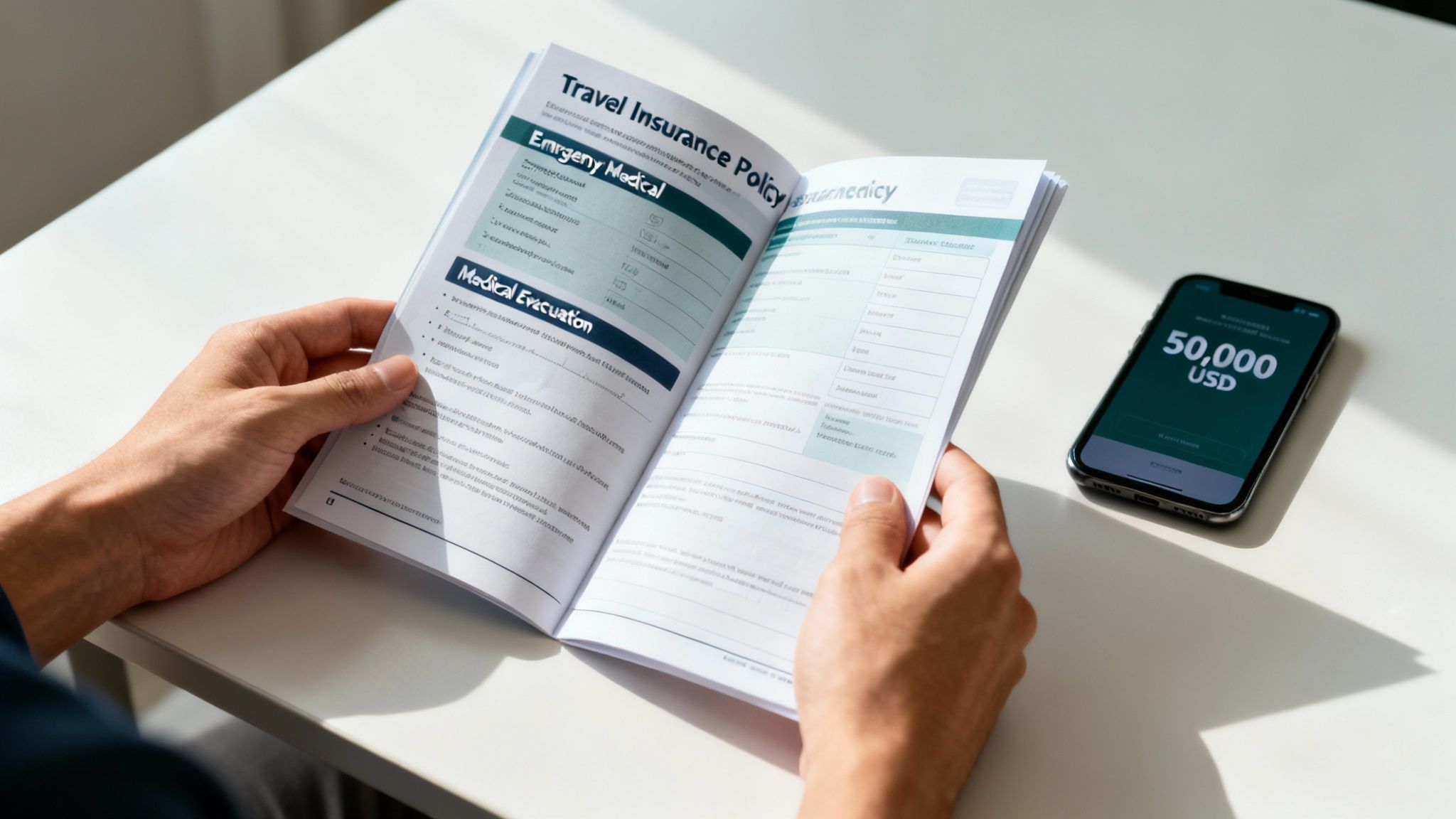
Trying to choose a travel insurance policy can feel like you're reading a foreign language. You're hit with confusing terms and pages of fine print. But once you know what to look for, the most important stuff really stands out. A solid health insurance for travel to Mexico isn't about flashy promises; it's about a few non-negotiable features that act as your financial shield if things go wrong.
Think of these features like the essential parts of a car. You wouldn't buy one without brakes, an engine, or a steering wheel, right? It's the same with your insurance. You shouldn't buy a policy without the core protections that truly matter when you're south of the border.
Let's break down exactly what those are, so you can flip through any policy document with total confidence.
Emergency Medical Coverage: The Foundation of Your Safety
This is the big one. The single most critical feature of any policy is its limit for emergency medical coverage. This is the maximum amount the insurer will pay for your hospital bills, doctor visits, and treatments if you get sick or injured. In Mexico, quality private hospitals are the go-to for travelers, and the costs can add up surprisingly fast.
For a short trip, you should look for a policy with at least $50,000 USD in medical coverage. No less. If you're staying longer or plan on doing anything adventurous—even just hiking—aiming for $100,000 USD or more is a much smarter move. This amount ensures that a serious incident, like an emergency surgery or setting a badly broken bone, won't leave you with a crippling bill to take home.
A low coverage limit is a false economy. Saving a few dollars on the premium could expose you to tens of thousands in medical debt if a real emergency strikes. Always prioritize a robust medical benefit above all else.
Imagine you're in Tulum and get a nasty case of food poisoning that lands you in the hospital for a few days on an IV. A cheap plan with a $10,000 limit could be wiped out in a day, leaving you to pay the rest. A policy with a $50,000 limit gives you a much stronger safety net and real peace of mind.
Medical Evacuation and Repatriation: Your Lifeline Home
While your medical coverage pays for treatment in Mexico, medical evacuation (often called "medevac") is what gets you to the right hospital in the first place.
Let's say you suffer a serious injury while exploring a remote part of the Oaxaca coast. The local clinic might not be equipped to handle it. Medical evacuation coverage pays for the ambulance—or even a medically-staffed flight—to get you to a major city with a top-tier hospital.
This feature is incredibly important but often gets overlooked. The cost of a medical flight from Mexico to the U.S. can easily range from $25,000 to $60,000 USD out of pocket, depending on your location and medical needs. Repatriation is a related benefit that covers getting you all the way back to your home country for treatment if your condition is stable enough for a long-haul flight but you need ongoing care.
- Emergency Medical Evacuation: Transports you to the nearest adequate medical facility.
- Repatriation of Remains: A tough thing to think about, but this covers the costs of returning your body home in a worst-case scenario. It's a necessary protection for your family.
Direct Payment to Hospitals: The Ultimate Convenience
One of the most stressful parts of a medical emergency abroad is the hospital demanding a huge payment upfront. This is where a policy with direct payment (sometimes called a "cashless service") becomes an absolute game-changer.
Instead of you having to max out credit cards to pay thousands of dollars and then fight for reimbursement later, the insurance company coordinates directly with the hospital to settle the bill. It turns a frantic, high-stress situation into something far more manageable.
Your first call in an emergency should always be to your insurer's 24/7 assistance line. They can often point you to an in-network hospital that has a direct billing agreement, saving you an incredible amount of financial and emotional strain. Dealing with a hospital billing department is the last thing you want to do when you're sick or hurt.
To get a better sense of the costs you could face without this feature, it's helpful to understand what an out-of-pocket maximum is and how quickly those expenses can pile up.
The Real Costs of Insurance and Healthcare in Mexico
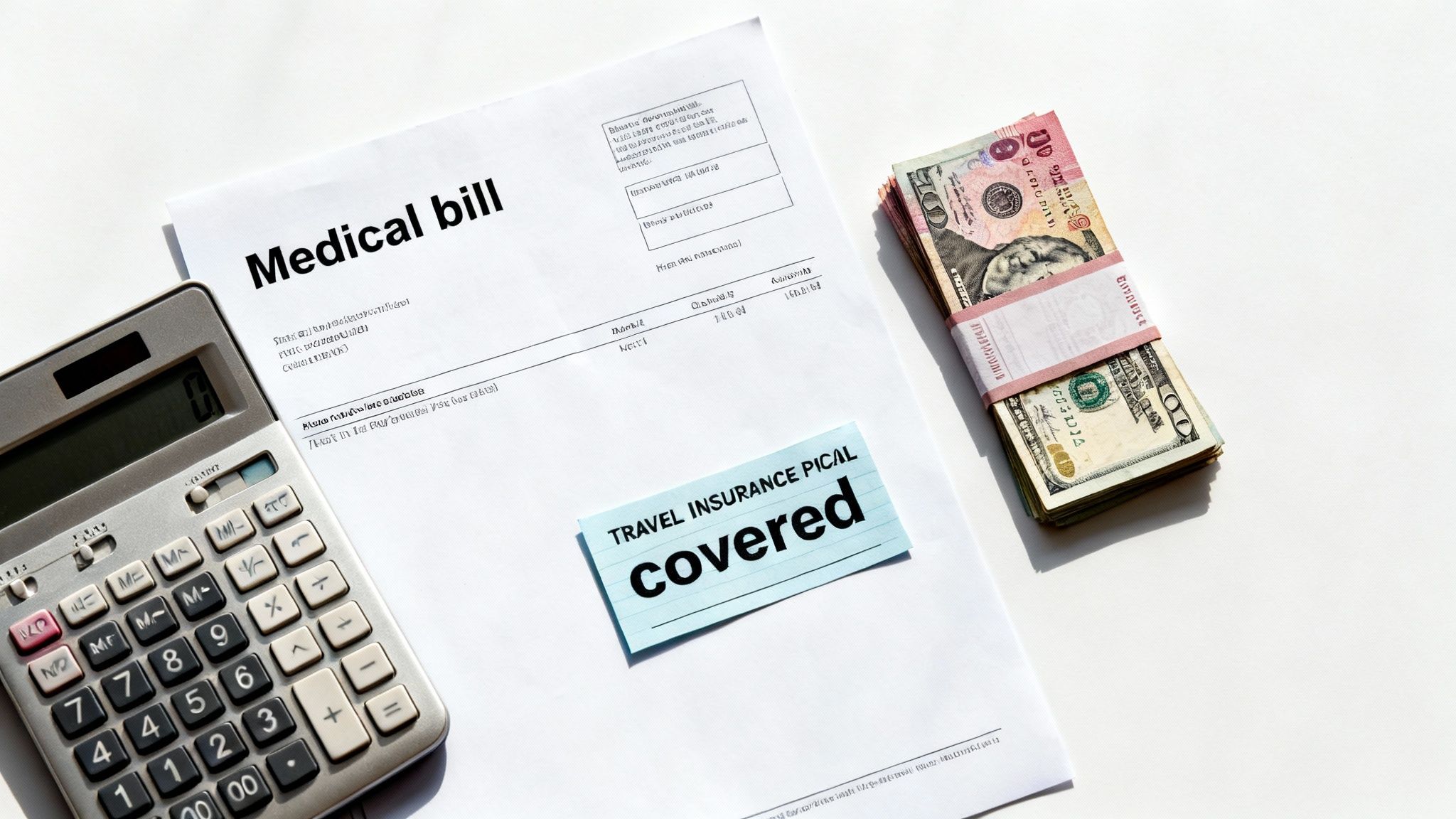
Alright, let's talk about the numbers. Getting a handle on the real cost of healthcare and insurance in Mexico is key to budgeting your trip and truly understanding the value of good coverage.
While it's true that healthcare here can be much more affordable than in places like the U.S., a serious medical emergency can still leave you with a significant bill. This is especially true at the high-quality private hospitals that most travelers and expats prefer.
The market for health insurance for travel to Mexico is booming for a reason. Valued at USD 518.0 million in 2022, it's expected to grow substantially in the coming years as more travelers recognize the importance of coverage. Single-trip policies are incredibly popular, with premiums averaging around $19 per day for plans that cover everything from a canceled flight to a medical crisis—though basic medical-only plans can cost as little as a few dollars per day. You can discover more insights about this growing market and its trends.
Breaking Down Insurance Premiums
So, what will your policy actually cost? The price tag isn't one-size-fits-all; it depends on several key factors. Think of it like adjusting the settings on a camera—each tweak changes the final picture.
- Your Age: Premiums almost always go up with age, simply because the statistical risk of needing medical care increases.
- Trip Length: A week-long getaway to Cancún will cost less to insure than a three-month deep dive into Mexico City.
- Deductible: This is the amount you pay out-of-pocket before your insurance starts footing the bill. A higher deductible usually means a lower premium, but you'll have a bigger initial cost if you need to make a claim.
- Coverage Limits: A plan with a $50,000 medical maximum will be cheaper than one with a beefy $500,000 limit.
For a healthy 30-year-old on a one-week vacation, a basic travel medical plan might run you between $40 and $70. For a 65-year-old on the exact same trip, that cost could be closer to $90 to $150.
For those of us staying long-term, comprehensive expat plans are a different ballgame. These can range from $2,000 to $6,000 or more per year, all depending on the level of benefits you need.
The Staggering Cost of Uninsured Medical Care
This is where the true value of insurance really hits home. An unexpected accident or illness can be financially devastating without a safety net.
Let's look at what you might pay out-of-pocket at a private hospital in Mexico versus what you'd pay with a solid insurance plan in hand.
Sample Healthcare Costs in Mexico With vs Without Insurance
| Medical Service | Average Cost Without Insurance (USD) | Typical Cost With Insurance (USD) |
|---|---|---|
| Emergency Appendectomy | $3,000 - $6,000 | $250 - $500 Deductible |
| Setting a Broken Leg | $4,500 - $10,000 | $250 - $500 Deductible |
| Hospital Stay (per night) | $300 - $800 | Covered after deductible |
| Emergency Room Visit | $200 - $500 | $100 - $250 Copay |
The numbers don't lie. While Mexican healthcare is significantly more affordable than in the U.S., a modest insurance premium acts as a powerful financial shield. It transforms a potential multi-thousand-dollar medical bill into a manageable, fixed expense like your deductible.
Ultimately, the cost of insurance is a tiny fraction of what you could face in an emergency. It's a calculated investment in your financial security and peace of mind, letting you soak up everything Mexico has to offer without the nagging fear of a catastrophic medical bill.
A Simple Checklist for Buying Your Policy
Diving into the world of insurance can feel like a chore, but getting the right health insurance for travel to Mexico doesn't have to be a headache. If you break the process down into a few manageable steps, you can confidently pick a policy that actually works for you and your budget.
Think of this checklist as your roadmap. It'll take you from the initial brainstorming phase all the way to having your documents in hand, ensuring you don't miss any crucial details along the way. You'll have peace of mind long before your plane ever leaves the tarmac.
Step 1: Assess Your Unique Trip Needs
Before you even glance at a quote, stop and think about your trip. The perfect policy for someone spending a week at an all-inclusive in Cancún is worlds away from what a three-month backpacker exploring remote villages will need.
Start by asking yourself a few key questions:
- How long will you be in Mexico? Short getaways are perfect for standard travel insurance. But if you're staying for six months or more, you should be looking at a more comprehensive expat health plan.
- What are you planning to do? Your base policy probably won't cover adventure sports. If things like scuba diving, zip-lining, or serious hiking are on your itinerary, you'll likely need to add an "adventure sports rider" to your plan.
- What's your current health situation? Be completely honest about any pre-existing conditions. Trying to hide something could get your claim denied, leaving you on the hook for some truly massive medical bills.
Step 2: Compare Quotes from Multiple Providers
Whatever you do, don't just grab the first quote you find. The insurance market is competitive, and you can use that to your advantage. Using an online comparison tool or working with a broker like Expat Insurance lets you see a bunch of options laid out side-by-side.
When you're comparing, look past the price tag. A cheap plan might look tempting, but it could have dangerously low coverage limits or a sky-high deductible that makes it practically useless when you actually need it. Your goal is to find the best value—a solid balance between a reasonable premium and coverage you can count on.
Don't treat insurance like a commodity where the lowest price wins. It's a vital safety net. Compare the core benefits—medical limits, evacuation coverage, and direct payment options—to see which policy offers the most comprehensive protection for your investment.
Step 3: Scrutinize the Policy Details
This is the part where you need to put on your reading glasses and pay attention. The "fine print" is where all the critical information lives—the stuff that determines whether your claim actually gets paid.
- Read the Exclusions: Every single policy has a list of things it won't cover. Common exclusions are incidents involving alcohol or drugs, self-inflicted injuries, and, of course, any pre-existing conditions you didn't declare.
- Understand Your Deductible: You need to know exactly how much money comes out of your own pocket before the insurance company starts paying. A $250 deductible feels a lot different than a $2,500 one in an emergency.
- Check the Claims Process: How do you even use this thing? Look for a 24/7 emergency assistance number. Find out if they offer direct payment to hospitals, which can save you from having to pay a massive bill upfront and wait for reimbursement.
Step 4: Secure Your Policy and Organize Documents
Once you've landed on the perfect policy, the final step is to buy it and get your paperwork sorted. Don't procrastinate on this. The best time to buy your insurance is right after you've booked your flights and accommodation.
As soon as you've purchased the policy, do these three things immediately:
- Print a physical copy of your insurance ID card and the policy summary. Keep it in your wallet or passport holder.
- Save a digital copy to your phone. While you're at it, email a copy to yourself and to a trusted family member back home.
- Program the 24/7 emergency assistance number into your phone's contacts. The last thing you want in a crisis is to be frantically digging through emails to find it.
By following this simple checklist, you can cut through the confusion and lock in the right protection for your adventure in Mexico.
Frequently Asked Questions About Mexico Health Insurance
Even when you feel like you have a solid plan, a few specific questions always seem to pop up before a trip to Mexico. We've gathered the most common ones we hear from travelers to give you direct, no-nonsense answers so you can head out with complete confidence.
Do I Really Need Insurance for an All-Inclusive Resort Stay?
Yes, absolutely. Think of the on-site clinic at your resort like a school nurse's office—it's great for a headache or a minor scrape, but it's not a hospital. They simply aren't equipped to handle a true medical emergency like a heart attack, a severe injury from a slip and fall, or a bad allergic reaction.
In a serious situation, the resort staff will do what they can and immediately call an ambulance to get you to the nearest private hospital. The second you arrive, that hospital will expect payment. A good travel medical policy is what covers the ambulance, the hospital bills, and even a medical flight back home if needed—costs that can add up to thousands of dollars without blinking. Relying only on the resort's first-aid station is a massive financial gamble.
What if I Have a Pre-Existing Condition Like Asthma or Diabetes?
This is a huge point, so pay close attention. Most basic travel insurance policies will flat-out exclude any routine care for pre-existing conditions. However, many will cover an "acute onset" of that condition—meaning a sudden, unexpected flare-up that lands you in the emergency room.
For real peace of mind, you need a plan that specifically offers a pre-existing condition waiver. For anyone staying longer, a true international health plan that underwrites and accepts your condition is the way to go. It is absolutely crucial that you disclose everything when you apply for a quote. Hiding a condition to save a few bucks can lead to a devastating claim denial right when you need that coverage the most.
An experienced broker is worth their weight in gold here. They know which insurers specialize in covering specific conditions and can find you a policy that won't bail on you when things get serious.
Can I Buy a Policy After I Arrive in Mexico?
A few companies let you do this, but it's a bad strategy. First off, your choices will be seriously limited, and you can bet the premiums will be higher.
More importantly, these "already traveling" policies almost always have a mandatory waiting period. This means your coverage for illnesses won't kick in for 24 to 72 hours after you buy it. You're left completely exposed for the first few days of your trip, which is a terrible risk to take. The best move, always, is to secure your health insurance for travel to Mexico before you ever leave home. It guarantees you're protected from day one and gives you access to the best plans and prices.
How Does Making a Claim Actually Work in Mexico?
How you handle a claim really depends on how serious the situation is. It's vital to know your policy's rules for different scenarios.
- For Minor Incidents: If you pop into a local clinic for something non-urgent, you'll almost always pay out-of-pocket first. Your job is to meticulously collect every receipt and piece of paperwork from the clinic. You'll then submit this to your insurance company for reimbursement.
- For Serious Emergencies: This is where great insurance providers really earn their keep. In an emergency that requires a hospital stay, the best policies have 24/7 assistance lines and arrange for direct payment to the hospital. Your very first call should be to your insurer's emergency number.
When you call, they'll direct you to a hospital in their network, coordinate with the doctors, and handle the billing so you don't have to front a massive amount of cash in the middle of a crisis. This service alone is a key reason to invest in a quality plan. And for other tips on staying connected, like figuring out how to make calls in Mexico, it's always smart to prepare ahead of time.
Is Travel Insurance Enough for a Six-Month Stay?
Nope, not even close. Standard travel insurance is built for short-term trips, usually up to 90 days, and it's laser-focused on emergencies. Once you're staying for six months, you're not just a tourist anymore; you're a temporary resident, and your healthcare needs are completely different.
For any stay longer than a couple of months, you really need to get an expat health insurance plan. These are designed for long-term international living and give you comprehensive coverage, including:
- Routine doctor visits and check-ups
- Consultations with specialists
- Management of chronic illnesses
- Full emergency and hospital care
An expat plan works a lot more like the health insurance you're used to back home. It's a sustainable way to manage your health while living abroad, whereas trying to use a travel policy for a long-term stay would leave you dangerously exposed to anything that isn't a life-or-death emergency.
Figuring out international health coverage can feel overwhelming, but you don't have to tackle it alone. The expert advisors at Expat Insurance specialize in finding the perfect plan for your situation, whether you're traveling for a week or moving for good. We compare dozens of top-rated insurers to make sure you get the best coverage at the right price. Get your free, no-obligation quote today and travel with total peace of mind.
