

February 12, 2026
•
5 min read
How to Get Mexican Residency: A Complete Guide for Expats
A practical guide to getting Mexican residency in 2026, covering financial requirements, the two-part application process, fees, and life after approval.
Justin Barsketis
Insurance Expert
Getting your head around the Mexican residency process is the first real step to making your move happen. The good news? It's a fairly straightforward, two-part system: you kick things off at a Mexican consulate in your home country, and then you wrap it all up by getting your residency card in Mexico.
The biggest hurdle for most people is proving you can support yourself financially without needing to work in Mexico.
Your First Look at Mexican Residency
Getting residency in Mexico is a process with clear steps and requirements you'll need to nail down. Think of it as a two-act play.
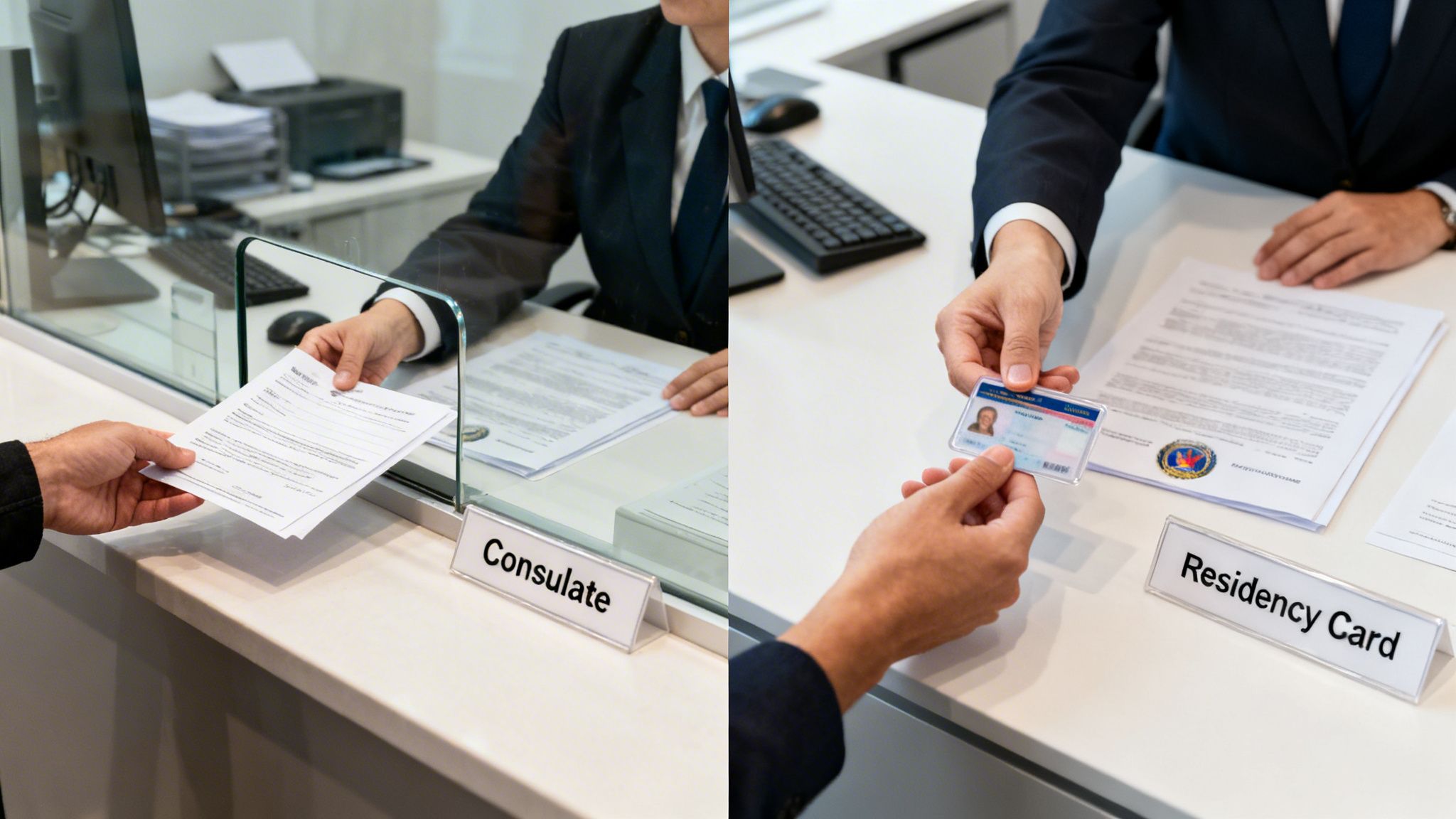
Act One happens at a Mexican consulate outside of Mexico. This is where you'll make your case, submit your documents, and - if everything checks out - get a temporary resident visa sticker placed in your passport. Act Two begins once you arrive in Mexico. You'll head to a local immigration office (INM) to swap that visa sticker for your official residency card.
Understanding the Financial Foundation
The absolute cornerstone of most residency applications is proving economic solvency. You have to show the Mexican government that you have enough monthly income or savings to live comfortably without taking a local job.
This leads to two main pathways:
- Temporary Residency (Residente Temporal): This is the typical starting line for most expats. It's designed for people who plan to live in Mexico for more than six months but less than four years.
- Permanent Residency (Residente Permanente): This route is generally for retirees who can show a significant pension or for folks who have already held temporary residency for four straight years.
There's been a critical update recently in how these financial requirements are calculated. They used to be tied to Mexico's daily minimum wage, but now they are based on the UMA (Unidad de Medida y Actualización), a much more stable economic yardstick.
The shift to the UMA matters because Mexico's minimum wage has seen double-digit annual increases in recent years, which kept pushing the residency income thresholds higher and higher. The UMA's value adjusts more predictably (in line with inflation), which makes it far easier to plan your finances for the application without worrying about a sudden, massive jump in the required amounts.
The Modern Residency Landscape
So, why the change? It really boils down to a massive spike in demand. Mexico has seen a huge influx of retirees and professionals in recent years, making temporary residency the most common status for foreigners. The volume of applications has been climbing steadily, putting pressure on the system.
To create a more consistent and manageable system, the authorities adopted the UMA. For instance, the UMA for 2026 was set at 117.31 pesos. That's a modest 3.69% increase from the year before, compared to the 13% minimum wage hike that same year.
To help you visualize the two main options, here's a quick breakdown.
Key Residency Pathways at a Glance
This table sums up the two most common routes people take to become residents in Mexico.
| Residency Type | Best For | Typical Duration | Path to Permanency |
|---|---|---|---|
| Temporary | New expats, digital nomads, those on a multi-year stay. | Initially 1 year, renewable for up to 4 total years. | Can apply for permanent residency after 4 years. |
| Permanent | Retirees with pensions, those with 4 years of temp residency. | Indefinite. No renewals needed. | Direct path for those who qualify, or the final step after temp. |
Essentially, most people start with temporary residency and "graduate" to permanent status after four years. However, if you meet the higher financial threshold right away (usually as a retiree), you can often jump straight to permanent residency.
Choosing Between Temporary and Permanent Residency
The first big decision you'll make is picking the right visa. This isn't just about filling out forms; it's about matching your long-term plans with the correct legal status. The two main paths, Temporary and Permanent Residency, are designed for different situations and have their own distinct requirements.
Getting this right from the start will save you a lot of time, money, and headaches. For most people, the choice is pretty clear once you understand the key differences. If you're specifically looking at retirement, our guide to the Mexican retirement visa digs deeper into that pathway.
The Standard Starting Point: Residente Temporal
For the vast majority of aspiring expats, remote workers, and even many retirees, Temporary Residency (Residente Temporal) is the front door to living in Mexico. Think of it as your initial permit to live here for an extended stay - longer than a tourist visa, but not necessarily forever.
This visa is first granted for just one year. It's a bit like a trial run, giving you and the Mexican government time to get acquainted. After that first year, you'll handle the renewal process inside Mexico, where you can extend your stay for one, two, or three more years.
The bottom line is you can hold this status for a maximum of four consecutive years. It gives you the flexibility to set up a life, open a bank account, and travel in and out of Mexico without needing a new tourist permit (FMM) each time. It's the most common and accessible way to get started.
The Long-Term Commitment: Residente Permanente
Permanent Residency (Residente Permanente) is exactly what it sounds like: a permit to live in Mexico for good. This status means more stability and less paperwork, since it never expires and doesn't need to be renewed. But qualifying for it straight out of the gate from your home country is a much taller order.
The most common way people get permanent residency is by "graduating" from temporary status. Once you've completed four uninterrupted years as a Residente Temporal, you become eligible to convert your status to permanent. This is the well-worn path most expats take.
That said, a few specific groups can skip the temporary phase and apply for permanent residency right away.
- Retirees with a Healthy Pension: This is the main group that can qualify directly. You'll need to show a significant, consistent monthly pension or retirement income that meets the government's pretty steep financial requirements.
- Close Family Ties: If you have a direct family connection to a Mexican citizen or a permanent resident (like a spouse, parent, or minor child), you can often apply for permanent residency directly.
- The "Points" System: This is less common for the typical expat, but Mexico does have a points-based system. It looks at factors like your education level, professional skills, and investment activity, which can sometimes lead directly to permanent status.
Here's a real-world example: A retired couple from Canada, both receiving government and private pensions that add up to over $7,500 USD a month, would likely qualify to apply for Residente Permanente directly at their local Mexican consulate. On the other hand, a 35-year-old remote worker making $6,000 USD a month would start with the Residente Temporal visa.
Alternative Paths and Things to Consider
Beyond the usual income and pension routes, there are a few other, less-traveled paths. For example, owning high-value real estate in Mexico can sometimes be used to prove you have the financial means. This usually means a property with a significant market value, so it's not an option for everyone. Check with an immigration facilitator or customs agent for the current threshold, as it changes with the UMA each year.
Ultimately, your choice comes down to your personal situation. Are you just dipping your toes into expat life, or are you a retiree with a solid financial base ready to settle in for the long haul? The temporary route is a flexible, lower-barrier way to start, while the permanent path offers the ultimate long-term security for those who meet the tougher criteria. Nailing this first decision is the most important step in your residency process.
Meeting the Economic Solvency Requirements
Proving you can support yourself financially is pretty much the most important piece of your residency application. This step, what the government calls demonstrating economic solvency, is where a lot of applicants get nervous. But it's much simpler once you get a handle on the numbers and the two main ways to qualify.
At the end of the day, the Mexican government just wants to see that you have a stable financial footing before they hand you a residency card. You don't want to become a burden on their system, and they don't want you to, either. Simple as that.
For most folks going for temporary residency, you've got a choice: qualify with a steady monthly income, or show you have a healthy amount in savings or investments. The key here is that you don't need to show both. This flexibility is a huge advantage, opening the door for everyone from remote workers with regular paychecks to retirees living off their nest egg. It's also worth getting a sense of the cost of living in Mexico to understand how far your money will stretch once you arrive.

Financial Proof for Temporary Residency
When you're applying for that Residente Temporal visa, you need to prove your financial stability over a specific timeframe. The consulate is going to want to see official, printed bank or investment statements to back up your claims. No screenshots allowed.
Here are the two paths you can take:
- The Monthly Income Route: This is perfect for digital nomads, pensioners, or anyone with a reliable, recurring source of funds. You'll need to provide bank statements from the last six months showing a consistent monthly deposit that hits the minimum threshold.
- The Savings & Investment Route: This option is tailor-made for people who might not have a regular monthly income but have built up substantial savings. For this, you'll submit statements from the last twelve months proving your average daily balance in savings or investments met the required amount.
Just a heads-up: consulates are notoriously picky about documentation. Your statements must be the originals, stamped by the bank, and your name must match your passport exactly. If you're using brokerage statements, they need to clearly show the account value for the entire required period.
Once you land in Mexico, you'll probably want to get a local bank account set up. Our guide on how to open a bank account in Mexico as a foreigner can walk you through that process.
So, How Much Money Are We Talking About?
The official requirements are tied to a government metric called the UMA, which gets updated every year. It can be a bit confusing, so let's translate it into real-world numbers you can actually use for planning.
Financial Solvency Requirements (Income vs. Savings)
The minimum financial proof needed for temporary and permanent residency applications can seem daunting, but it's straightforward once you see it laid out. Below is a table comparing the income versus the savings/investment paths for both residency types.
| Residency Type | Required Monthly Income (Approx. USD) | Required Savings/Investment Balance (Approx. USD) |
|---|---|---|
| Temporary | ~$4,400 USD | ~$74,000 USD |
| Permanent | ~$7,400 USD | ~$298,000 USD |
These figures are based on the latest UMA calculations and an exchange rate of roughly 18 MXN to 1 USD, so they can fluctuate. The exact amount your consulate requires may vary slightly. It's always a smart move to aim for a bit over the minimum just to be safe.
It's also worth noting that these financial thresholds have shot up significantly in recent years. To put it in perspective, back in 2022, the monthly income requirement for temporary residency was just over $2,000 USD. It's more than doubled in just a few years, which shows how important it is to check the latest numbers before you apply.
A Real-World Example: Let's say we have a freelance graphic designer who wants to apply for temporary residency. Her income goes up and down, making the monthly income requirement a bit stressful. But she's been good with her money and has consistently kept over $80,000 USD in a brokerage account for the past couple of years. She can simply use the savings path, provide her last twelve months of statements, and easily prove her economic solvency. No problem.
The Higher Bar for Permanent Residency
If you're aiming to get Residente Permanente status right from the start, the financial bar is set much, much higher. This route is mostly geared toward retirees with significant pensions or investment income. The government's logic is pretty clear: if you're going to live here for life, they want to see proof of lifetime financial stability. You'll need to show a much larger monthly pension or a very substantial investment balance to qualify this way.
What About Applying with a Partner or Kids?
Good news for couples and families. The rules are actually quite accommodating. If one person (the main applicant) meets the full economic solvency requirement, they can usually extend that qualification to their spouse and minor children.
Of course, it's not a completely free ride. The main applicant will need to show an additional amount of income or savings for each dependent they bring along. The extra amount is much smaller than the initial requirement, which makes it a really viable path for families looking to make the move together.
For instance, a retired couple could use a combined pension statement. As long as their total monthly income meets the threshold for one primary applicant plus one dependent, they can apply at the same time. It's a common and successful strategy for many expat couples.
The Two-Part Application Process
Getting your Mexican residency is a journey with two distinct halves. The process is intentionally split, making you get pre-approved in your home country before you ever show up in Mexico with plans to stay. Understanding how both phases work is the secret to a smooth, headache-free experience.
The first part happens entirely outside of Mexico, at a Mexican consulate. This is where you prove you're eligible - usually through financial documents - and walk away with a temporary resident visa sticker in your passport. The second phase, known as canje (which just means "exchange"), kicks off once you arrive in Mexico. It's where you'll trade that sticker for your actual residency card.
Phase One: The Consulate Appointment
This initial stage is all about meticulous preparation. Your goal is simple: secure an interview at a Mexican consulate and show up with a flawless application package. This is where most of the hard work is done.
Your main job here is gathering every single required document. And I don't just mean printing out bank statements. It's about making sure every piece of paper meets the consulate's exact, sometimes peculiar, specifications.
Your document checklist will almost always include:
- Passport: Needs to be valid for at least six months after your planned entry date into Mexico.
- Application Form: Filled out correctly and signed.
- Passport-Sized Photos: Must be recent and meet very specific size and background rules.
- Financial Records: Original bank or investment statements, typically for the last 6-12 months, depending on if you're proving monthly income or a lump sum of savings.
- Application Fee: Typically around $56 USD at U.S. consulates, paid in the local currency of whatever country the consulate is in.
Insider Tip: Every single Mexican consulate has its own quirks. Some are sticklers for official Spanish translations of all your documents, while others will happily accept them in English. Before you do anything, check the specific website of the consulate where you're applying. It will save you a ton of last-minute panic.
Once you have your documents in order, the next hurdle is actually booking the appointment. This can be surprisingly tricky, as slots are often scarce. While many consulates use online booking portals, some are shifting to different methods. For a leg up, check out our guide on how to book a Mexican visa appointment through WhatsApp, a method that's becoming more popular.
The interview itself is usually pretty low-key. The consular officer will look over your paperwork, might ask a few simple questions about why you want to live in Mexico, and take your fingerprints. If it all checks out, they'll hang onto your passport for a few days to put the visa sticker inside. That sticker is your green light to start the next phase in Mexico.
Phase Two: The In-Country Canje Process
With that precious visa sticker in your passport, you have 180 days to enter Mexico. The moment you land, a new, much shorter clock starts ticking: you have only 30 days to start the second phase of your application at a local Instituto Nacional de Migración (INM) office. Missing this 30-day window is a critical mistake. It will void your entire application, and you'll have to fly home and start all over again.
This in-country process is the canje. You're literally exchanging that visa sticker for your actual residency card.
The steps at the INM office generally look like this:
- Submit a New Application: You'll fill out another form online, print it, and take it to your local INM office. You'll also need your passport and the FMM tourist card you got at the airport.
- Pay Government Fees: INM will give you a payment form to take to a nearby bank. Pay it, get the receipt, and bring it right back to INM.
- Biometrics Appointment: They'll schedule you to come back to have your fingerprints and photo taken.
- Card Collection: After your biometrics are done, you'll get notified when your physical residency card is ready to be picked up. This can take anywhere from a few days to a few weeks, all depending on how busy that particular INM office is.
Getting that card in your hand is a huge moment. You are now officially a resident of Mexico, ready to open a bank account, sign a lease, and truly begin your new chapter.
Fees, Timelines, and Common Roadblocks
Getting your residency application right means having a realistic budget and a clear picture of the waiting game. It's not just about meeting the financial solvency numbers; you have to factor in government fees, potential helper costs, and the time it takes to get through each stage.
Planning for these things is just as critical as getting your bank statements in order. Too many applicants get tripped up by unexpected costs or delays that a little foresight could have easily avoided.
Budgeting for Your Residency Application
Let's get this out of the way: the cost of getting Mexican residency has gone up. A lot. The Mexican government completely restructured its fee schedule for 2026, and processing costs have basically doubled for most people. This needs to be in your budget from day one.
For instance, the government fee for a one-year temporary residency card shot up from MXN$5,328 to MXN$11,140.74 - that's a jump of over 109%. The permanent residency fee saw a similar hike, rising to MXN$13,578.96 from MXN$6,494.
What this means in real terms is that the total government spend for the entire four-year journey from temporary to permanent status has ballooned from roughly $1,350 USD to over $2,700 USD per person.
And remember, these government fees are just part of the picture. You also need to account for other expenses:
- Consulate Visa Fee: This is typically around $56 USD per person, which you'll pay at your initial consulate appointment.
- Document Translations: If your consulate requires everything in Spanish, this can add another $20-$50 for each document.
- Facilitator or Lawyer Fees: This is optional but highly recommended. Hiring someone to handle the in-country process can run anywhere from $400 to $1,000+ USD per person.
If you'd like personalized guidance on budgeting for your move, you can always book a consultation with one of our team members.
Common Application Hurdles
Knowing where other people have stumbled is the best way to make sure you don't. The path to residency is pretty well-trodden, which means the common mistakes are predictable. With a bit of prep, you can sidestep them entirely.
The single biggest mistake is underestimating the details. A single missing bank statement, a name that doesn't perfectly match your passport, or a photo with the wrong background can get your entire application rejected at the consulate, forcing you to start over.
Here are the most frequent issues people run into:
- Incorrectly Formatted Financials: Consulates are sticklers for this. They demand original, printed statements - no screenshots from your banking app. If you're using savings, you need the full 12-month period. If you're using income, it has to be the last six months. No exceptions.
- Missing the 30-Day Canje Window: This one is critical. Once you enter Mexico with that visa sticker in your passport, the clock starts. You have exactly 30 calendar days to start the exchange (canje) process at an INM office. If you miss this deadline, your visa becomes void. Your only option is to leave Mexico and start the whole process over from scratch.
- Assuming All Consulates are the Same: Every Mexican consulate seems to operate with its own set of unwritten rules. One might demand Spanish translations for every single document, while another down the road is perfectly happy with English. Always, always check the specific website of the exact consulate where you plan to apply.
These issues are a big part of why so many people are asking if Mexico is cracking down on visas. The short answer is yes - they are simply enforcing the existing rules more strictly than ever before.
This is why hiring an immigration facilitator or lawyer for the in-country part of the process can be a lifesaver. They know the local INM office's quirks, they make sure your paperwork is flawless, and they can often help secure appointments faster. It's an investment that can save you an immense amount of stress and prevent costly mistakes.
Life as a Resident: Your Essential Next Steps
Congratulations, you've got your residency card in hand! This is your key to a new life in Mexico, but it's really just the beginning. Now it's time to tackle a few administrative tasks that will solidify your status and make daily life much, much smoother. Think of it as laying the foundation for your new chapter here.
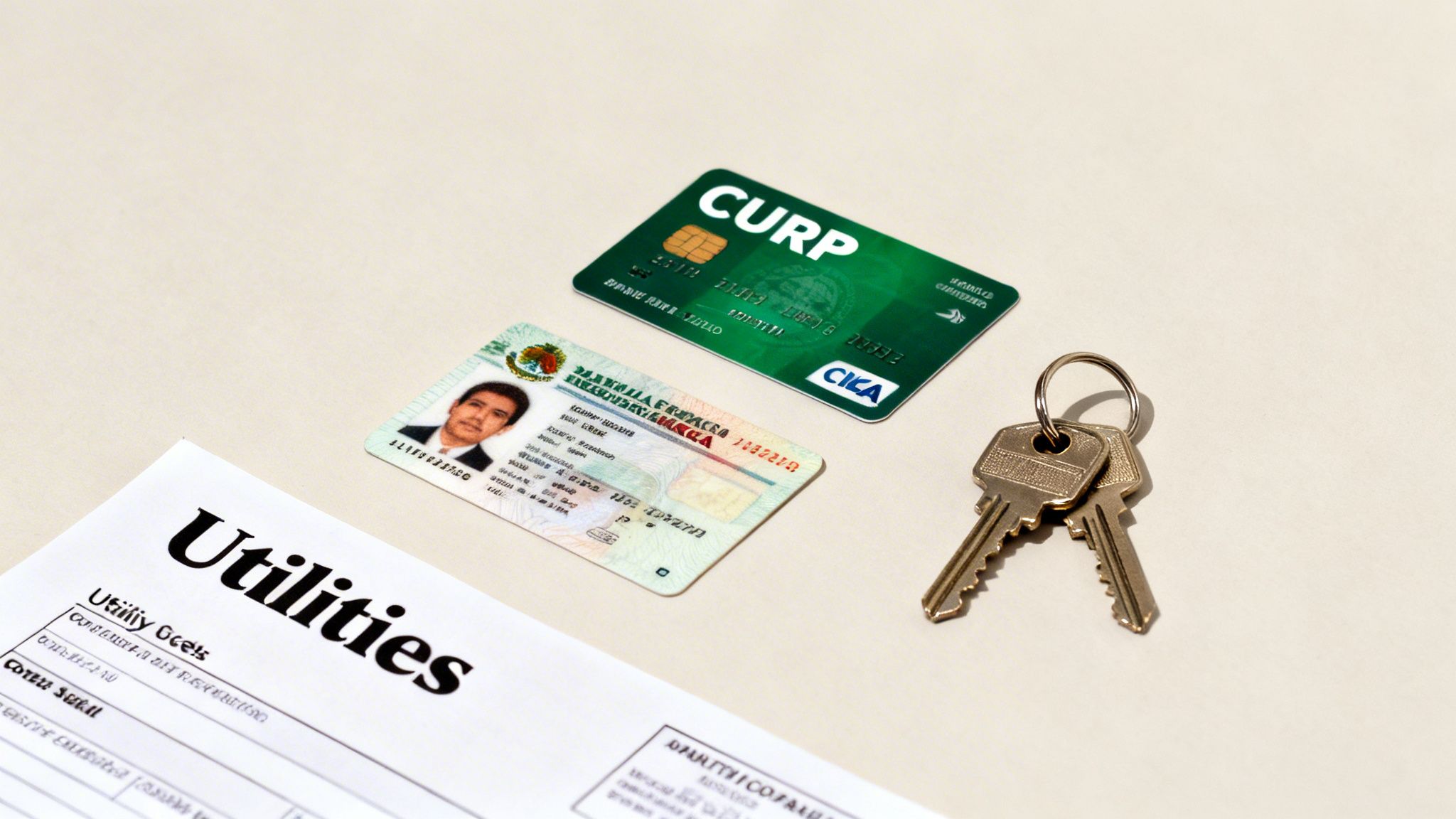
Your first and most important step is getting your official CURP (Clave Única de Registro de Población). This is a unique identification number automatically assigned to all residents and citizens. While the number should be printed right on your new residency card, you'll want the official document. You can easily download it from the government's official portal.
Setting Up Your New Life
With your official CURP document, you can start tackling other critical tasks. This number is the key to unlocking almost everything of substance in Mexico, from opening a local bank account to getting a driver's license or signing up for utilities like electricity and internet.
Think of your CURP as Mexico's version of a Social Security Number. You'll need it for healthcare enrollment, tax registration, and pretty much any official transaction. Keep a digital and physical copy somewhere safe.
Next up, you should start thinking about your healthcare options. You can explore private health insurance plans, which many expats prefer, or look into Mexico's public healthcare system (IMSS). Keep in mind that IMSS eligibility rules can be complex for foreigners, so it's vital to understand your options early on. For a detailed comparison of what's available, take a look at our guide to expat health insurance in Mexico.
Looking Ahead: Renewals and Responsibilities
Finally, if you're holding a Residente Temporal card, pull out your calendar. Your initial card is only valid for one year.
The good news? The renewal process is handled entirely within Mexico at your local INM office and is far simpler than the initial application. You typically don't need to prove economic solvency all over again.
You must start the renewal process within the 30 days before your card expires. Don't wait until the last minute on this one. Being proactive ensures your legal status remains uninterrupted, keeping your residency journey in Mexico smooth and stress-free. For a broader look at the residency landscape, you can also read our overview on residency in Mexico.
Frequently Asked Questions About Mexican Residency
Even with the best roadmap, you're bound to have questions pop up as you work through the residency process. Getting a handle on the finer points - like work permits, how much time you actually have to spend in Mexico, and what happens if your finances change - can save you a lot of headaches later on.
We get these questions all the time from expats planning their move. Let's dig into the details that really matter once you're on the path to becoming a resident.
Can I Work in Mexico on a Temporary Residency Visa?
The short answer is no, not automatically. A standard temporary residency visa that you get by proving economic solvency is not a work permit. It's designed for people who can support themselves financially without taking a job in Mexico.
If you want to work legally for a Mexican company, you have two main routes:
- Get a Sponsored Visa: This is a completely different process where a Mexican employer sponsors your application from the very beginning, before you even apply at the consulate.
- Apply for a Work Permit: Once you have your temporary residency card in hand, you can apply separately at an INM office for permission to work. You'll need to show proof of a formal job offer from a Mexican employer.
What about working remotely for a company back home? This is a huge legal gray area. While tons of digital nomads do it, a standard temporary residency visa doesn't explicitly authorize this kind of work.
Do I Have to Stay in Mexico to Keep My Residency?
The rules are completely different for temporary and permanent residents, so it's critical to know which one applies to you.
For Temporary Residency, there are no minimum stay requirements. Feel free to come and go as you please. You can spend most of the year outside Mexico without putting your status at risk, which is perfect for anyone splitting their time between countries.
For Permanent Residency, the rules are much stricter. You risk losing your permanent resident status if you are outside of Mexico for more than two consecutive years. It's a good idea to keep track of your travel dates just to be safe.
What Happens if My Financial Situation Changes After I Get Residency?
Once your residency is approved, you're generally in the clear. You don't have to re-prove your economic solvency every single year. The financial check is the main hurdle for your initial application and for any renewals of a temporary card.
As long as you got your residency legally, a change in your income or savings down the road won't typically jeopardize your current status. The key exception is if you let your residency expire. If you have to start the application process all over again, you'll need to meet whatever the current financial requirements are at that time.
Getting the right healthcare coverage is one of the most important steps after you arrive. At Expat Insurance, we specialize in finding the right international health coverage for expats in Mexico, comparing plans from over 65 insurers to match your needs and budget. Get a free quote today and ensure you're protected from day one.
Justin Barsketis
Insurance Expert & Writer
Justin is an insurance guru that loves digital marketing. As our founder Justin manages our business development programs and MGA network. Please don’t hesitate to contact him if you are not getting the attention you deserve.
