

November 27, 2025
•
5 min read
Your Guide to Live in the Philippines
Thinking about moving? Learn what it's really like to live in the Philippines. This guide covers costs, visas, and lifestyle to help you plan your move.
Deciding to pack up and move to the Philippines is a massive, life-changing choice. It's a decision that mixes daydreams of a tropical paradise with some very real, practical considerations. It can absolutely be the adventure of a lifetime, full of warm smiles and incredible sunsets, but it's not a leap you should take without looking first.
This guide is designed to give you a straight-up, balanced view to help you figure out if this vibrant, complex country is the right place for you to build a new life.
Is a Move to the Philippines the Right Choice for You?
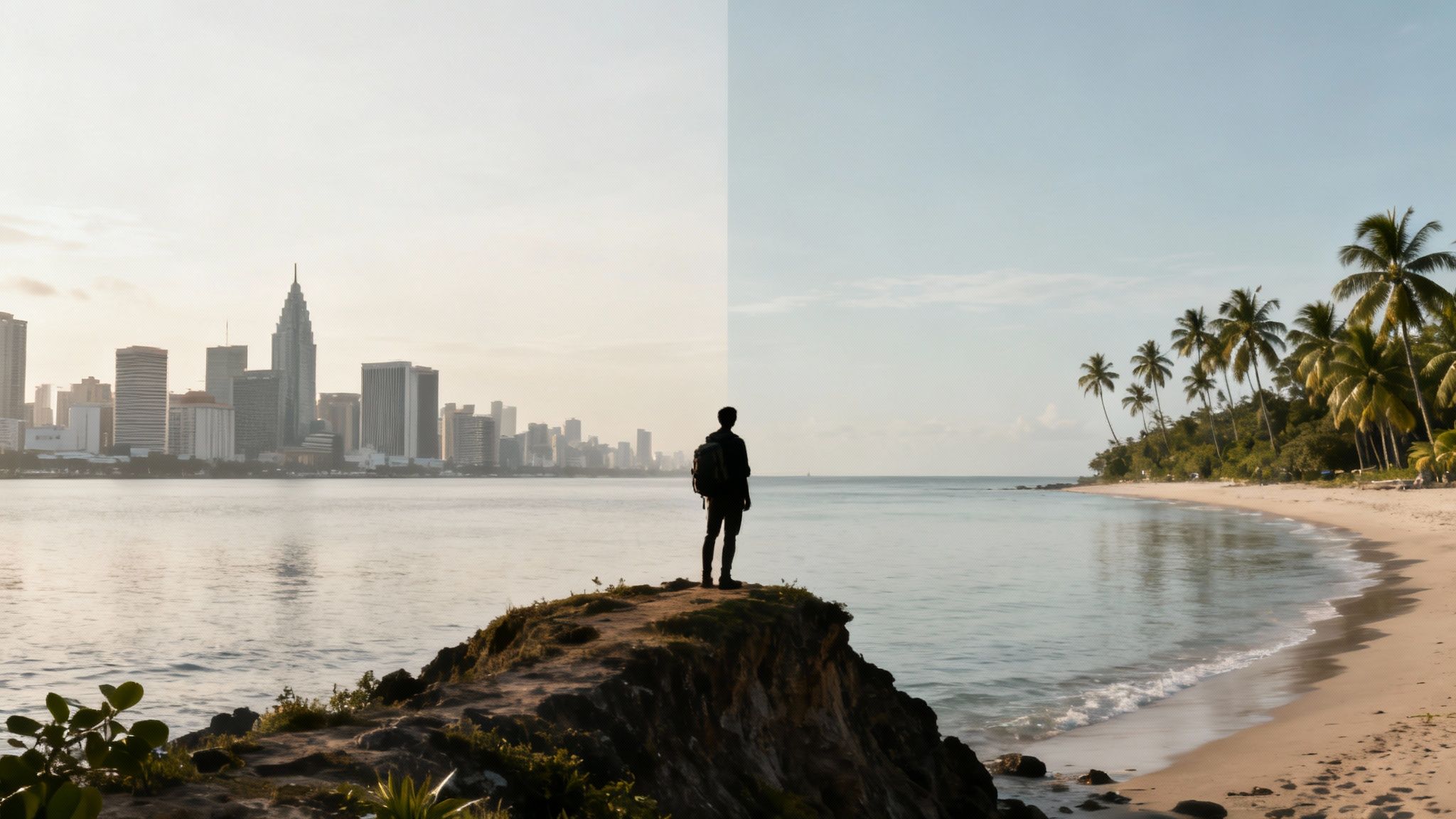
When you picture living in the Philippines, what comes to mind? For most, it's those postcard-perfect images of white-sand beaches and a perpetually laid-back lifestyle. And while that's certainly a huge part of the appeal, a successful move means looking far beyond the scenery.
It's really about weighing the undeniable pros against the potential challenges to see if the reality of life here truly aligns with your personality, your goals, and your patience level.
Make no mistake, this isn't a one-size-fits-all destination. Your day-to-day experience will be wildly different depending on whether you're drawn to the electric, non-stop energy of a city like Manila or the quiet, coastal rhythm of a small provincial town.
To get a clearer picture, it helps to break things down. Here's a quick look at the highs and lows you can expect.
Pros and Cons of Living in the Philippines
This table gives you a snapshot of what to expect—the good, the bad, and the things you'll just have to get used to.
| Key Aspect | Pros (The Upside) | Cons (The Challenges) |
|---|---|---|
| Cost of Living | Exceptionally low. Your money stretches much further for housing, food, and daily expenses. | Imported goods can be expensive. Higher salaries are rare outside of specific industries. |
| Culture & People | Incredibly warm, welcoming, and hospitable. Strong sense of community (kapwa). | Bureaucracy can be slow and relationship-based. Communication can be indirect. |
| Natural Beauty | World-class beaches, diving, mountains, and over 7,000 islands to explore. | Prone to natural disasters like typhoons and earthquakes. Some areas are very remote. |
| Pace of Life | Generally relaxed and less stressful, especially outside of major metropolitan areas. | Can be frustratingly slow ("Filipino time"). Infrastructure development can lag. |
| Language | English is an official language and is widely spoken, making daily life easier for expats. | Learning at least basic Tagalog or a local dialect is crucial for deeper integration. |
| Infrastructure | Improving, with modern malls and facilities in cities. Growing digital nomad scene. | Internet can be unreliable in rural areas. Traffic in cities is notoriously bad. |
Thinking through these points is the first step. It's about being honest with yourself about what you can embrace and what might be a deal-breaker.
The Allure of the Archipelago
So, what is it that pulls so many people from across the globe to call the Philippines home? It usually boils down to a powerful combination of factors that just clicks.
- A Remarkably Low Cost of Living: This is a big one. Your money simply goes further here. A comfortable life—including a nice place to live, eating out regularly, and travel—is possible for a fraction of what you'd spend in North America, Europe, or Australia.
- A Genuinely Welcoming Culture: Filipinos are famous for their hospitality for a reason. There's a deep-seated concept called kapwa, which translates roughly to "shared self" or a sense of togetherness. This creates a communal, friendly atmosphere that makes it easier for newcomers to feel at home.
- Breathtaking Natural Beauty: With over 7,000 islands, the country is a playground for anyone who loves the outdoors. You've got world-class diving spots, volcanic mountains to hike, and more pristine beaches than you could visit in a lifetime. Adventure is never far away.
Understanding the On-the-Ground Reality
Of course, no place is perfect. Being prepared for the real-world challenges is just as critical as dreaming about the perks. A realistic mindset is your single best tool for making a smooth transition.
When you move here, you're stepping into a nation that is buzzing with energy. The country's population is projected to hit 116.8 million by 2025, making it the 14th most populous on Earth. This creates vibrant, dynamic cities, but it also means dealing with a high population density that impacts everything from traffic jams to the efficiency of public services. For a deeper dive, check out the World Population Review data on the Philippines.
A successful expat doesn't just move to a new country; they adapt to its rhythm. The key is to embrace the differences, from the slower pace of bureaucracy to the importance of personal relationships in getting things done.
Ultimately, choosing to live here is a trade-off. You're swapping some familiar comforts for entirely new experiences. It means learning to navigate a different culture, practicing patience with infrastructure that isn't always reliable, and finding the beauty in both the stunning landscapes and the organized chaos of daily life. This guide will help you unpack all of it, so you can arrive with your eyes wide open.
Understanding the True Cost of Living
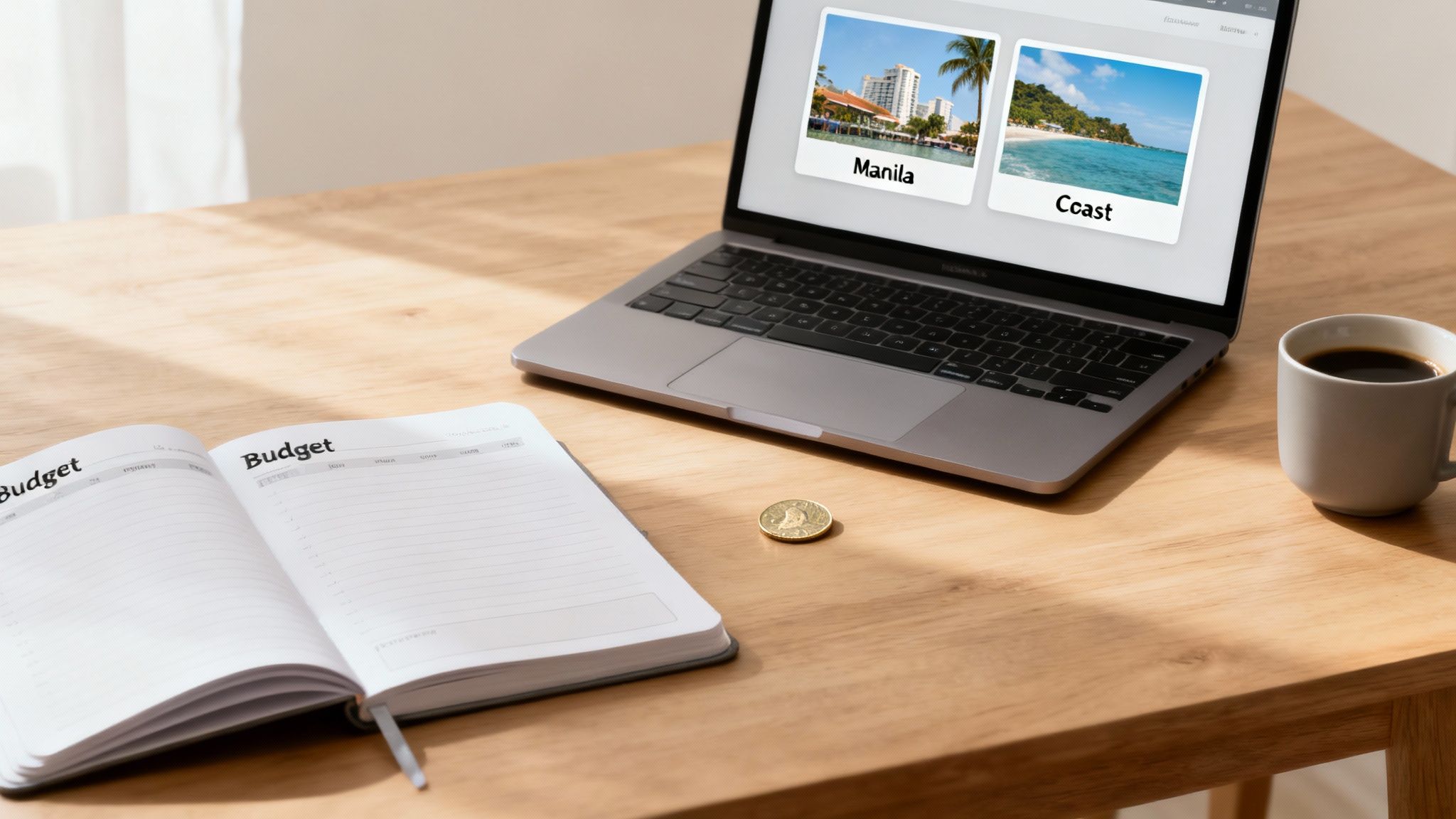
One of the biggest magnets pulling expats to live in the Philippines is the famously low cost of living. And while it's absolutely true that your money can go a lot further here, thinking of it as a single price tag is a mistake. The real cost is all about the lifestyle you build for yourself.
Your experience will be worlds apart depending on where you plant your flag. A chilled-out, beachfront life in a sleepy provincial town costs a tiny fraction of a high-octane, urban existence in one of Manila's central business districts.
To get this right, you have to look past the averages and start digging into the actual line items. This is how you build a financial blueprint that makes sense for you, ensuring your big move is exciting, not stressful. Let's break it down.
Housing and Utilities: Your Biggest Expense
Your single largest monthly bill will almost certainly be for housing. The options are all over the map, from sleek high-rise condos in places like Makati or Bonifacio Global City (BGC) to traditional houses in the suburbs or countryside.
In the big cities, a one-bedroom condo in a prime spot will run you anywhere from $400 to $800 USD a month. Head to a smaller city like Dumaguete or even just outside Cebu's core, and you could find a similar—or bigger—place for half that. Don't forget the upfront costs, either. You'll need to budget for security deposits and understand things like how prorated rent works to avoid any surprises when you first land.
Utilities are the next piece of the puzzle. Water and internet are pretty reasonable, but electricity can be a shock. It's often more expensive than in many Western countries. A monthly power bill for a small condo, especially if you're running the air conditioning a lot, can easily hit $80-$150 USD.
The "City vs. Province" budget is the most important calculation you'll make. A $1,500 monthly budget that feels tight in Manila could provide a very comfortable, even luxurious, lifestyle in a smaller coastal town.
For a really deep dive, check out our full guide on the cost of living in the Philippines. It gives you a much more detailed breakdown to help you match your budget to your dream location.
Daily Expenses and Building a Sample Budget
Once you've sorted out your rent, your daily spending habits are what will truly shape your budget. This is everything from food and transport to going out and taking care of your health. The good news? This is where you have the most control.
Eating like a local is incredibly cheap. If you shop at the local wet markets for fresh produce, meat, and fish, you'll slash your grocery bills compared to buying imported goods at the fancy supermarkets. You can grab a satisfying meal at a local carinderia (a small eatery) for just $2-$4. A dinner at a decent restaurant in the city, on the other hand, might be $15-$25 a head.
Transportation costs are just as varied. In the big cities, ride-sharing apps like Grab are a lifesaver, but the fares add up. If you really want to save, you'll learn to love the local jeepneys and tricycles.
Here's a rough sketch of what a monthly budget might look like, just to show you the difference:
Sample Monthly Budgets for a Single Expat
| Expense Category | Metro Manila (Urban) | Provincial Town (Coastal) |
|---|---|---|
| Rent (1-BR Condo/Apt) | $600 | $300 |
| Utilities (Elec, Water, Net) | $175 | $100 |
| Groceries | $300 | $200 |
| Transportation | $100 | $50 |
| Entertainment & Dining | $250 | $150 |
| Healthcare/Insurance | $75 | $75 |
| Total Estimated Monthly Cost | $1,500 | $875 |
As you can see, your choice of location is the biggest lever you can pull to manage your expenses. This amazing flexibility is a huge part of what makes life in the Philippines so appealing for so many expats.
Navigating Visas and Residency in the Philippines
Trying to figure out the legal side of living in the Philippines can feel like you're trying to solve a puzzle without the picture on the box. It's a world filled with strange acronyms and endless paperwork, but once you understand the basic routes, the whole process becomes much clearer. For nearly everyone, the journey to legal residency starts with a simple stamp in your passport.
This first step is usually the Tourist Visa, granted to most nationalities right at the airport when you arrive. Think of it as your starting point, not your final destination. It gets you an initial 30 days in the country, but its real value is its flexibility—you can extend it, buying you time to legally stay while figuring out a more permanent plan.
Extending this visa is a classic rite of passage for just about every new expat. It means a trip to a local Bureau of Immigration (BI) office, filling out some forms, paying the fees, and getting that all-important new stamp. You can typically extend for one, two, or six months at a time, up to a maximum of 36 months. It's a great temporary fix, but it's not a direct path to becoming a permanent resident.
The Tourist Visa Extension Route
Using tourist visa extensions to stay long-term is something many expats do, at least at first. You don't necessarily have to do a "visa run" by leaving the country; it's more of a cycle of renewals at the immigration office. This approach is perfect for people who are still testing the waters of life in the Philippines or don't yet qualify for a residency visa.
A few things to keep in mind, though:
- Time and Patience: A trip to the BI isn't a quick in-and-out affair. It can take several hours, so it's best to show up early, bring a good book, and be prepared to wait.
- Paperwork: Always bring your passport, a copy of its main page and your arrival stamp, and enough cash in Philippine pesos to cover the fees.
- ACR I-Card: Once you've been in the country for more than 59 days, you'll need to apply for an Alien Certificate of Registration Identity Card (ACR I-Card). This is a microchipped ID card required for all foreign residents.
While the process is totally manageable, it can get old after a while. And since immigration rules can change with little warning and vary depending on your nationality, it's always smart to have a solid grasp of the general visa requirements for foreign travel before you even get on the plane. Eventually, most people who decide to put down roots start looking for a more permanent solution.
Securing a Long-Term Residency Visa
When you're tired of the renewal cycle and ready to really settle in, the Philippines offers some excellent residency visas designed for different types of expats. Getting one of these means no more trips to the immigration office and a much more stable foundation for your new life.
The most popular option by far for retirees is the Special Resident Retiree's Visa (SRRV). This program is managed by the Philippine Retirement Authority (PRA) and is specifically designed for foreigners who want to make the country their second home.
The SRRV is often called the "gold standard" for expat retirees. It grants you indefinite stay with multiple entry privileges, so you can come and go as you please without ever worrying about visa renewals again.
To qualify for the SRRV, you generally need to be at least 40 years old and place a one-time visa deposit into a PRA-accredited bank. The deposit amount ranges from $15,000 to $50,000, depending on your age and whether you have a pension. This deposit is still your money, but it has to stay in the bank for as long as you hold the visa.
Other routes exist, too, like investment-based visas for those planning to start a business. Each pathway has its own specific set of requirements, but they all lead to the same prize: the legal stability to truly call the Philippines home.
Finding Your Perfect Home and Community
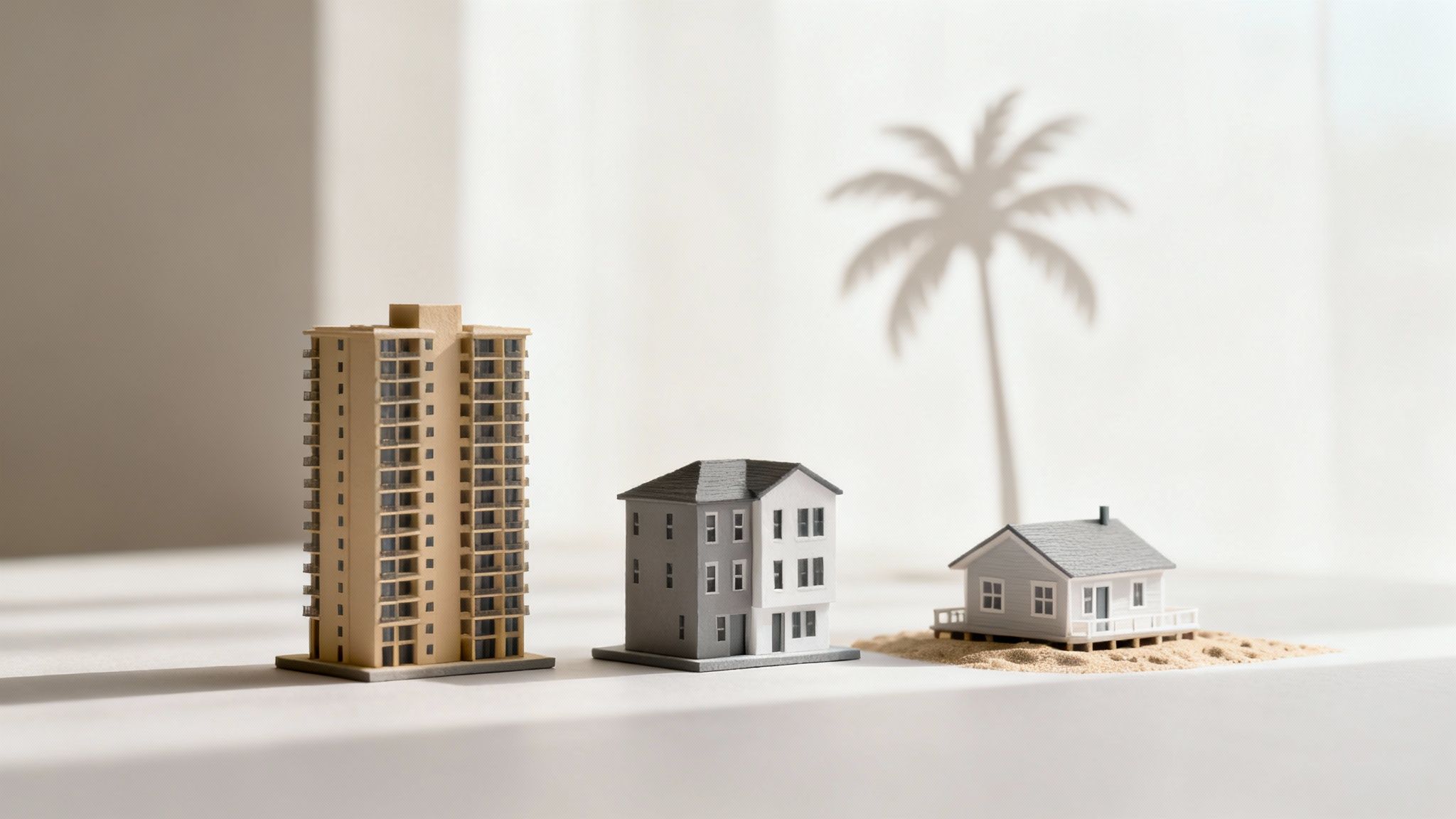
Deciding where to live in the Philippines is about so much more than just picking a house. You're choosing the entire backdrop for your daily life. This one decision will probably shape your social circle, your routines, and your overall happiness more than anything else.
The country's incredible diversity means there's a spot for just about every personality type out there. Are you craving the 24/7 pulse of a modern megacity? Or is the gentle rhythm of a quiet seaside village more your speed? Finding your perfect fit starts with getting to know the unique character of the most popular expat spots.
From a sleek high-rise condo to a laid-back beach bungalow, your home base is what defines the adventure. Let's dig into the top destinations and what life is really like in each one.
The Urban Powerhouses: Makati and BGC
For anyone who thrives on energy and sheer convenience, you can't beat Metro Manila's prime business districts. Makati and Bonifacio Global City (BGC) are the polished, modern faces of the Philippines, offering a lifestyle that feels both international and uniquely Filipino.
Think of these areas as self-contained bubbles of efficiency and comfort. This is where you'll find the world-class shopping malls, gourmet restaurants, immaculate parks, and a nightlife that buzzes until the early hours. Condo living is the norm here, and most buildings come loaded with amenities like pools, gyms, and 24/7 security, making for a soft landing for new expats.
- Makati: As the traditional financial heart of the country, Makati has a more established, classic city feel. It's a mix of towering skyscrapers and surprisingly leafy, exclusive residential villages tucked away from the main drags.
- Bonifacio Global City (BGC): Known for its clean, wide, pedestrian-friendly streets, BGC feels newer and more meticulously planned. It's a major hub for tech companies, startups, and a younger, trendier crowd.
Living here means you're trading wide-open spaces and lower costs for unmatched convenience. When everything you need is just a short walk away, it's a huge advantage in a city legendary for its traffic.
Beyond the Bustle: Popular Provincial Hubs
If the intensity of Manila isn't your thing, don't worry. The Philippines has fantastic alternatives that blend city comforts with a much more relaxed, nature-focused pace. These provincial hubs offer a balanced lifestyle that a lot of expats find is the perfect sweet spot.
Cebu City is often called the "Queen City of the South," and for good reason. It has a major international airport, excellent hospitals, and huge malls, but it's also just a stone's throw from some of the world's best beaches and dive sites. It really is the perfect middle ground between a buzzing metro and true island living.
Life outside the capital offers a different kind of richness. You might trade some big-city conveniences, but what you gain is a stronger connection to local culture, nature, and a much more laid-back community vibe.
For retirees, Dumaguete has become a celebrated haven. Its gentle pace of life, incredibly friendly locals, and excellent (yet affordable) medical facilities make it a top choice for those looking to settle down in comfort. And for the true nature lovers, places like Palawan offer a more rustic, off-the-grid existence surrounded by jaw-dropping natural beauty.
To find a place in these areas, you'll generally work with local real estate agents or browse online expat groups. Lease agreements are typically for one year and usually require a security deposit plus several months of rent paid upfront. No matter where you decide to look, take your time exploring different neighborhoods—or barangays—to find the community that truly feels like home.
Staying Healthy and Safe in Your New Home
Moving to a new country is a massive adventure, but it's the feeling of security that really lets you plant roots and enjoy it. When you're setting up a new life in the Philippines, getting a handle on the local healthcare system and practicing some basic street smarts are the two biggest things you can do for your own peace of mind.
The healthcare situation here is really a story of two different worlds. There's a public system, but it's often underfunded and stretched thin. Because of this, just about every expat you meet will be using the private healthcare system, and the experience is night and day.
In the bigger cities like Manila, Cebu, and Davao, you'll find private hospitals that are impressively modern and well-equipped. They're staffed by highly-trained, English-speaking doctors and nurses. Places like St. Luke's Medical Center and Makati Medical Center are even JCI-accredited, which means they're held to the same tough international standards as top hospitals in the West.
Why Health Insurance Is Non-Negotiable
Since you'll be relying on the private system, having solid health insurance isn't just a smart move—it's absolutely essential. While medical care is generally cheaper than in places like the United States, a serious emergency or an unexpected surgery can still hit you with a massive bill. A good insurance plan is your financial shield.
Without it, hospitals will ask you to pay for everything upfront. They'll often demand a hefty deposit just to admit you, which is the last thing you want to deal with when you're in the middle of a medical crisis.
Having the right insurance isn't just about buying a policy; you're buying access to the best care available without having to think twice about the cost. It turns a potential disaster into a manageable problem.
When you're shopping for a plan, look for one that covers all the bases: emergency evacuation, hospital stays, and outpatient visits. It's critical to get a policy that's specifically built for expats living overseas. You can get a better feel for your options by exploring different types of health insurance for expats and seeing what fits your life.
Staying Safe with a Bit of Common Sense
Now, let's talk about personal safety. It's easy to get spooked by official travel warnings, but the day-to-day reality for most expats here is overwhelmingly safe and friendly. The trick isn't to be fearful, but to be aware. Most crime is opportunistic, so taking a few simple precautions makes a world of difference.
Here are a few practical tips to help you navigate daily life with confidence:
- Mind Your Pockets in Crowds: Just like any busy city, keep your phone, wallet, and other valuables tucked away and secure when you're in crowded markets, malls, or on public transit. It's the easiest way to deter pickpockets.
- Use Trusted Rides: Stick to well-known ride-sharing apps like Grab, especially after dark. It's generally better than hailing a random, unmarked taxi off the street.
- Know Your Surroundings: It's just common sense—avoid walking alone in poorly lit or sketchy-looking areas late at night. Trust your gut. If a place or situation feels off, it probably is. Just walk away.
- Watch Out for Scams: Be a little skeptical of strangers who are overly friendly right off the bat with offers that sound too good to be true. A little common sense is your best defense.
By making your health coverage a priority and adopting these simple safety habits, you'll be free to soak up all the incredible experiences the Philippines has to offer.
Setting Up Your Daily Life and Work
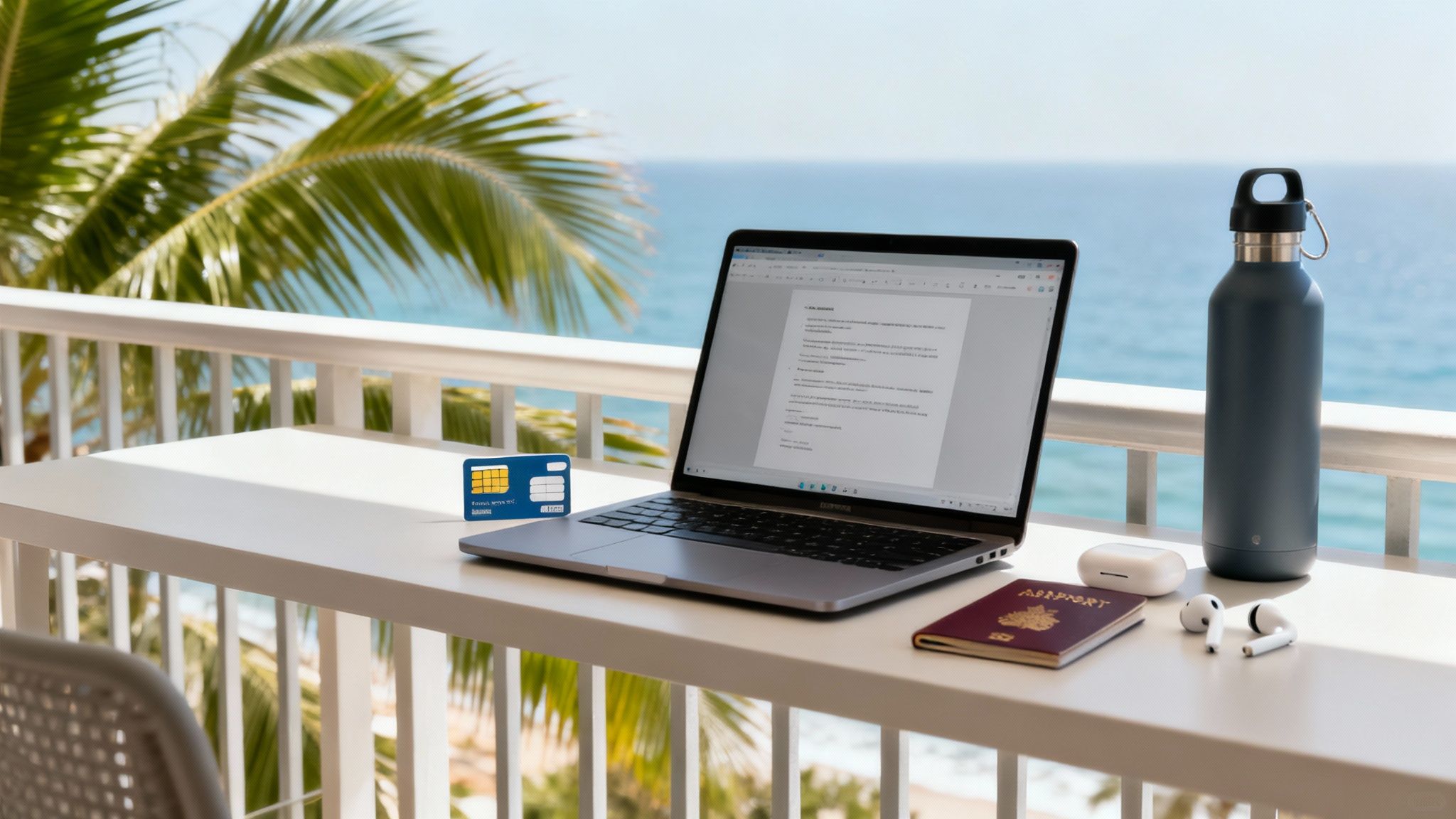
Moving from just visiting to truly living in a new country is all about mastering the small stuff—the day-to-day logistics that make life run smoothly. Once you decide to live in the Philippines, especially if you're working remotely, a few key setups will make a world of difference. Think of these as the practical building blocks that transform a new address into a real, functional home base.
Getting online is almost always priority number one. When it comes to internet in the Philippines, you're looking at a tale of two realities. In the big city hubs like Manila and Cebu, you can lock down reliable, high-speed fiber internet that's more than enough for video conferences and heavy-duty work.
But the minute you step outside those major centers, the picture changes dramatically. In many provincial towns and on the islands, you'll likely be relying on mobile data or much spottier connections. It's so important to do your homework on the local infrastructure before you fall in love with a specific spot.
Getting Connected and Managing Your Money
With your internet sorted, the very next thing you should do is get a local SIM card. This is incredibly easy. You can grab one right at the airport or from one of the thousands of tiny neighborhood convenience shops, known as sari-sari stores. This simple step gives you a local number and access to mobile data, which is indispensable for everything from navigating with Google Maps to using local payment apps.
Speaking of money, opening a local bank account is a game-changer. It helps you handle daily expenses and dodge those relentless international transfer fees. To get an account, most big banks will ask for your ACR I-Card (your Alien Certificate of Registration), proof of your address, and of course, your passport. It just makes paying bills and budgeting in Philippine pesos so much simpler.
A local bank account and SIM card are your keys to daily life. They unlock access to local payment apps like GCash, which are used for everything from paying for a tricycle ride to settling utility bills.
It's helpful to understand the local economy you're stepping into. The Philippines has a large, service-based labor force. As of September 2025, the country posted a high employment rate of 96.2%, but the minimum wage sits around 695 Philippine pesos per day—that's about $12 USD. It's a dynamic environment with a high literacy rate and a very young population, making it fertile ground for both traditional jobs and the growing digital economy.
For digital nomads looking to make the Philippines their base, finding the right remote work is key. You can explore some of the best platforms for digital nomad jobs to get started.
Understanding Local Norms and Getting Around
Finally, settling in is about more than just logistics; it's about learning the unwritten rules of daily life. In social and professional settings, the concept of pakikisama—which roughly translates to getting along and maintaining group harmony—is absolutely essential. A friendly, non-confrontational attitude will get you a lot further than being blunt or demanding.
When it comes to getting around, every area has its own rhythm. In the cities, the Grab app is your best friend for booking cars and taxis. For shorter trips and a more authentic local experience, you'll get to know tricycles (motorbikes with a sidecar) and the iconic, colorful jeepneys.
It's mastering these small details that really makes a new place start to feel like home.
Answering Your Burning Questions About Life in the Philippines
Even after you've done your homework, there are always a few lingering questions that pop up when you're seriously considering a move. Let's tackle some of the most common ones we hear from soon-to-be expats, offering straight-up answers to help you lock in your plans.
Can a Foreigner Actually Buy Property?
This is the big one, and the short answer is: it's complicated, but yes. On paper, foreigners cannot own land in the Philippines. The country's constitution keeps land ownership strictly for its own citizens.
But don't let that stop you. There are several well-established, legal ways for expats to own a home:
- Own the Structure, Not the Soil: You can legally own the house or building itself. The standard way this works is by purchasing the structure and then securing a long-term lease for the land it sits on.
- The Condo Route: This is hands-down the most popular option for expats. The Condominium Act of the Philippines allows foreigners to have full ownership of a condo unit, provided that foreign ownership in the entire building doesn't top 40%.
- Corporate Ownership: You can form a corporation in the Philippines that can own land. The catch? The corporation must be at least 60% Filipino-owned.
Is the Philippines a Safe Place for Expats to Live?
For the overwhelming majority of expats, the answer is a resounding yes. The Philippines is a safe and incredibly welcoming place to call home. Just like anywhere else on the planet, staying safe is mostly about being aware of your surroundings and using a bit of common sense.
Major cities and tourist hotspots are generally very secure. That said, it's always smart to keep an eye on your belongings in crowded markets or on public transport to avoid petty theft like pickpocketing.
The key to feeling safe is preparation, not paranoia. By understanding local norms, avoiding risky situations, and staying aware of your surroundings, you can enjoy a secure and peaceful life.
Violent crime directed at foreigners is rare. What you're more likely to encounter are minor scams or opportunistic theft. Simple habits—like using trusted ride-hailing apps, not flashing your new iPhone around, and being mindful of your bag—make a huge difference.
Just How Widely Spoken Is English?
You'll be pleasantly surprised. The Philippines consistently ranks near the top in Asia for English proficiency. English is an official language, right alongside Filipino, and it's taught in every school and used everywhere—from business and government to grabbing a coffee.
This high level of English makes getting settled in so much easier for expats. You can handle nearly any task, from opening a bank account to sorting out your visa or just chatting with your neighbors, without hitting a major language barrier.
Of course, learning some basic Filipino (or the local dialect where you live) is a fantastic way to connect more deeply with the culture, but you can absolutely get by and thrive using only English.
Ready to secure your peace of mind before you move? The experts at Expat Insurance specialize in finding the perfect international health insurance plan for expats living in the Philippines. Get a free, no-obligation quote and personalized advice by visiting https://www.expatinsurance.com.
