

November 24, 2025
•
5 min read
A Modern Guide to Living in China as an Expat
Thinking about living in China? Our 2024 expat guide covers visas, housing, cost of living, banking, and cultural tips to help you start your new life.

Moving to China is an incredible experience, blending ancient traditions with a pace of life so modern it can feel like stepping into the future. To really thrive, you have to get comfortable with a digital-first, largely cashless society. Success boils down to a few key things: getting your visa sorted, embracing mobile payments like Alipay and WeChat Pay, and understanding the cultural nuances that shape day-to-day life. It's an adventure that absolutely rewards a bit of prep and an open mind.
Your Essential First Steps to Living in China
Starting a new life in China can seem like a massive undertaking, but when you break it down, the first few moves are more straightforward than they appear. The whole process really stands on three foundational pillars: locking down the right visa, finding a place to call home, and plugging into the country's cashless economy.
Think of this as your starting map. It's designed to make those initial hurdles feel completely manageable.
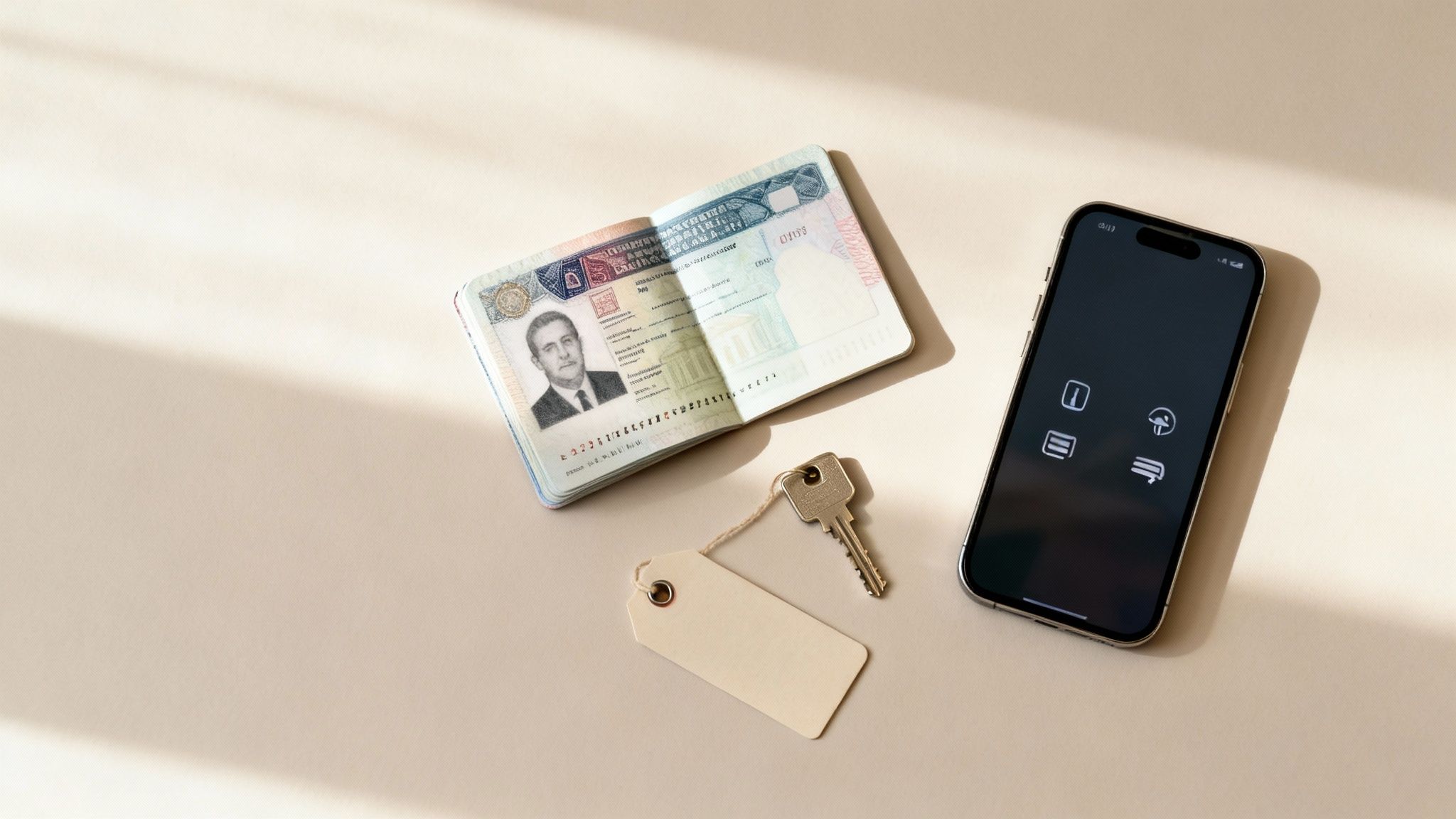
Everything kicks off with your immigration paperwork. For most professionals coming to China for work, this means getting a Z-visa. This is your official entry ticket, the key that gets you in the door. Once you're in, you'll convert this into a residence permit, which is what allows you to stay long-term.
With the legal side underway, you can turn your attention to housing. The rental market is a different beast depending on where you are—from the pricey, high-energy apartments in Shanghai to more wallet-friendly options in second or third-tier cities.
Finally, and this one is critical for just getting around, is sorting out your money. China runs on a digital payment system dominated by two apps: Alipay and WeChat Pay. From grabbing street food to splitting a dinner bill, almost every single transaction happens with a QR code scan on your phone.
The Three Pillars of a Smooth Transition
To keep from feeling overwhelmed, just pour your energy into these three key areas at the start. Nail these early on, and you'll build a solid foundation for your entire time in China.
-
Visa and Legal Status: This is your absolute first priority. Your employer will usually help with the Z-visa application, but it's on you to gather the documents and, crucially, register with the local police as soon as you arrive.
-
Housing and Accommodation: Your "home base" is the anchor for everything else. Finding an apartment isn't just about having a place to sleep; you'll need a signed lease to apply for your residence permit.
-
Digital Payments and Banking: You really can't function in modern China without a local bank account linked to Alipay or WeChat Pay. This isn't just a nice-to-have; it's the core of how the country's economy works day-to-day.
One of the most common slip-ups for new arrivals is overlooking the local registration requirement. When you first arrive, and every single time you re-enter China, you must register your address with the local Public Security Bureau (PSB) within 24 hours. Forgetting to do this can lead to fines or headaches with your visa down the line.
To get you started, here's a quick-glance table summarizing these core pillars.
Expat Quick Start Checklist for China
| Area of Focus | Key Action Required | Primary Tools/Documents |
|---|---|---|
| Visa & Legal Status | Obtain a Z-visa before entry, then convert to a Residence Permit. | Passport, Employment Contract, Medical Check, Police Registration Form |
| Housing & Accommodation | Find an apartment and sign a formal lease agreement. | Rental Apps (Lianjia/链家), WeChat Groups, Real Estate Agents |
| Digital Payments & Banking | Open a Chinese bank account and link it to WeChat Pay & Alipay. | Passport, Proof of Address (Lease), Residence Permit |
Following this checklist will help ensure your initial weeks in China are productive and stress-free, setting you up for a fantastic experience.
While the process has its share of bureaucracy, remember that millions of expats have walked this path before. For extra peace of mind, it's always smart to know what resources you have in an emergency. You can learn more about how to get help from the US embassy during an emergency in our detailed guide, which has crucial info for American citizens abroad. If you approach these first steps with a bit of patience and diligence, you'll find your new life in China gets off to a fantastic start.
How to Navigate Visas and Secure Your Residency
Before you can even think about finding an apartment or opening a bank account, you've got to tackle the paperwork. The first major hurdle for anyone moving to China for work is the visa. It's the absolute foundation of your life as an expat there.
Think of your initial visa, most likely a Z-visa, as the key that gets you through the front door. It grants you legal entry specifically to be employed, but it's not the document that lets you stick around and actually live there long-term.
That's where the residence permit comes in. If the Z-visa is your key, the residence permit is your long-term lease agreement. This is the official document that allows you to live and work in China legally. You must convert your Z-visa into a residence permit within 30 days of arriving in the country. Getting this two-step process right is the single most important part of securing your legal status.
Securing Your Z-Visa Before You Arrive
This whole process actually starts with your employer in China. They kick things off by applying for a Work Permit Notification Letter on your behalf. Once that crucial document is issued, the ball is in your court. It's time to gather your documents and head to a Chinese embassy or consulate in your home country to apply for the Z-visa.
The list of required documents can feel a bit overwhelming, but it's pretty standard stuff. The key is just to be ridiculously organized.
- Valid Passport: Make sure it has at least six months of validity left and plenty of blank pages for the visa itself.
- Work Permit Notification: This is the official "invitation" from your employer, which has been approved by the Chinese authorities.
- Certified Non-Criminal Record: You'll need to get a background check from your local or national police. Be prepared to have it authenticated or apostilled, depending on your country's rules.
- Medical Examination: There's a specific physical examination form that has to be filled out by a licensed doctor.
The visa application process is incredibly precise. Any mistake, no matter how small, can cause major delays. Double-check every single form for accuracy and ensure all your documents are certified exactly as required by your local Chinese consulate. A tiny oversight can easily set your timeline back by weeks.
From Visa to Residence Permit After Arrival
Once you touch down in China with that shiny new Z-visa in your passport, a 30-day clock starts ticking. Now you have to complete the second, equally critical step: converting that visa into a full-blown residence permit. This part of the process is handled in-country at the local Public Security Bureau (PSB) Exit-Entry Administration office.
Your employer should be there to guide you through it, but here's a general idea of what to expect:
- Police Registration: Within 24 hours of moving into your new place, you have to register your temporary address with the local police station. If you're staying in a hotel initially, they handle this for you. If you go straight to an apartment, it's on you to get it done.
- Official Health Check: Yes, another one. Even if you did a full medical in your home country, you'll likely have to do another one at a government-designated medical center in China.
- Submit Your Application: Armed with your police registration, health check results, and a stack of other documents from your employer, you'll go to the PSB to formally apply for the residence permit.
- Receive Your Permit: The PSB will hold onto your passport for a few weeks while they process everything. Once it's approved, they'll place the residence permit sticker inside your passport. This sticker officially replaces your Z-visa as your legal status document in China.
This final permit is your official license to live and work in the country. Staying compliant with these immigration rules is absolutely vital—it's what ensures your time in China is secure and hassle-free.
For a bit more context on how different countries handle entry permissions, you might want to learn more about visa requirements for foreign travel to see the bigger picture.
Finding Your Home and Mastering Daily Life
Once your visa is in hand, the real adventure begins: setting up your life in China. This is where the rubber meets the road—finding a place to call home and getting a feel for the daily cost of living. Your experience will be shaped by one of the most incredible migrations in human history. It's a key detail that can't be overstated.

This tidal wave of urbanization affects everything. By the end of 2024, China's urbanization rate hit 67%, with a staggering 943 million people now living in cities. This isn't just a statistic; it's a massive shift from rural areas to economic hubs that creates intense competition and incredible opportunities. You can discover more insights about China's urban growth on Wikipedia and see just how it continues to reshape the country.
This growth is the invisible hand guiding your apartment hunt and your budget.
Decoding the Housing Market
Finding an apartment in China is an experience, to say the least. The market moves at lightning speed, especially in the big-name cities where good places are snapped up in a heartbeat. The first thing you need to wrap your head around is the city "tier" system. It's the unofficial cheat code to managing your expectations.
- Tier 1 Cities (e.g., Shanghai, Beijing, Shenzhen): These are the global megacities. Think hyper-modern, international, and packed with opportunity. Salaries are the highest here, and so are the rental prices. You'll definitely pay a premium for a modern, centrally located apartment.
- Tier 2 Cities (e.g., Chengdu, Hangzhou, Nanjing): These are big, booming provincial capitals with a growing expat scene. They strike a fantastic balance, offering modern conveniences without the Tier 1 price tag. A great sweet spot.
- Tier 3 Cities and Below: Here you'll find smaller, developing cities where housing is most affordable. The flip side? Fewer Western amenities and a real need for some solid Mandarin skills to navigate daily life.
To kick off your search, dive into local rental apps like Lianjia (链家) or Beike (贝壳). They're mostly in Chinese, but their map-based search is pretty intuitive once you get the hang of it. Honestly, though, the most efficient route is often finding a local real estate agent through an expat WeChat group.
Be prepared for the standard payment structure for long-term rentals in China. It's typically two months' rent as a deposit plus three months' rent in advance. That initial outlay can be a shock, so make sure you budget for it before you land.
Understanding Rental Contracts
When you find a spot you love, the rental contract becomes your bible. Most agents are on the up-and-up, but it's on you to make sure your lease has the right protections.
Key Clauses to Verify in Your Lease:
- Landlord's Proof of Ownership: Always, always ask to see the landlord's property ownership certificate (房产证) and their ID. This confirms they actually have the legal right to rent the place to you.
- Diplomatic Clause: This is a lifesaver. It lets you break the lease early without penalty if your job suddenly requires you to leave the country.
- Utility and Fee Responsibility: Get it in writing. The contract must spell out exactly who pays for what—utilities (water, gas, electricity), internet, and any property management fees.
- Repair Clause: Who fixes the washing machine when it breaks? The lease should clarify who is responsible for maintenance and repairs on appliances, plumbing, and so on.
If you can, have a Mandarin-speaking friend or colleague give the contract a once-over before you sign. This document isn't just for your housing security; you'll need it for your residence permit application, too.
Mastering the Cost of Daily Life
Beyond rent, you might be surprised at how affordable daily life in China can be. Food and transportation, in particular, are a bargain.
Public transport is world-class and dirt cheap. A subway ride in a major city like Shanghai or Beijing will usually set you back less than $1 USD. Groceries are also incredibly reasonable, especially if you shop at local wet markets and embrace local produce.
But there's a catch: imported goods. If you can't live without your favorite European cheese, Italian coffee, or French wine, be prepared for a bit of sticker shock. These are considered luxury items and come with a price tag to match.
Managing Your Finances and Healthcare
Once you've navigated the legal hurdles of getting settled, your next big challenge is mastering your money and your health. Honestly, getting these two things right from the very beginning will save you a world of pain down the road. They are the absolute foundation of a stable, stress-free life in China.
And it all starts with opening a local bank account.

This isn't just a suggestion; it's non-negotiable. You'll need a Chinese bank account for everything: getting paid, covering rent, and—most crucially—linking to the mobile payment apps that literally run the country. To get one opened, you'll generally need your passport, your residence permit, and some proof of your address.
Embracing China's Cashless Society
Get ready for a shock: cash is practically a relic in China. The country operates almost entirely on a digital payment system built around two powerhouse "super apps": Alipay (支付宝) and WeChat Pay (微信支付).
Once you've linked your new Chinese bank account to these apps, you can pay for pretty much anything just by scanning a QR code with your phone. Think of it like this: your phone is your wallet. Taxis, street food, groceries, bills—it's all done through a quick scan.
Setting it up is surprisingly easy:
- Download the Alipay and WeChat apps from your app store.
- Find the wallet or payment section inside each app.
- Just follow the on-screen instructions to add your Chinese bank card details.
- You'll need to complete a quick identity check, which usually just means entering your passport number.
When you're juggling money between China and your home country, it really helps to get your head around how currency exchange works on a bigger scale. Spending a little time understanding the global currency exchange market can save you a lot of money and headaches when sending funds back home.
Navigating the Healthcare System
Just as vital as your bank account is your health plan. China's healthcare system is really a tale of two different worlds: the local public system and the private international clinics.
Public hospitals are filled with incredibly skilled doctors and can handle just about anything. The catch? They can be overwhelmingly crowded, and the language barrier is a real challenge. You'll find yourself trying to figure out a confusing registration process while waiting in very, very long lines.
This is exactly why private international clinics exist. They are built for expats, with English-speaking doctors and staff, Western standards of care, and the ability to bill your insurance company directly. The only downside is the cost, which is significantly higher.
For this reason, comprehensive health insurance isn't just a good idea; it is an absolute necessity for any expat living in China. Trying to rely on the public system alone without solid insurance is a massive financial and logistical gamble.
This is becoming even more critical as China's population changes. By the end of 2024, the total population was around 1.408 billion, but it's actually started to decline slightly. With birth rates at historically low levels of about 6.77 births per 1,000 people, the country is facing the pressures of an aging population. This puts a growing strain on social services, especially healthcare.
Securing the Right Health Insurance
Sorting out your health insurance is something you should do before you even get on the plane. A standard travel policy just won't do the job for someone living here. You need a robust plan that gives you easy access to those international clinics where you'll feel most comfortable.
Your policy should absolutely include these key features:
- Inpatient and Outpatient Coverage: This makes sure you're covered for both major hospital stays and simple visits to the doctor.
- Direct Billing Network: Look for an insurance provider that has direct payment agreements with international clinics in your city. This saves you from having to pay huge bills out-of-pocket and waiting for reimbursement.
- Emergency Medical Evacuation: This is a must-have. It covers the enormous cost of transporting you to another country for medical care if something truly serious happens.
To make sure you get a policy that actually meets your needs, it pays to shop around and see what's available. You can start by checking out our guide on health insurance for expats to compare different plans and find the perfect fit for your new life in China.
Integrating into Chinese Culture and Society

Getting by in China is one thing. Actually thriving is another. Once you've sorted out the logistics—the visas, the bank accounts, the apartment keys—the real adventure begins. To truly feel at home, you have to start untangling the social fabric that holds daily life together.
This means getting a feel for a culture deeply rooted in relationships, respect, and a completely different way of communicating. Think of it like learning the unwritten rules of a new game. Once they click, everything from making friends to navigating office politics becomes a whole lot smoother.
Understanding Guanxi and Mianzi
Right off the bat, you'll hear two words tossed around constantly: guanxi (关系) and mianzi (面子). They don't have neat, one-word English translations, but they are the invisible forces guiding just about every social and professional interaction in the country.
Guanxi is your network of relationships and connections. It's more than just who you know; it's your social capital—a complex web of mutual favors and obligations. Building good guanxi with your colleagues, neighbors, and friends is absolutely essential for getting things done, whether you're trying to find a reliable plumber or land a new business deal.
Mianzi, usually translated as "face," is all about reputation, social standing, and prestige. Giving someone "face" means showing them respect and acknowledging their status. On the flip side, causing someone to "lose face" by publicly embarrassing or criticizing them can torpedo a relationship for good. For example, pointing out a mistake to a coworker quietly, in private, gives them face. Calling them out in a team meeting causes them to lose it.
Grasping these concepts is your key to deeper connections. An expat who helps a colleague with a small task is building guanxi. A manager who praises an employee in front of the team is giving them mianzi. These small, consistent actions build the trust necessary for strong relationships in China.
Essential Mandarin Survival Phrases
Look, no one expects you to be fluent overnight. But learning just a few basic Mandarin phrases will dramatically improve your day-to-day life. It's a sign of respect, and it makes simple interactions—like buying your morning coffee or greeting a neighbor—so much easier.
Here are a few absolute must-haves to get you started:
- Nǐ hǎo (你好) - Hello
- Xièxiè (谢谢) - Thank you
- Duōshǎo qián? (多少钱?) - How much is this?
- Tīng bù dǒng (听不懂) - I don't understand.
- Wǒ yào zhège (我要这个) - I want this one (a lifesaver when all you can do is point at a menu).
The Hukou System and Social Context
To really understand your local friends and colleagues, it helps to have a passing knowledge of the hukou (户口) system. This is a household registration system that essentially ties Chinese citizens to their official place of birth or residence.
The hukou system has had a massive impact on Chinese society for decades. It has shaped where people can live, work, and what social benefits they can access. Historically, it heavily restricted migration from rural areas to cities. While modern reforms have loosened the rules, millions of people who moved for work still face challenges accessing the same level of education, healthcare, and social security as official urban residents. You can learn more about the facts of China's hukou system to get a better sense of this framework.
Knowing a bit about the hukou helps you understand the personal histories and hurdles many people in China have navigated. It's a bit of context that can lead to more empathetic and meaningful connections as you build your new life abroad.
Common Questions About Living in China
Stepping into a new life abroad always kicks up a long list of questions. When that new life is in a place as dynamic and distinct as China, those questions can feel especially urgent. From language barriers to digital firewalls, getting a handle on the practical realities is the first step to a smooth transition.
This section gets right to the point, tackling the most common concerns we hear from expats planning their move. We've put together direct answers to help you prepare, know what to expect, and hit the ground running from day one.
Can I Get By Without Speaking Mandarin?
This is the big one, isn't it? It's probably the number one question on every future expat's mind. The short answer is yes, it's possible—but that comes with some major asterisks. In massive international hubs like Shanghai, Beijing, and Shenzhen, you can absolutely manage your day-to-day life in English, especially inside expat-heavy neighborhoods, international companies, and upscale restaurants.
But relying only on English will put a ceiling on your experience. If you want to really connect with the culture, deal with any kind of government paperwork, or travel to smaller cities, learning some basic Mandarin is a must. It's not just about getting by; making an effort to speak the language shows a huge amount of respect for the local culture and opens doors to conversations and friendships you'd otherwise miss.
Start by focusing on a few key survival phrases:
- Greetings and pleasantries: A simple "nǐ hǎo" (hello) and "xièxie" (thank you) go an incredibly long way.
- Ordering food and drinks: Being able to ask for the bill ("mǎidān") or point and say "zhège" (this one) is empowering.
- Transportation basics: Knowing how to tell a taxi driver "zuǒ" (left), "yòu" (right), and "zhí zǒu" (straight ahead) is a total game-changer.
Even a small vocabulary will do wonders for your confidence and daily life.
Is the Internet Restricted and How Do Expats Deal with It?
Yes, the internet in China is not the wide-open web most Westerners are used to. The country operates behind a sophisticated filtering system often called the "Great Firewall," which blocks access to many popular international websites and apps.
This list includes platforms that are probably central to your digital life:
- Google and all its services (Gmail, Maps, Drive)
- Facebook and Instagram
- WhatsApp and Telegram
- X (formerly Twitter) and YouTube
- Major international news sites
So, how does anyone stay connected to the outside world? The answer is a Virtual Private Network (VPN). A VPN works by encrypting your internet traffic and routing it through a server in another country, letting you hop right over the firewall.
It is absolutely critical to subscribe to and install a reliable VPN service on all of your devices—phone, laptop, and tablet—before you arrive in China. Trying to access VPN provider websites from within the country is often difficult, if not impossible. Don't wait until you land to figure this out.
How Safe Is China for Expats?
For the most part, China is considered an exceptionally safe country for expats. Rates of violent crime are remarkably low, and this high level of personal safety is one of the biggest perks people mention about living there. Major cities have a very visible police presence and are monitored by extensive public surveillance networks.
The safety concerns you're more likely to run into are minor, like petty theft (think pickpocketing in crowded tourist spots or on the subway) and the occasional scam targeting foreigners. Just like in any big city anywhere in the world, it pays to be aware of your surroundings and keep an eye on your belongings.
But when it comes to walking around late at night without looking over your shoulder, many expats will tell you that China feels significantly safer than their home countries.
What Is the Biggest Culture Shock for New Expats?
Everyone's experience is different, but two things tend to stand out for new arrivals: the indirect communication style and the all-in, hyper-digital ecosystem.
First, there's the concept of "face" (mianzi), which shapes social interactions in a way that can be new to many foreigners. Direct confrontation or public criticism is generally avoided to prevent anyone from losing face or feeling embarrassed. Communication is often more subtle and indirect, which can be a real learning curve if you're used to a more straightforward approach. Learning to read between the lines is a key skill for building good relationships, both personally and professionally.
The second major adjustment is the sheer dominance of digital life. In China, your smartphone isn't just a phone—it's your wallet, your ID, your social life, and your key to just about every service imaginable. The country is profoundly cashless. Everything from buying a single apple from a street vendor to booking a doctor's appointment is done by scanning a QR code through super-apps like WeChat or Alipay. Getting used to this—and the fact that you can't really function without it—is a fundamental part of settling into modern China. It's an incredibly convenient system once you're in, but it can feel like a vertical learning curve right at the start.
Finding your way in a new country is an adventure, and being prepared is your best tool. At Expat Insurance, we specialize in simplifying one of the most critical parts of your journey—your health and safety. Our team of advisors, many of whom are expats themselves, can help you find the perfect international health insurance plan, ensuring you have reliable coverage and peace of mind from the moment you arrive. Let us handle the details, so you can focus on your new life in China. Learn more at Expat Insurance.
