
January 22, 2026
•
5 min read
The Ultimate Moving Abroad Checklist for 2026: 10 Critical Steps
Your essential moving abroad checklist for a seamless relocation. Covers health insurance, visas, finances, and logistics to ensure nothing is missed.
Relocating to another country is one of life's most exciting adventures, but it's also a complex project with dozens of moving parts. A successful transition depends less on luck and more on meticulous planning. Forgetting a critical step, like securing compliant health insurance for preexisting conditions or understanding visa timelines, can lead to costly delays, legal hurdles, and immense stress. This is where a detailed moving abroad checklist becomes your most valuable tool. It transforms an overwhelming process into a manageable series of actionable steps.
This comprehensive guide is designed to be your definitive roadmap, breaking down the entire international relocation process into a clear, timeline-based plan. We go beyond simply packing boxes to cover the non-negotiable legal, financial, and healthcare preparations essential for a smooth move. You'll find specific, practical advice on everything from obtaining the correct visas and managing your tax residency status to arranging international banking and finding local medical providers. While focusing on your own preparations, remember that a truly successful international move also considers all family members; for those with furry companions, you can find a comprehensive guide to moving overseas with pets to navigate that specific process.
Whether you're a digital nomad seeking adventure, a retiree planning a peaceful new chapter, or an executive on a corporate assignment, following this checklist will ensure you arrive prepared, protected, and ready to thrive. We'll guide you through what needs to be done months in advance, in the final weeks before departure, and during your first year in your new home country, ensuring no critical detail is overlooked.
1. Secure International Health Insurance Before Departure
Obtaining comprehensive international health insurance is arguably the most critical step to complete before you relocate. Unlike domestic plans, which often provide limited or no coverage outside your home country, expat health insurance is specifically designed for life abroad. These policies cover everything from routine doctor visits to major medical emergencies, ensuring you aren't left with catastrophic out-of-pocket costs.
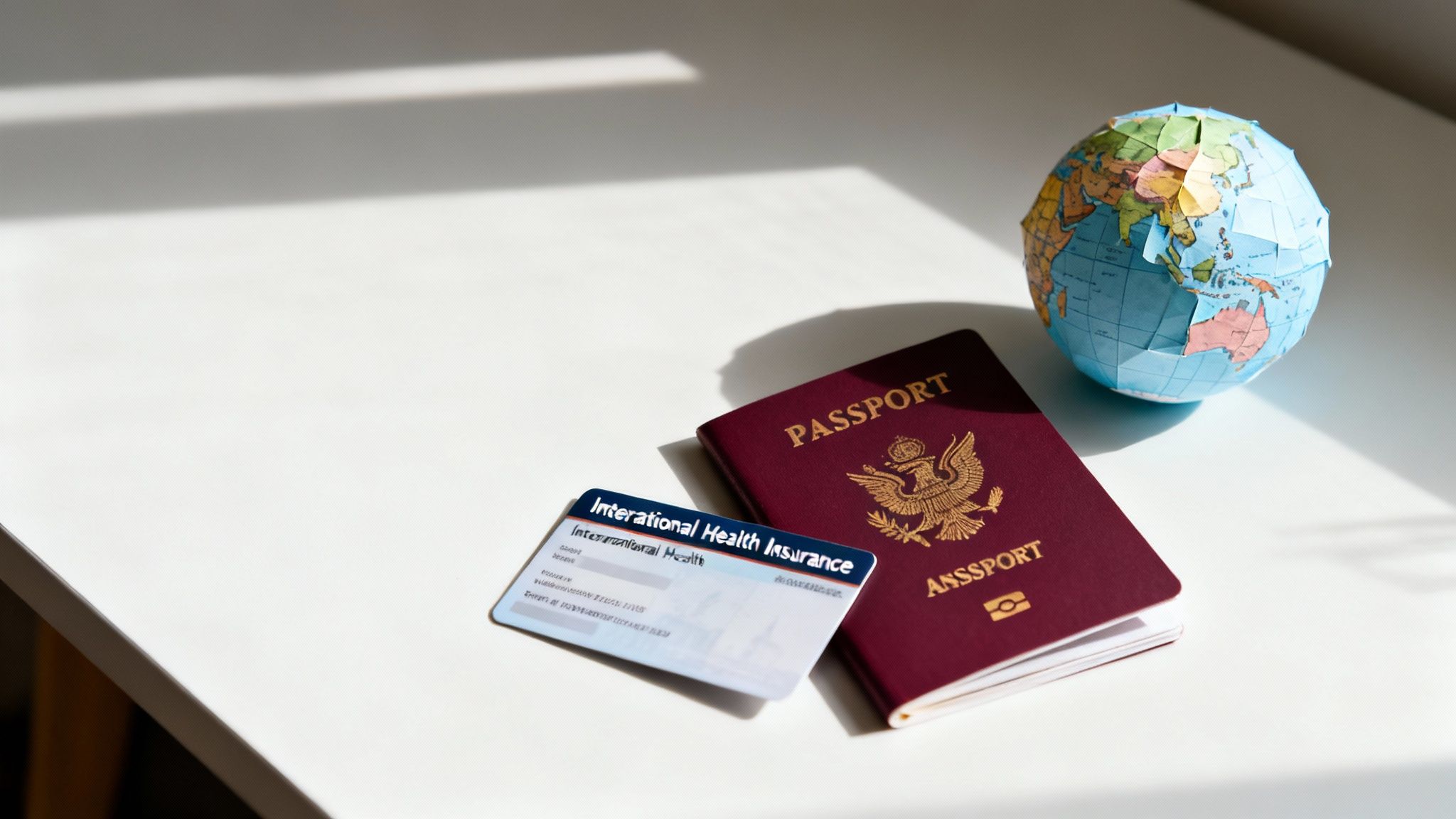
Starting this process early is non-negotiable, as many countries require proof of adequate health coverage to approve visa or residency applications. A gap in coverage, even for a few days, can create significant financial and medical risks.
Why This is Your First Priority
International health insurance goes beyond basic travel insurance. It provides long-term, comprehensive medical coverage, including specialized services like medical evacuation and repatriation. This ensures you can be transported to a better-equipped facility or even back home if a serious medical event occurs.
Examples of its importance:
- A digital nomad in Thailand needs a plan that covers them across Southeast Asia.
- A corporate expat family moving to Dubai requires a group policy with pediatric and maternity benefits.
- A retiree in Mexico needs a plan that addresses age-specific health concerns and pre-existing conditions.
Actionable Steps and Tips
To ensure a seamless process, follow this checklist. Aim to start researching 2-3 months before your departure to allow ample time for comparison and underwriting.
- Gather Medical Records: Collect all relevant medical histories for you and any family members.
- Disclose Everything: Be transparent about pre-existing conditions to avoid claim denials later.
- Compare Insurers: Request quotes from multiple providers like Allianz, Axa, or GeoBlue. Brokers can simplify this process by comparing dozens of plans for you.
- Confirm Key Details:
- Does the plan cover your destination country and any other countries you plan to visit?
- Is the activation date aligned with your departure date?
- Are your current prescription medications covered?
- Keep Documents Accessible: Save digital copies of your policy and keep physical copies with your important travel documents.
By prioritizing this task, you establish a fundamental safety net, making it an essential first item on your moving abroad checklist. For a detailed comparison of top providers, find out more about the best international health insurance for expats and choose a plan that fits your needs.
2. Obtain or Renew Passport and Necessary Visas
A valid passport is the foundational document for any international move, and securing the correct visa is a legal prerequisite for long-term stays in most countries. Visa processing times can vary dramatically by destination and citizenship, ranging from a few weeks to several months, making this an essential early step in your moving abroad checklist. Underestimating these timelines is a common and costly mistake.
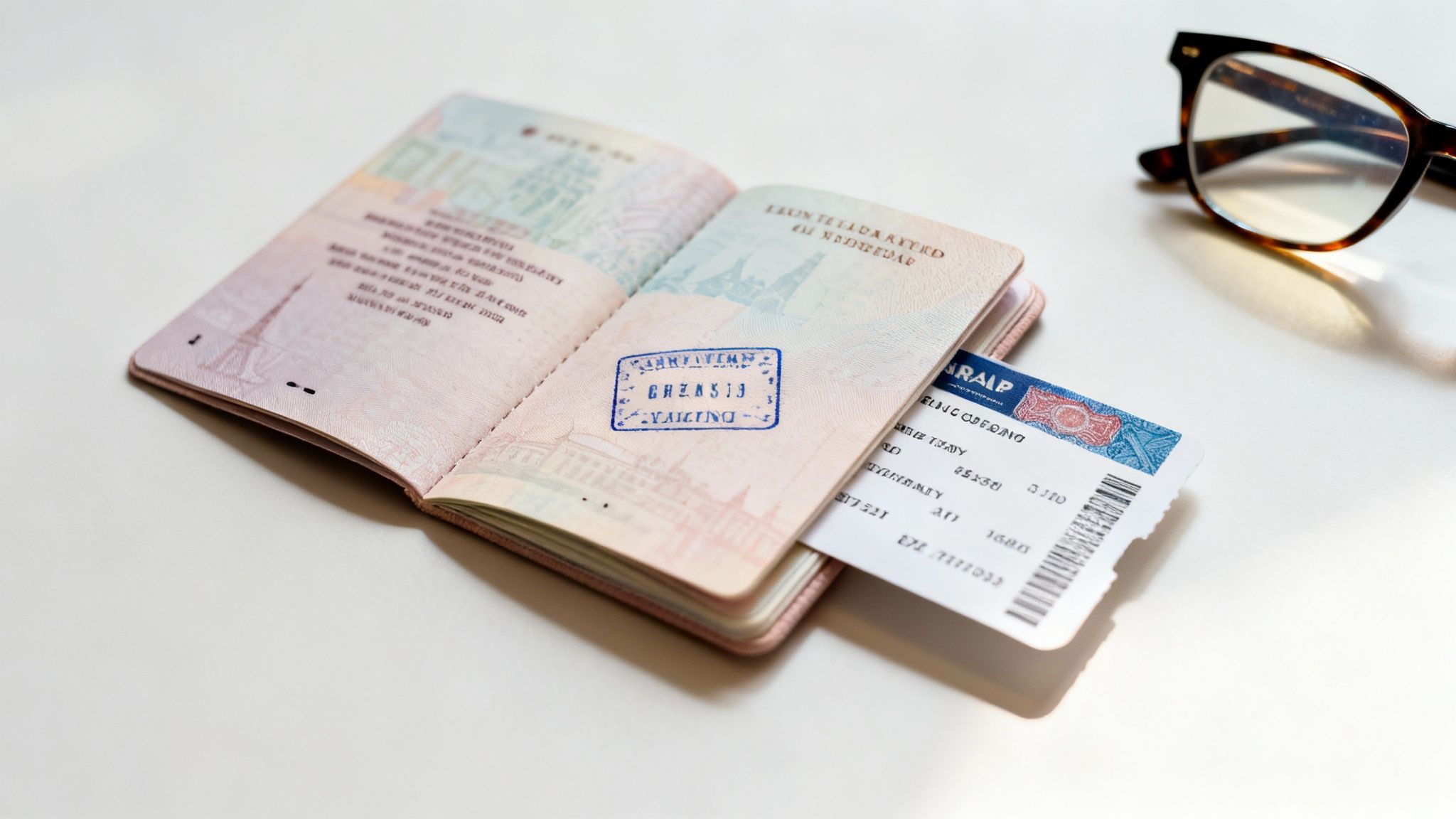
Starting this process 6-12 months before your planned departure is critical. Many countries require your passport to have at least six months of validity remaining upon entry, and a visa application can't proceed without a valid passport. A delay here can derail your entire relocation plan.
Why This is Your First Priority
Your passport and visa are the legal keys that unlock your ability to live, work, or retire in a new country. Without them, even the best-laid plans are impossible to execute. Different visa categories-such as work, student, or retirement-have unique documentation requirements, timelines, and legal stipulations.
Examples of its importance:
- A digital nomad moving to Portugal needs to apply for a D7 or Digital Nomad Visa, each with specific income requirements.
- A corporate expat relocating to Dubai typically has their employment visa sponsored by their company, which expedites the process.
- A retiree moving to Panama must navigate the Pensionado Visa process, which requires proof of a lifetime pension.
Actionable Steps and Tips
To ensure a smooth application process, follow this checklist. Aim to start researching visas 6-12 months before your move and apply at least 3-6 months before your departure date.
- Check Passport Validity: Ensure your passport is valid for at least one year beyond your intended arrival date. Renew it immediately if it's not.
- Research Visa Categories: Consult your destination country's official embassy or consulate website to identify the correct visa for your situation.
- Gather Documents Early: Start collecting required paperwork like birth certificates, proof of financial means, and employment letters.
- Confirm Key Details:
- What are the exact financial, health, and criminal record requirements?
- How long is the typical processing time for your citizenship?
- Are you required to apply from your home country or can you apply from abroad?
- Keep Digital and Physical Copies: Scan all application documents and your approved visa. Store copies securely in the cloud and with your important travel papers.
Navigating the complexities of immigration is a fundamental part of moving abroad. For a closer look at what may be required, find out more about visa requirements for foreign travel to better prepare for your application.
3. Research Healthcare System and Local Medical Providers
Once you have insurance, understanding the on-the-ground healthcare landscape of your new country is the next logical step. The quality, cost, and accessibility of medical care vary dramatically worldwide. Proper research ensures you can navigate the local system confidently, from finding a family doctor to handling a medical emergency, making this a crucial part of your moving abroad checklist.
This knowledge directly complements your international health insurance. It helps you identify in-network providers, understand local treatment protocols, and anticipate potential gaps between what your policy covers and what the local system offers. Failing to do this research can lead to confusion, delays in care, and unexpected expenses.
Why This is Your Next Priority
Knowing the local healthcare system prevents you from scrambling for information during a stressful medical situation. It allows you to make informed decisions about where to seek care and what to expect. This is especially important in countries with dual public and private systems, where quality can differ significantly.
Examples of its importance:
- An expat in Germany must navigate its mandatory, multi-payer system with extensive specialist networks.
- A retiree moving to Portugal needs to understand how to register with the public SNS while using private clinics for faster access.
- A family in Singapore can leverage its world-renowned private hospitals, which are often in-network for premium insurance plans.
Actionable Steps and Tips
Start this research about 1-2 months before your move, as it will help you ask more informed questions when finalizing your health insurance plan.
- Identify Top-Tier Facilities: Use resources from organizations like the Joint Commission International (JCI) to find accredited hospitals and clinics in your new city.
- Consult Expat Communities: Join Facebook groups or forums for your destination to get firsthand reviews and recommendations for English-speaking doctors.
- Map Out Emergency Services: Locate the nearest 24/7 emergency rooms and understand the local equivalent of 911. Save these numbers and addresses in your phone.
- Verify Medication Availability:
- Create a list of your prescription medications, including their generic names.
- Check with local pharmacies or expat forums to confirm their availability and whether you need a local prescription.
- Find out if any of your medications are considered controlled substances.
- Pre-Select Providers: Shortlist 2-3 primary care physicians and pediatricians before you arrive, making it easier to schedule initial appointments.
By familiarizing yourself with the local healthcare environment, you empower yourself to access care quickly and effectively, ensuring your health and well-being are protected from day one.
4. Arrange Housing and Understand Rental/Purchase Requirements
Securing suitable housing is a cornerstone of a successful move abroad, yet it's often one of the most complex tasks. Rental markets, legal requirements, and tenant rights vary dramatically from one country to another. Navigating unfamiliar leasing contracts, surprise fees, and different cultural norms for landlord-tenant relationships can be a significant source of stress.

Starting this process 2-3 months before your move is crucial. This timeframe allows for thorough research, virtual or in-person viewings, and careful review of legal documents without the pressure of an imminent arrival date.
Why This is Your First Priority
Your housing choice dictates your daily life, from your commute to your access to amenities and community. A rushed decision can lead to signing an unfavorable lease, living in an inconvenient or unsafe area, or facing unexpected costs. Understanding the local system beforehand prevents costly mistakes and ensures your new home is a place of comfort, not conflict.
Examples of its importance:
- A family moving to the UK must be prepared for a standard five-week security deposit and strict tenant protection laws.
- An expat in Germany will find that obtaining personal liability insurance (Haftpflichtversicherung) is highly recommended, as it protects against accidental damage to the rental property and many landlords prefer tenants who have it.
- A retiree considering Portugal will find an affordable market but must navigate increasing demand and varying regional rental laws.
Actionable Steps and Tips
To streamline your housing search, follow this checklist. Budget for 1-2 months of temporary accommodation, like an Airbnb, to give yourself a local base from which to find a long-term home.
- Research Reputable Platforms: Use established local websites like Rightmove (UK) or Idealista (Spain and Portugal) to gauge market prices.
- Join Expat Communities: Leverage Facebook groups for specific cities to get honest reviews of neighborhoods, landlords, and real estate agents.
- Verify Everything: Request video tours, confirm the landlord's identity and property ownership, and ask which utilities are included in the rent.
- Review Contracts Carefully:
- Understand the deposit protection scheme; many countries legally require it to be held by a third party.
- Have a local legal expert review the lease. The small cost provides invaluable protection.
- Photograph the property's condition upon moving in to safeguard your deposit.
- Prepare Your Documents: Landlords often require proof of income, a letter of employment, and visa documentation.
Securing housing is a vital part of any moving abroad checklist. For those considering ownership, discover more about the process of buying property in Mexico to understand international real estate laws.
5. Manage Financial Accounts, Banking, and Currency Exchange
Navigating your finances across borders is a foundational step in any successful international move. This involves more than just notifying your bank of travel; it requires setting up new banking systems in your destination country while strategically managing your financial ties back home. A well-planned financial transition prevents costly currency exchange fees, avoids account access issues, and ensures you meet complex international tax obligations from day one.
Starting this process early is crucial, as opening a bank account abroad can be complicated without proof of residency, which itself can take time to secure. Proactive financial management is a non-negotiable part of your moving abroad checklist, protecting your assets and simplifying your new life.
Why This is Your First Priority
Your financial setup is the engine that powers your relocation. Without access to local currency and a functioning bank account, paying for rent, utilities, and daily necessities becomes a significant hurdle. Furthermore, understanding your tax liabilities in both your home and host countries prevents severe penalties. Proper financial planning ensures you can transfer large sums for deposits or purchases efficiently and cost-effectively.
Examples of its importance:
- A US citizen moving to Spain must continue to file US taxes and report foreign accounts via FBAR and FATCA filings.
- A remote worker in Portugal uses a service like Wise to receive payments in multiple currencies with minimal fees.
- A UK retiree in Australia consults a specialist about Qualifying Recognised Overseas Pension Schemes (QROPS) to manage their pension transfer.
Actionable Steps and Tips
To create a robust international financial plan, begin at least 3-4 months before your departure. This timeline allows for account applications, tax consultations, and strategic fund transfers.
- Research Banking Requirements: Investigate what documents are needed to open a bank account in your destination country (e.g., visa, proof of address, employment contract).
- Consult a Tax Professional: Speak with an accountant specializing in expat taxes to understand your obligations, including tax treaties and reporting requirements.
- Compare Transfer Services: Use services like Wise or Remitly for international money transfers, as they typically offer better exchange rates and lower fees than traditional banks.
- Organize Home Accounts:
- Do you need to keep your home bank account open for pensions or property income?
- What are the foreign transaction fees on your current credit and debit cards?
- Notify your banks of your move to avoid having your accounts frozen.
- Keep Meticulous Records: Maintain digital and physical copies of all financial statements, tax filings, and international transfer receipts.
6. Address Tax Residency Status and File Required Tax Forms
Navigating your tax obligations is a non-negotiable part of your moving abroad checklist, as it affects everything from your net income to your legal standing in both your home and host countries. Your tax residency status determines where you owe taxes and which country's tax laws apply to you. Failing to address this can lead to double taxation, steep penalties, and legal complications down the line.
Understanding your status early is crucial. Most countries use specific criteria, like the number of days you are physically present, to define tax residency. This process requires formally notifying your home country's tax authorities and taking deliberate steps to establish residency in your new one.
Why This is Your First Priority
Properly managing your tax residency protects you from financial and legal risks. It ensures you are compliant and can take advantage of tax treaties designed to prevent double taxation. Getting this wrong can negate the financial benefits of moving abroad and create years of bureaucratic headaches.
Examples of its importance:
- A U.S. citizen moving to Spain must continue filing U.S. taxes annually due to citizenship-based taxation, while also filing Spanish taxes as a resident.
- A UK citizen becoming a non-resident for tax purposes must carefully track their days spent in the UK to maintain that status.
- A remote worker moving to Dubai establishes tax residency in a zero-income-tax jurisdiction but must still understand any lingering obligations to their home country.
Actionable Steps and Tips
Consult a tax professional specializing in expat issues 3-6 months before your departure. Their guidance is invaluable for navigating the complexities of international tax law.
- Understand Residency Rules: Research the specific "physical presence" or other tests for both your home and destination country.
- Notify Tax Authorities: Formally inform your home country's tax agency of your departure date to "break" residency.
- Gather Documentation: Collect documents like your lease agreement, employment contract, or utility bills to prove your new residency.
- File Final Returns: File a final tax return in your home country and clarify any ongoing filing requirements.
- Research Tax Treaties: Check for a tax treaty between your home and host countries to avoid being taxed twice on the same income.
- Set Calendar Reminders: Note the tax deadlines for both countries, as they will likely differ.
For U.S. citizens, firms like Bright!Tax offer specialized services to help manage complex filing requirements, including FATCA and FBAR reporting. Proactive tax planning is a cornerstone of a successful international move.
7. Arrange Life Insurance and Estate Planning for International Status
Securing your financial legacy is a critical, yet often overlooked, part of a successful international move. Relocating abroad introduces complexities to life insurance and estate planning, as residency changes can affect policy validity, tax liabilities, and inheritance laws. Standard domestic life insurance policies may not provide coverage once you live overseas, potentially leaving your loved ones unprotected.
International life insurance is designed specifically for an expatriate lifestyle, offering coverage across multiple countries and often including essential benefits like repatriation of remains. Similarly, your estate plan requires a global perspective to ensure your assets are distributed according to your wishes, regardless of where they are held. Neglecting this step in your moving abroad checklist can create immense legal and financial burdens for your beneficiaries.
Why This is Your First Priority
Your financial and legal affairs don't stop at the border. An international move without updating your life insurance and estate plan is a significant risk. If something were to happen to you, your family could face challenges with claim payouts, cross-border inheritance disputes, and unforeseen taxes. Proactive planning ensures your financial safety net remains intact.
Examples of its importance:
- An expat family in Singapore needs a term life policy that protects their children and covers debts back home.
- A retiree in Portugal requires a whole life policy integrated into an estate plan that navigates both US and Portuguese inheritance laws.
- A high-net-worth individual with assets in Dubai and London needs a sophisticated estate plan with international trusts to protect their wealth.
Actionable Steps and Tips
Address these financial safeguards at least 3-4 months before you move, as underwriting and legal consultations take time. It is often easier to secure life insurance while still a resident of your home country.
- Review Existing Policies: Contact your current life insurance provider to confirm if your policy remains valid while living abroad.
- Compare International Insurers: Get quotes from global providers like Allianz or AXA. Specialized brokers can help compare plans tailored to expats.
- Confirm Repatriation Benefits: Ensure your policy includes coverage for returning remains to your home country, which provides peace of mind for your family.
- Update Beneficiaries: Verify that your beneficiary designations are current and reflect any changes in residence.
- Consult an Estate Attorney: Seek advice from a lawyer with expertise in international estate planning to update your will and consider establishing trusts if needed.
- Organize and Share Documents: Keep digital and physical copies of all policies and legal documents. Inform your executor and key family members where to find them.
8. Notify Relevant Authorities and Cancel/Transfer Services
Properly winding down your domestic life is a crucial, yet often overlooked, part of your moving abroad checklist. This involves systematically notifying government agencies, financial institutions, and service providers of your impending departure. Neglecting these administrative tasks can lead to serious complications, including tax penalties, missed legal notices, and even identity theft risks.
Starting this process early prevents last-minute chaos and ensures a clean break. A comprehensive plan to cancel subscriptions, disconnect utilities, and update official records protects your financial and legal standing while you are settling into your new country.
Why This is a Critical Priority
Failing to inform the right entities about your move can have long-lasting consequences. Government bodies like tax authorities need your updated status to assess your obligations correctly. Banks and credit card companies require a current address for security and communication. This administrative cleanup is not just about convenience; it is about compliance and security.
Examples of its importance:
- A U.S. citizen moving to Spain must notify the IRS of their foreign address to ensure they receive important tax documents and avoid compliance issues.
- A British retiree moving to Portugal needs to inform HMRC of their non-resident status to manage their tax and pension affairs correctly.
- A family relocating from Canada to Australia must cancel utilities, phone plans, and gym memberships to avoid being charged for services they no longer use.
Actionable Steps and Tips
Create a master checklist for these notifications about two months before your departure. This gives you enough time to handle any required paperwork, wait times, or final billing cycles without stress.
- Prioritize Government Bodies: Inform tax authorities (e.g., IRS, HMRC), your state or provincial tax agency, and electoral commissions of your new address and departure date.
- Arrange Mail Forwarding: Set up a mail forwarding service with your national postal service (like USPS or Royal Mail) for at least 12 months. This catches any mail you forgot to update.
- Contact Financial Institutions: Update your address with all banks, credit card companies, and investment firms. Ask about their policies for non-resident account holders.
- Cancel and Disconnect:
- Schedule disconnection dates for utilities like gas, electricity, and water. Request final bills.
- Cancel subscriptions: streaming services, gym memberships, magazines, and other recurring payments.
- Terminate your domestic cell phone and internet plans.
- Notify Your Employer: Provide HR with your new foreign address to ensure you receive your final pay stub and annual tax forms (like a W-2) correctly.
9. Arrange Transportation and Manage Logistics of Physical Relocation
Managing the physical relocation of your possessions is one of the most complex tasks on any moving abroad checklist. This involves deciding what to ship, selecting a transportation method like sea or air freight, understanding customs requirements, and coordinating timelines. The costs and complexities are significant, with international shipping fees and potential import duties often surprising unprepared expats.
Underestimating these logistics can lead to major delays, damaged goods, or unexpected customs bills that derail your budget. While professional moving companies can streamline the process, strategic planning on what to ship versus what to purchase locally is essential for managing costs effectively.
Why This is a Top Priority
Failing to plan your physical move well in advance can have a domino effect on your entire relocation. Your household goods could arrive before you have secured permanent housing, leading to expensive storage fees. Conversely, delays in shipping can leave you living out of a suitcase for weeks or months, adding stress and discomfort to your transition.
Examples of its importance:
- A family moving to London might spend $15,000 to $30,000 on professional movers for a full household.
- A single expat moving to Lisbon could minimize costs to $3,000 to $8,000 by using a shared container for essential items.
- Retirees downsizing to Costa Rica may sell most furniture to reduce shipping volume, simplifying customs and lowering taxes.
Actionable Steps and Tips
To avoid logistical nightmares, start this process at least 2-3 months before your move. This provides enough time to get quotes, declutter, and schedule movers.
- Obtain Multiple Quotes: Request detailed estimates from 3-5 international moving companies like Allied or Santa Fe Relocation.
- Declutter Ruthlessly: It is almost always cheaper to sell or donate large furniture items and buy new ones in your destination country.
- Research Customs: Investigate your new country's import restrictions and duties for personal goods. Some items may be prohibited or heavily taxed.
- Confirm Key Details:
- Does the moving quote include customs clearance, port fees, and final delivery?
- Is transit insurance included, and what are the coverage limits?
- What is the estimated delivery window, and how does it align with your arrival?
- Create a Detailed Inventory: Document every item being shipped with photos and estimated values for insurance and customs purposes.
Properly managing your move ensures your essential belongings arrive safely and on schedule, making your new house feel like a home much faster.
10. Research and Adjust to Cultural Differences and Local Community Integration
Successfully adapting to your new home goes far beyond logistics; it requires understanding and embracing a new culture. Proactively researching cultural norms, social etiquette, and community dynamics is a vital part of any moving abroad checklist. This preparation minimizes culture shock and accelerates your ability to feel at home, preventing the isolation that can derail an otherwise exciting relocation.
Starting this research months in advance allows you to move past stereotypes and gain genuine insight into your destination's social fabric. Understanding these differences, from business communication styles to simple daily greetings, is the key to building meaningful connections and navigating your new environment with confidence.
Why This is Your First Priority
Cultural integration is not just about avoiding embarrassing mistakes; it directly impacts your overall well-being and success. A smooth transition depends on your ability to connect with local people, understand unspoken social rules, and find your place within the community. Failing to do so can lead to loneliness, frustration, and a premature end to your expat journey.
Examples of its importance:
- An expat in Japan must learn the precise etiquette of exchanging business cards (meishi) and the importance of group harmony.
- A family moving to Spain needs to adapt to later dinner times and the cultural significance of the midday siesta.
- A remote worker in the Netherlands will benefit from understanding the direct and straightforward communication style common in Dutch business culture.
Actionable Steps and Tips
To ensure a smoother cultural transition, begin your research 2-4 months before your move. This gives you time to absorb information, practice new skills, and connect with people on the ground.
- Learn Basic Language Phrases: Even a simple "hello" or "thank you" in the local language shows respect and opens doors. To truly immerse yourself and thrive in your new home, consider exploring effective strategies for mastering new languages.
- Join Expat Groups Online: Connect with people already living in your destination via Facebook groups or forums like InterNations to ask questions and get realistic advice.
- Research Key Social Norms: Focus on common situations like greetings, dining etiquette, punctuality, and gift-giving customs.
- Confirm Key Details:
- What is the general attitude toward foreigners?
- What are the local business hours and work-life balance expectations?
- Are there specific dress codes for professional or social settings?
- Be Patient and Observant: Give yourself a 6-12 month adjustment period. Watch, listen, and don't be afraid to politely ask locals for guidance when you are unsure.
By prioritizing cultural research, you build a foundation of respect and understanding that will enrich your entire experience abroad.
10-Point Moving Abroad Checklist Comparison
| Item | Implementation Complexity | Resource Requirements | Expected Outcomes | Ideal Use Cases | Key Advantages | Main Drawbacks |
|---|---|---|---|---|---|---|
| Secure International Health Insurance Before Departure | Moderate — research, compare policies, disclose health history | Time (2–3 months), premiums, medical records, broker or insurer support | Comprehensive cross-border medical coverage, evacuation/repatriation, visa compliance | Expats, digital nomads, families, retirees, visa applicants | Global coverage, emergency evacuation, visa acceptance, continuity during visits | Variable limits/exclusions, waiting periods, higher premiums for older/ill, complex claims |
| Obtain or Renew Passport and Necessary Visas | High — country-specific processes, appointments, legal requirements | Time (3–6+ months), application fees, supporting documents, possible consulate travel | Legal right to enter/reside, reduced travel delays, clarified visa status | All international relocators (work, student, retirement, investor, digital nomads) | Legal compliance, long-term residency rights, work/study authorization | Unpredictable processing, rejection risk, significant fees, consular travel |
| Research Healthcare System and Local Medical Providers | Low–Moderate — information gathering and provider contacts | Time for research, local contacts, possible translation or accreditation checks | Informed insurance choice, pre-identified providers, smoother care access | Those with healthcare needs, chronic conditions, families | Better provider selection, cost expectations, pre-arranged care relationships | Information gaps, language barriers, inconsistent quality or record-keeping |
| Arrange Housing and Understand Rental/Purchase Requirements | High — legal review, market research, negotiations | Time (2–3 months), deposits, agent and legal fees, reconnaissance trips | Secure, legal housing aligned with location and lifestyle | Families, long-term assignees, anyone needing stable local residence | Neighborhood fit, tenant protections, negotiated lease/purchase terms | High deposits, scams, remote viewing limits, slow utility connections |
| Manage Financial Accounts, Banking, and Currency Exchange | Moderate–High — banking rules, tax compliance, transfers | Financial records, tax advice, transfer services, time to open accounts | Accessible funds, reduced transfer costs, compliant tax reporting | Salaried expats, remote workers, investors, pensioners | Local salary deposits, dual-currency options, lower transfer fees with services | Tax complexity (FATCA/FBAR), transfer fees, account-opening restrictions |
| Address Tax Residency Status and File Required Tax Forms | High — legal definitions and filings vary by country | Tax advisor, documentation, time for filings and recordkeeping | Legal tax compliance, optimized liabilities, avoidance of penalties | High-income individuals, long-term residents, US citizens | Prevents penalties, treaty benefits to reduce double taxation | Costly professional help, dual obligations, complex multi-jurisdiction filings |
| Arrange Life Insurance and Estate Planning for International Status | Moderate — underwriting and cross-border legal coordination | Medical exams, legal counsel, premiums, estate attorney | Family financial protection and clear cross-border estate plans | Those with dependents, retirees, high-net-worth individuals | Repatriation benefits, beneficiary protection, continuity across countries | Medical underwriting limits, higher premiums, complex inheritance laws |
| Notify Relevant Authorities and Cancel/Transfer Services | Moderate — many notifications and verifications | Time, checklist, documentation, possible in-person visits | Stopped services, updated records, reduced admin and legal risk | All movers | Prevents missed communications, fraud, and billing errors | Time-consuming, variable processes, some in-person requirements |
| Arrange Transportation and Manage Logistics of Physical Relocation | High — coordination with movers, customs, timing | Moving quotes, insurance, packing materials, funds, customs docs | Household goods delivered, minimized customs problems, reduced loss | Families, corporate relocations, those shipping large volumes | Professional handling, insurance, door-to-door options | High cost, long transit times, customs delays, potential damage |
| Research and Adjust to Cultural Differences and Local Community Integration | Low–Moderate — learning, networking, behavioral adaptation | Time, language lessons, cultural training, community engagement | Faster social/professional integration, reduced culture shock | Long-term expats, employees in culturally different environments | Smoother adaptation, improved workplace relations, richer experience | Emotional energy required, homesickness, risk of staying in expat bubble |
From Checklist to New Home: Turning Your Plan Into Reality
Your journey abroad doesn't start at the airport; it begins the moment you decide to make this life-changing move. This comprehensive moving abroad checklist is more than just a list of tasks; it's a strategic framework designed to transform a monumental, often overwhelming, undertaking into a structured, manageable process. By methodically addressing each item, from securing visas to arranging your physical relocation, you build a solid foundation for your new life, one completed task at a time.
The true value of this checklist lies in its proactive approach. It forces you to confront critical decisions early, preventing last-minute crises that can derail your plans and add unnecessary stress. Think of it as a form of insurance against the unforeseen, ensuring your legal, financial, and personal well-being are prioritized long before you land in a new country.
The Power of Planning: From Abstract Dream to Concrete Reality
The difference between a successful relocation and a stressful one often comes down to the quality of your preparation. While it's tempting to focus on the exciting aspects, like exploring new cities or learning a new language, overlooking foundational elements can have serious consequences.
- Legal and Financial Security: Items like clarifying your tax residency status, setting up international banking, and arranging your estate plan are not just administrative hurdles. They are the pillars that support your financial stability and legal compliance abroad. Ignoring them can lead to costly penalties or bureaucratic nightmares down the line.
- Health and Well-being: Your health is your most valuable asset, especially when navigating a new environment. Securing comprehensive international health insurance isn't just a recommendation; it's a critical safety net. It provides access to quality care without the risk of catastrophic medical bills, giving you peace of mind to fully embrace your new life.
- Logistical Mastery: The physical act of moving your life across borders, from shipping belongings to arranging for pets, requires meticulous coordination. A detailed timeline ensures that all the moving parts align, from terminating services at home to having a place to live upon arrival.
Key Takeaway: A checklist doesn't eliminate surprises, but it builds resilience. When you have a solid plan in place for the essentials, you are better equipped, both mentally and practically, to handle the inevitable challenges and cultural adjustments that come with expat life.
Beyond the List: Embracing the Expat Mindset
Ultimately, this moving abroad checklist is a tool to empower your transition. It frees up your mental energy from logistical worries, allowing you to focus on what truly matters: immersing yourself in a new culture, building a community, and growing as an individual. Each ticked box represents a step closer to your goal, turning the abstract dream of "living abroad" into a tangible, achievable reality.
This is not merely about relocating; it's about consciously designing a new chapter of your life. It's about taking control of the process, making informed decisions, and setting yourself up for success from day one. Remember that preparation is the bridge between your current life and the incredible adventure that awaits. As you finalize your plans, take a moment to appreciate how far you've come. The research is done, the foundation is laid, and a world of new experiences is on the horizon.
Navigating the complexities of international health insurance is a critical part of your moving abroad checklist. Let the experts at Expat Insurance simplify the process for you, comparing plans from top global insurers to find coverage that fits your unique needs and destination. Secure your peace of mind by visiting Expat Insurance to get a free quote and ensure your health is protected, wherever your journey takes you.
