

January 19, 2026
•
5 min read
Travel Insurance for Backpackers: Your Guide to Travel Insurance for Backpackers
Plan smart, travel safer with the right coverage. Our guide explains travel insurance for backpackers, how to choose a policy, and essential tips for your trip.
Travel insurance designed for backpackers is a special kind of coverage built for long, unpredictable trips that often cross multiple countries. Unlike a standard vacation policy, it's designed to handle adventure activities, long-haul journeys, and medical emergencies in some pretty remote places. Honestly, it's an essential piece of gear for any serious traveler.
Why Backpacker Insurance Is Your Most Important Gear
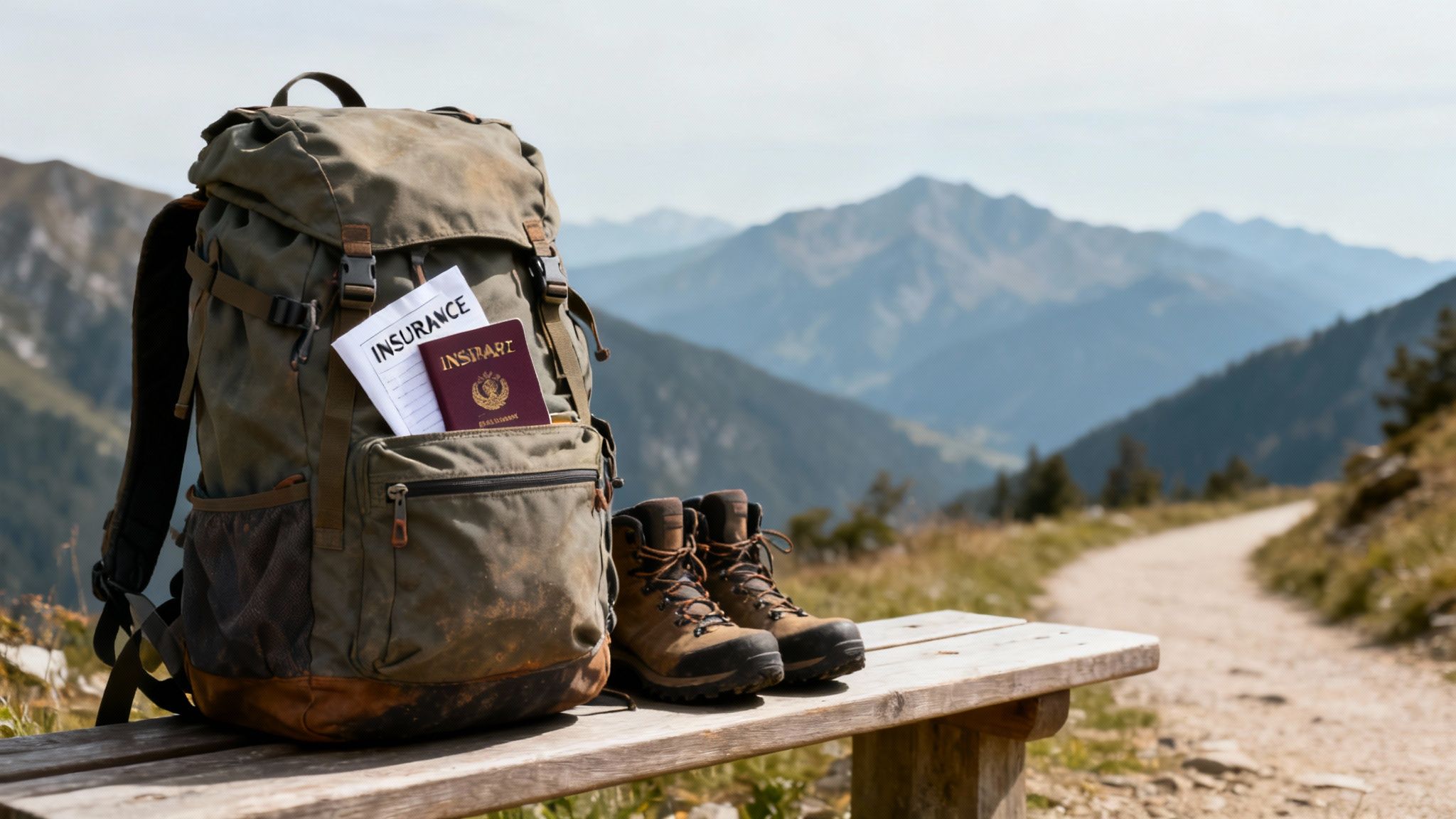
Think about the gear you absolutely wouldn't leave home without: a solid backpack, a good pair of boots, and your passport. Go ahead and add one more non-negotiable item to that list—travel insurance. It might not feel as solid as a rain jacket, but it's probably the most critical piece of equipment you'll have with you.
Let's play out a scenario. You're trekking through a remote village in the Andes when you get hit with a sudden, serious illness. The local clinic is basic at best, and you desperately need to get to a proper hospital in a city hundreds of miles away. Without insurance, the bill for an emergency evacuation could be financially crippling, turning the trip of a lifetime into an absolute nightmare. This is exactly where travel insurance for backpackers comes in.
A Safety Net for Your Adventure
Think of this insurance as a safety net for a tightrope walker. It doesn't stop you from falling, but it gives you the confidence to get out there on the rope, knowing you're protected if something goes wrong. Standard vacation policies are built for a week at a resort, not for six months of island hopping, mountain climbing, and taking spontaneous detours.
Backpacker insurance is just built differently. It's designed for the messy, incredible reality of long-term, independent travel and anticipates the unpredictable nature of your journey.
A specialized policy is your financial and logistical lifeline, ready to handle everything from a stolen passport in Bangkok to a serious injury on a remote trail, ensuring a mishap doesn't end your entire adventure.
What This Guide Will Cover
Think of this guide as your roadmap to understanding and picking the right travel insurance for your trip. We're going to cut through the confusing jargon and focus on what really matters. By the end, you'll know exactly what to look for, how to sidestep common traps, and how to find a policy that acts as your most reliable travel companion.
Decoding Your Policy: What Every Backpacker Needs Covered
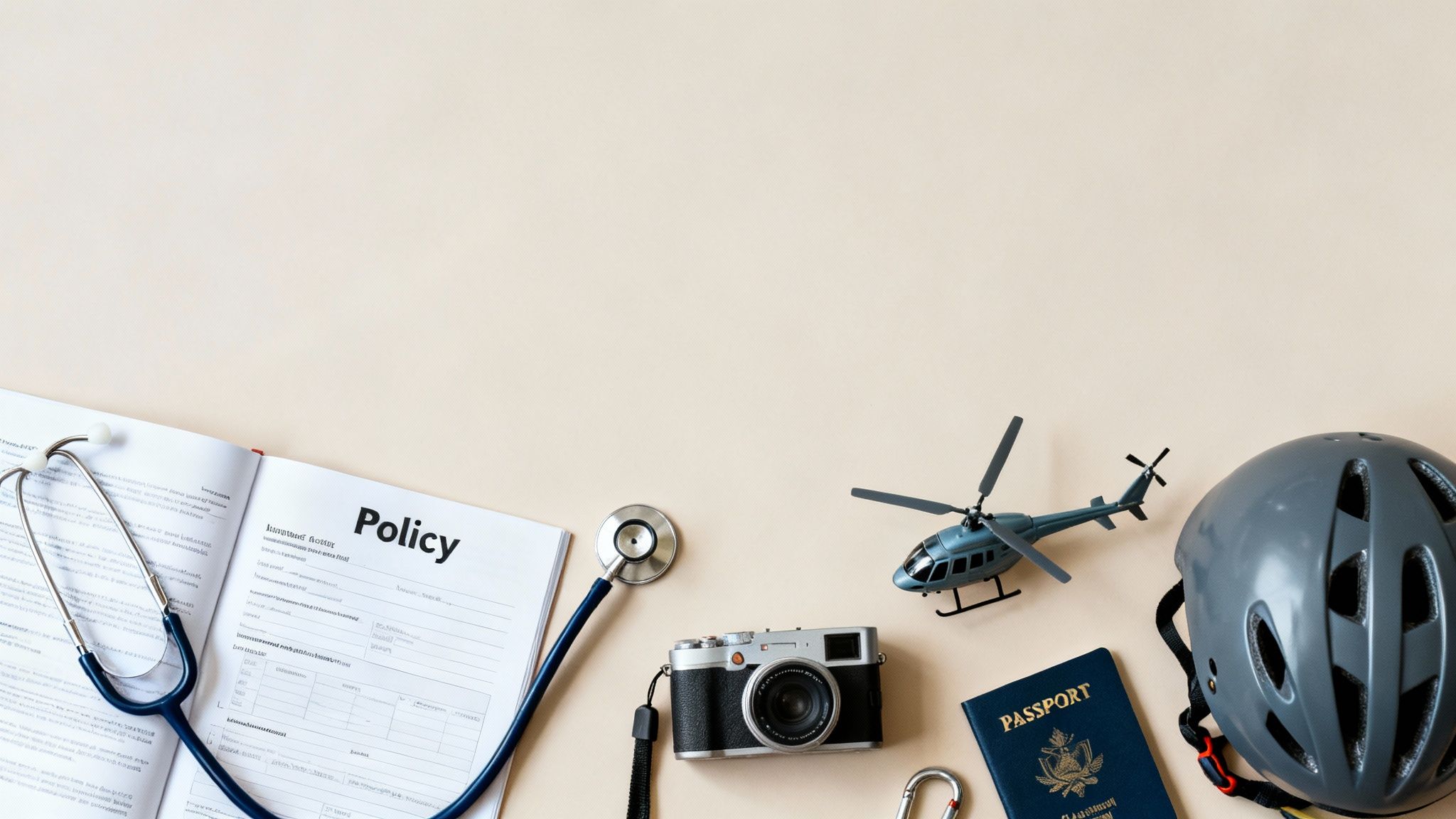
Trying to cut through the jargon in an insurance policy can feel like you're attempting to translate an ancient text. But when you're halfway across the world, knowing what you're actually covered for is non-negotiable.
Think of your policy less like a boring document and more like a toolkit for your trip; each clause is a specific tool designed for a particular crisis. Let's break down the essential tools every backpacker needs in their insurance kit. These are the absolute fundamentals of any solid travel insurance for backpackers, and I'll explain them with real-world scenarios to show you why they matter so much.
High-Limit Medical Coverage
This is the absolute cornerstone of your policy. Your number one priority. A nasty case of food poisoning in Thailand is one thing, but a serious accident—like a motorbike crash in Vietnam—can rack up hospital bills so fast it'll make your head spin. A policy with low medical limits is like bringing a water pistol to a house fire. Useless when you truly need it.
Your medical coverage has to be strong enough to handle a major emergency without bankrupting you. A simple broken leg can cost thousands, and any serious surgery will easily climb into the tens of thousands. Aim for policies offering at least $100,000 in medical coverage. Honestly, higher is always better, especially if you're heading to countries with notoriously expensive healthcare like the USA or parts of Western Europe.
Emergency Evacuation and Repatriation
Picture this: you're trekking in a remote corner of the Himalayas and get hit with severe altitude sickness. The nearest hospital capable of treating you is a helicopter ride away. This is where emergency evacuation coverage becomes a literal lifesaver, covering the sky-high costs of getting you from the middle of nowhere to a proper medical facility.
But it doesn't stop there. Repatriation is the clause in your policy that gets you all the way back home for ongoing treatment if you're too sick or injured to keep traveling. Without this, you could be stuck paying for your care abroad and the incredibly expensive, medically-assisted flight back to your home country.
A strong evacuation and repatriation clause is your ticket home when things go seriously wrong. It's the difference between a managed crisis and a catastrophic, life-altering event far from your support system.
Adventure Sports and High-Risk Activities
Let's be real, backpacking is about more than just seeing the sights—it's about doing things. Maybe that's scuba diving in the Philippines, sandboarding in Peru, or rock climbing in Thailand. Your standard policy might look at those activities and say, "Nope." Many insurers classify them as "high-risk" and flat-out exclude them from basic plans.
You absolutely have to check the fine print or buy a specific add-on for adventure sports. If you're an adrenaline junkie planning on anything extreme, you must scrutinize your policy to see if you're covered. Some providers offer great resources on what to look for with extreme sports coverage for bungee jumping and other heart-pounding activities. Never, ever assume you're covered. Always verify it in writing.
Gear and Electronics Protection
On the road, your backpack is your entire world. It holds your laptop, camera, smartphone, passport—everything. While no policy can replace something with sentimental value, gear protection can definitely soften the financial hit from theft or damage. Most policies have a total limit for your belongings and, more importantly, a per-item limit.
This per-item limit is the detail that trips people up. If your policy covers $2,000 worth of gear but has a $500 per-item limit, your $1,500 laptop won't be fully replaced. Get real about the value of your electronics and make sure the policy's limits actually match what you're carrying. For a deeper dive, check out our guide on what travel insurance typically covers.
Trip Interruption and Cancellation
Life happens. A family emergency back home or a sudden illness right before you leave can derail your entire trip. Trip cancellation is what reimburses you for non-refundable costs—like flights and tours—if you have to cancel before you even leave for a covered reason.
Trip interruption, on the other hand, kicks in if you're already traveling and have to cut your trip short to fly home unexpectedly. It can cover the cost of that last-minute flight and possibly pay you back for the unused portion of your trip. These benefits are a crucial financial safety net against life's curveballs. After all, medical emergencies consistently rank among the most common reasons travelers file insurance claims, which shows you just how often the unexpected happens on the road.
How to Choose the Right Policy for Your Adventure

Picking travel insurance isn't a one-size-fits-all deal. Not even close. The policy that's perfect for a six-month trek through South America is going to look completely different from one built for a three-month dive trip in Southeast Asia.
Think of it like packing your backpack; you wouldn't bring a winter parka to the tropics. Your insurance needs to be just as specific to your journey.
To find the right fit, you have to break down the key ingredients of your adventure. The best travel insurance for backpackers is the one that lines up perfectly with your trip's length, destinations, planned activities, and personal health. This is the framework that will help you ditch the generic plans and choose coverage that will actually have your back.
Consider Your Trip Duration and Flexibility
Let's be honest, backpacking trips are beautifully unpredictable. What starts as a three-month plan can easily morph into a six-month odyssey. A standard, fixed-date policy becomes a massive headache the moment your plans change, potentially leaving you uninsured halfway across the world.
This is where flexibility becomes your best friend. Look for policies made for long-term travelers.
- Open-Ended Policies: Some companies specialize in plans you can extend online while you're still on the road. This is a game-changer for spontaneous backpackers.
- Pay-as-You-Go Models: A few modern insurers offer monthly subscription-style plans. This lets you keep your coverage active for as long as you need it, and you can simply cancel when you finally head home.
- Grace Periods: Check if a policy has a grace period for your return. Some plans give you limited coverage for a short time after you get back home, which can be a lifesaver for follow-up medical care.
Choosing a policy you can extend on the road is one of the smartest decisions a backpacker can make. It removes the stress of a looming deadline and allows you to travel freely, knowing your safety net can be extended right along with your itinerary.
Match Your Coverage to Your Destinations
Where you're going has a huge say in your insurance needs and what it'll cost. Healthcare expenses are wildly different around the globe, and your policy needs to reflect that reality. A plan with a $100,000 medical limit might feel like enough for budget-friendly spots in Southeast Asia or Central America, but it would be dangerously inadequate elsewhere.
Countries like the United States, Canada, and Japan have some of the most expensive healthcare systems on the planet. If your travels take you to any of these places—even for a short layover—you need a policy with much higher medical limits. We're talking $500,000 or more. Skimping here could expose you to catastrophic debt from even a minor accident.
Insure Your Thirst for Adventure
Your itinerary is more than just a list of countries; it's a list of experiences. If those experiences involve anything more thrilling than visiting a museum, you need to triple-check your policy's adventure sports coverage.
Many standard plans exclude activities they consider "high-risk," a list that can surprisingly include things like hiking at altitude or even surfing.
Before buying anything, make a list of every single activity you might want to try, from bungee jumping and rock climbing to scuba diving. Then, cross-reference that list with the policy's fine print. Many insurers offer an "adventure pack" or "sports rider" as an add-on for an extra fee. For backpackers planning to hit the water, checking out dive travel tips and tricks can offer great insights, and proper insurance is a critical piece of that puzzle.
Handle Preexisting Conditions Correctly
This is one of the most critical—and misunderstood—parts of getting travel insurance. A preexisting condition is generally any medical issue you've received advice or treatment for in a set period before your policy begins. Hiding a condition to save a few bucks is a recipe for disaster. If you need to make a claim related to it, it will almost certainly be denied, leaving you on the hook for the entire bill.
Honesty is the only way to go. You must declare all preexisting conditions when you apply. Some insurers might deny coverage, but many will offer a plan that either excludes that specific condition or covers it for a higher premium. It might cost more upfront, but it's the only way to be sure your policy is actually valid when you need it most. For shorter trips, you can learn more about how providers handle this by looking into short-term travel insurance options.
Understanding the Cost of Backpacker Insurance
For any backpacker watching their budget, the cost of insurance is a massive question mark. It's so tempting to just grab the cheapest plan you can find and call it a day, but I've seen that approach backfire badly. The price of travel insurance for backpackers isn't just some random number; it's a carefully calculated reflection of your personal risk profile.
Think of it like booking a flight. The price changes based on where you're going, how long you'll be in the air, and whether you're flying coach or first class. Insurance works pretty much the same way, with a few key variables that determine what you'll pay. Getting a handle on these factors is the first step to finding a plan that offers genuine value, not just a low price tag.
Your Age and Trip Length
Age is a pretty straightforward factor for insurers. Statistically, the older we get, the more likely we are to need medical care, so premiums for older travelers are almost always higher. Most standard backpacker policies are priced for travelers under 40, with costs climbing in different age brackets after that.
The length of your trip also plays a huge part. A six-month policy is, of course, going to cost more in total than a two-month one. The good news? The per-day cost often gets cheaper the longer you travel, which is a nice little bonus for those of us on extended adventures.
Your Destinations and Itinerary
Where you're headed is one of the biggest drivers of cost. A policy for a year-long trip through Southeast Asia will be worlds cheaper than one covering the same amount of time in the United States, Canada, or Western Europe. This boils down to one simple thing: the astronomical cost of healthcare in certain countries.
If a basic hospital visit in the U.S. can rack up tens of thousands of dollars in bills, the insurer's potential payout is massive. To cover that risk, they have to charge a higher premium. This is why you need to be completely honest about every single country on your itinerary—it ensures your policy is actually valid when you need it most.
An insurer calculates your premium based on the most expensive country on your list, even if you only plan to be there for a few days. Forgetting to declare a high-cost destination like the USA can invalidate your entire policy.
To give you a clearer picture, here's a rough idea of how costs can vary.
Sample Cost Estimate for a 6-Month Backpacking Trip
| Traveler Profile | Southeast Asia Trip | South America Trip | Europe & USA Trip |
|---|---|---|---|
| 25-year-old | $450 - $700 | $550 - $850 | $900 - $1,500+ |
| 35-year-old | $500 - $800 | $650 - $1,000 | $1,100 - $1,800+ |
| 45-year-old | $650 - $1,100 | $800 - $1,300 | $1,500 - $2,500+ |
Disclaimer: These are general estimates and can vary widely based on the insurer, coverage levels, and specific activities.
As you can see, your destination makes a huge difference. Planning your route thoughtfully can have a big impact on your insurance bill.
Your Coverage Levels and Deductible
Finally, the amount of coverage you choose directly affects the price. A policy with $500,000 in medical coverage will naturally cost more than one with just $100,000. The same logic applies to any add-ons you pick, like adventure sports coverage or protection for your expensive camera gear.
Your deductible—the amount you have to pay out-of-pocket before your insurance starts paying—is another key lever you can pull.
- Higher Deductible: This means a lower premium upfront. The trade-off is that you'll have to cover more of the initial costs yourself if you need to file a claim.
- Lower (or Zero) Deductible: You'll pay a higher premium, but your out-of-pocket expenses will be minimal or nothing at all when you need help.
Choosing a higher deductible is a solid way to lower your initial cost, but only if you have the savings to cover it in an emergency. It's a personal call based on your budget and how much risk you're comfortable with. Remember, one of the biggest potential expenses is medical evacuation, which can be eye-wateringly expensive. You can learn more about the staggering figures and why solid coverage is so critical by exploring the cost of medical evacuation insurance in more detail.
When to Get International Health Insurance Instead
Something funny happens on a long backpacking trip. What started as a journey slowly starts to feel like… life. The line between traveling through a place and living there gets blurry. When that shift happens, your needs change, and the travel insurance for backpackers that served you so well might not be the right tool for the job anymore.
Think of it like this: travel insurance is a top-of-the-line emergency kit. It's got everything you need for the unexpected disasters—a broken arm from a scooter mishap, a nasty bout of dengue fever, or a medical flight home. It's designed to patch you up, get you back on your feet, or bring you home safely.
International health insurance, on the other hand, is like having your family doctor in your new home base. It's for the routine stuff, the preventative check-ups, and managing your overall health when you're no longer just passing through. It's not just for emergencies; it's for living.
When Your Needs Outgrow a Backpacker Policy
That transition from traveler to expat is usually gradual, but you need your insurance to keep pace. Travel insurance is built for temporary stays and things that go wrong unexpectedly. It almost never covers routine or preventative care because the whole idea is that you'll handle that stuff back in your home country.
This is where the two types of plans really go their separate ways.
- Routine Check-Ups: Need a physical or a wellness visit? A travel policy won't touch it. An international health plan is built for exactly this.
- Chronic Condition Management: Have to see a doctor regularly to manage something like diabetes or asthma? Travel insurance is only for an acute, unforeseen flare-up, not the day-to-day management. That's what an international plan is for.
- Dental and Vision Care: A travel policy might cover emergency dental work if you knock a tooth out, but it's not paying for a routine cleaning or a new pair of glasses. These are standard benefits in a lot of international health plans.
A backpacker policy is your safety net for the unpredictable journey. International health insurance becomes your healthcare system for a more settled life abroad. Knowing which one you need is vital for your financial and physical well-being.
Are You a Traveler or an Expat?
So, how do you know when it's time to make the switch? It really boils down to your intentions and how you're living. If you're a digital nomad setting up shop in one city for the next year or an expat starting a whole new chapter, your medical needs will go way beyond what travel insurance for backpackers can offer.
To figure it out, just ask yourself a few simple questions:
- How long will I be in one country? If the answer is more than a year with no clear end date, you're probably drifting into expat territory.
- Am I setting up a home base? Renting a long-term apartment, enrolling in a local language class, or getting a local phone contract are all signs you're settling in.
- Do I need regular medical care? If you need ongoing appointments for a chronic condition, therapy, or regular prescriptions, an international health plan is non-negotiable.
- Do I want coverage for preventative care? If wellness visits, regular screenings, and routine dental cleanings are important to you, you've officially outgrown travel insurance.
If you found yourself nodding "yes" to most of these, it's a pretty strong signal that your adventure has evolved. It's time to start looking into international health insurance to make sure you have solid, comprehensive coverage for your new life abroad.
How to Navigate a Claim Without the Headache
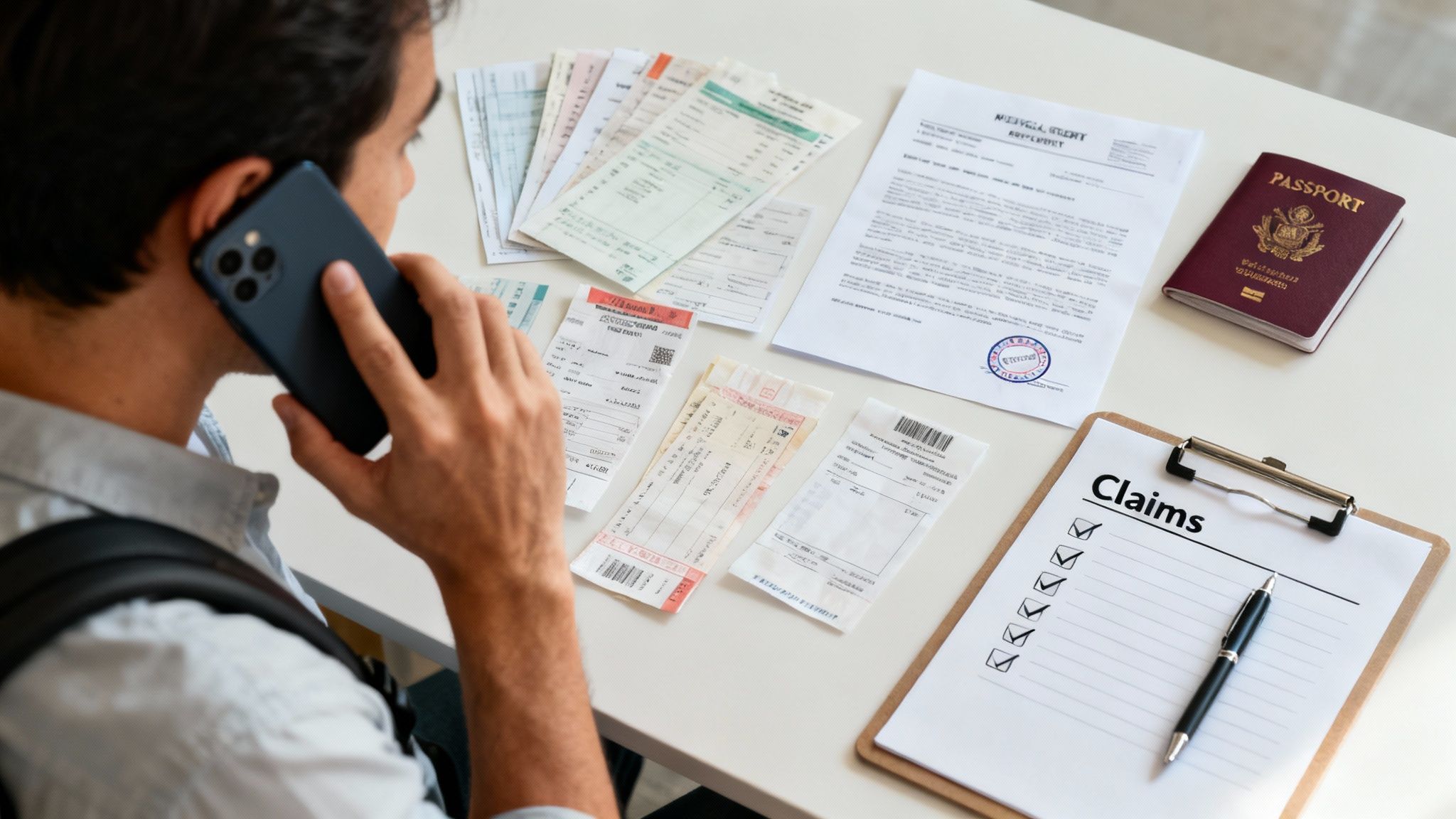
Let's be real. When something goes wrong on the road, the last thing you want is a mountain of paperwork and a frustrating claims process. Having a solid travel insurance for backpackers policy is only half the battle; knowing how to actually use it is what separates a minor hiccup from a trip-ending disaster.
Think of it like this: your policy is the raft, but knowing how to file a claim is the paddle. Without the paddle, you're just stuck floating down the river hoping for the best. This is your guide to paddling smoothly and getting the support you paid for.
Your First Critical Steps
The moment something happens—a medical emergency, a stolen backpack, a canceled flight—the clock starts ticking. What you do in those first few hours is absolutely crucial and lays the groundwork for getting your claim approved.
First, contact your insurer's 24/7 emergency assistance line immediately. This is non-negotiable, especially for anything medical. They need to be in the loop from the very beginning to approve treatments and coordinate your care. Skipping this call can give them a perfectly valid reason to deny your claim.
Next, you need to become a documentation machine. Keep a record of absolutely everything. Your mission is to build such a rock-solid case file for your claim that there's simply no room for them to question it.
Think of yourself as a detective building a case. Every receipt, every photo, and every official report is a piece of evidence that makes your claim stronger and harder to deny. A well-documented claim is an approved claim.
Mastering the Documentation Game
To get paid, you have to prove two things: what happened and what it cost you. Vague stories won't cut it. You need cold, hard proof. Get organized from the get-go.
Here's a quick rundown of the evidence you'll need to collect, depending on what went wrong:
- For Medical Issues: Hoard every piece of paper. That means doctors' notes, hospital admission forms, test results, and—most importantly—original itemized receipts for every single expense.
- For Theft or Loss: You must file a police report within 24 hours. This is a deal-breaker for most insurers. Make sure you get a written copy of the report; they will always ask for it.
- For Damaged Property: Before you fix anything, take clear photos of the damage from multiple angles. You'll also need a written quote for the repair or an official statement confirming the item is beyond saving.
- For Trip Delays: Get a written statement from the airline or bus company explaining the reason for the delay and how long it lasted. Keep all your receipts for the extra food and accommodation you had to buy.
Once you have your evidence, get it submitted. Most insurers have online portals now, which makes life a lot easier. After you submit, follow up. Be polite, but be persistent. Staying organized and proactive is your best bet for a headache-free resolution.
Your Top Questions About Backpacker Insurance, Answered
Even with all the details laid out, you're bound to have some specific questions buzzing around your head. It's completely normal. Let's tackle the most common ones we hear from backpackers who are already out there on the road.
Can I Get Insurance if I'm Already Traveling?
Yes, you absolutely can! This is a classic backpacker situation—you extend your trip, plans change on a whim, and suddenly you realize your original policy is about to run out. It happens to the best of us.
Thankfully, many modern insurers who focus on long-term travel, including the brokers at Expat Insurance, get this. They allow you to buy a new policy or even extend the one you have from pretty much anywhere in the world.
Just keep in mind there's usually a short waiting period before the new coverage kicks in for illnesses, often around 24 to 72 hours. This is just a standard measure to prevent someone from buying a policy after they've already gotten sick or hurt.
Does Backpacker Insurance Cover Personal Liability?
Most solid backpacker policies will include personal liability coverage, and honestly, you shouldn't get a policy without it. Think of it as your financial safety net if you accidentally hurt someone or damage their stuff.
Let's say you're cycling through a crowded market and accidentally cause a collision, or you knock over a priceless vase in a tiny shop. This is the part of your policy that steps in to help cover the damages and any potential legal headaches. It's a huge deal.
Personal liability is one of those things nobody thinks about until they desperately need it. Always check the coverage limits to make sure they're high enough to handle a worst-case scenario.
What's the Difference Between a Deductible and an Excess?
Good question, but it's a trick one! These two terms—deductible and excess—mean the exact same thing. Insurers just use them interchangeably.
A deductible (or excess) is simply the amount of money you have to pay out-of-pocket on a claim before the insurance company starts paying the rest.
For example, if you have a $250 deductible and you rack up a $1,000 medical bill, you'll pay the first $250. Your insurer then covers the remaining $750. Opting for a higher deductible can often lower your upfront premium, which is something to consider.
Are My Expensive Electronics Really Covered?
This is where a lot of travelers get tripped up. While nearly all policies cover your bags and personal belongings to some extent, they almost always have two critical limits you need to know about: a total claim limit and a per-item limit.
If your policy's per-item limit is $500, that awesome $1,500 laptop of yours won't be fully paid for if it gets stolen. You'd only get the $500.
If you're traveling with pricier gear—like a nice camera, a drone, or a high-end laptop—you'll probably need to buy a specific electronics add-on or look into a separate, specialized insurance policy for your gear. Don't just assume it's all covered.
Figuring out travel insurance can feel like a chore, but it doesn't have to be a headache. The expert brokers at Expat Insurance are pros at matching travelers with the right plan for their adventure. They compare options from over 65 insurers to make sure you get the coverage you actually need at the best possible price. Get a free, no-obligation quote and travel with some genuine peace of mind.
