

August 11, 2026
•
5 min read
How to Order Meat at a Butcher in Mexico: A Complete Guide to the Carnicería
Ordering at a Mexican carnicería takes vocabulary most guides skip. Cuts, the dedos thickness system, prices, and the exact phrases that get what you want.
Justin Barsketis
Insurance Expert
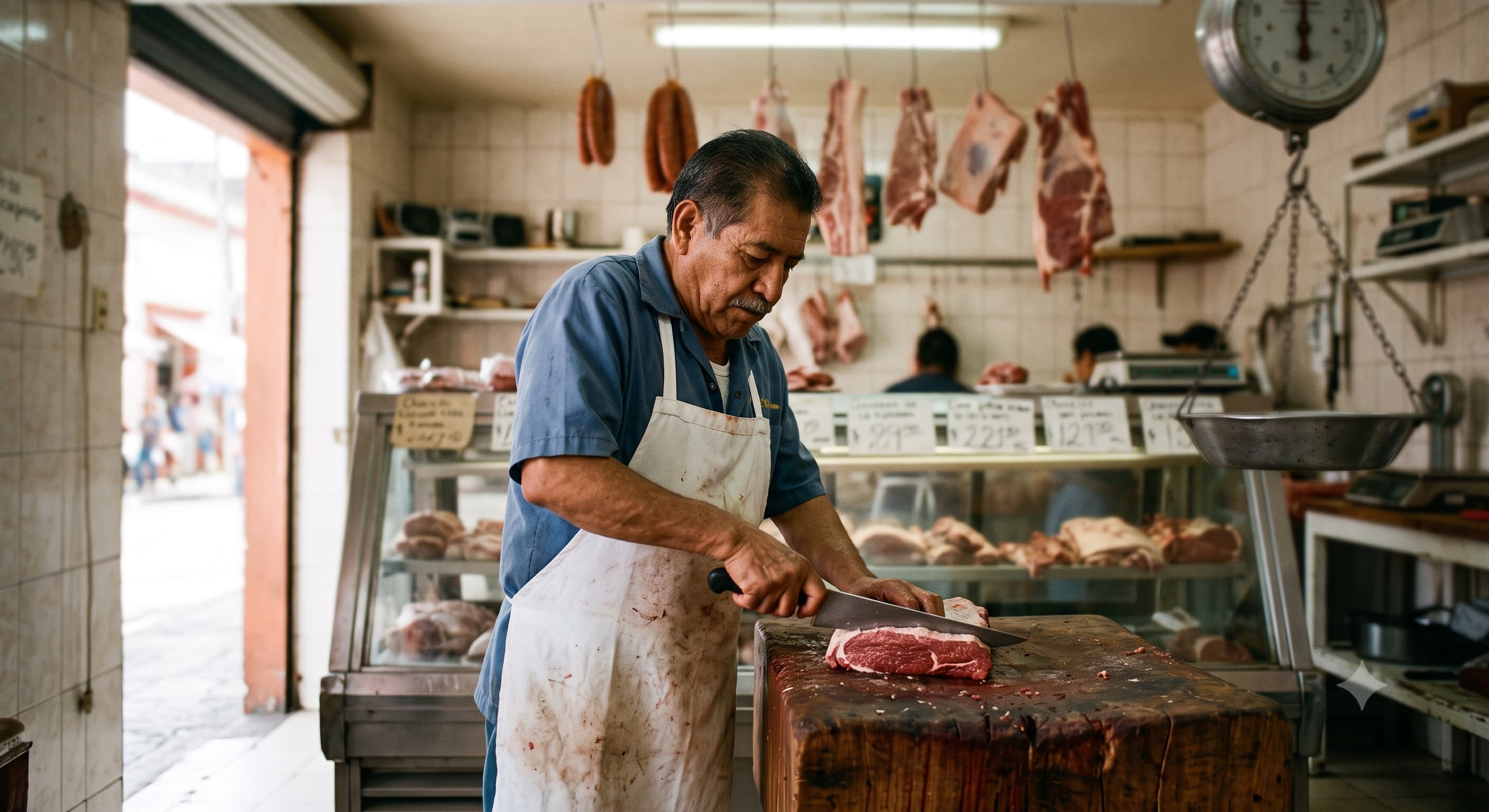
Ordering at a Mexican butcher shop is one of those small daily skills that separates people who live in Mexico from people who are just staying here. Have you cracked the code at your local carnicería? Tell us your best phrase in the comments below.
*NOTE! Whenever you see text in blue, this is a link that will lead you to another one of our articles so that you can get more information.
Not sure how your health coverage works down here? Book a free consultation with one of our brokers.
How to Order Meat at a Butcher in Mexico
Introduction
How to Order Meat at a Butcher in Mexico – Introduction:
The first trip to a Mexican carnicería is humbling. You walk up to a glass case full of red meat that looks nothing like what you saw at home, a man in a white apron says "¿qué le damos?", and you realize that every word you need is a word you do not have. So you point at something, you say "un kilo", and you go home with two pounds of mystery beef that turns to shoe leather in the pan.
We have all done it. The good news is that the Mexican butcher is one of the most accommodating retail workers on earth. He will cut, trim, grind, pound, debone, and slice your meat to whatever specification you can describe. The entire problem is the describing.
This guide covers the vocabulary, the measurement system, the ordering sequence, and the handful of cultural details that make the difference between getting what you wanted and getting whatever was already sitting in the case. If you are new here, it pairs well with our guide to shopping at markets in Mexico and our tips and resources for learning Spanish.
Where You Are Actually Shopping
How to Order Meat at a Butcher in Mexico – Where You Are Actually Shopping:
Not every meat counter in Mexico is the same, and knowing which one you are standing in front of changes how you order.
– The Carnicería –
The standalone neighborhood butcher shop. Beef and pork, usually both. This is where custom cutting happens and where building a relationship pays off the most. A carnicero who knows you will start setting aside the cuts you like.
– The Pollería –
Chicken is its own trade in Mexico. Poultry is frequently sold at a separate counter or a separate shop entirely. If you ask for chicken at a beef carnicería, you may get a polite point toward the door.
– The Mercado –
The municipal market has multiple butcher stalls competing under one roof. Prices tend to be better and the cutting is done to order. The catch is timing, which we will get to.
– The Supermarket –
Chedraui, Soriana, La Comer, and Walmart all have staffed meat counters behind the pre-packaged trays. Many expats do not realize this and only shop the styrofoam. The counter will cut to order just like a carnicería, and the labels are usually bilingual, which makes it a soft landing while you learn the words.
The Dedos System
How to Order Meat at a Butcher in Mexico – The Dedos System:
Here is the single most useful thing in this article, and the thing almost no phrasebook teaches you.
Mexican butchers cut steak thickness by fingers. Not inches, not centimeters. You hold up your fingers sideways, stacked, and that is the thickness you get.
The phrasing is simple:
- De un dedo (one finger, roughly 2 cm)
- De dos dedos (two fingers, roughly 3.5 to 4 cm)
- De tres dedos (three fingers, roughly 5 cm)
So the full request for a proper grilling steak is: "Un rib eye de dos dedos de grueso, por favor." Say it while holding up two fingers turned sideways against the glass, and the butcher will nod and cut exactly that.
Why this matters more in Mexico than elsewhere: the default cut here is thin. Very thin. The standard bistec is sliced somewhere between half a centimeter and two centimeters, because the dominant Mexican cooking methods for beef are fast pan frying, tacos, and stewing, none of which want a thick piece. If you walk in and ask for "rib eye" without specifying, there is a real chance you go home with something you could read a newspaper through.
Mexican grilling specialists generally recommend three to five centimeters of thickness for premium cuts destined for the parrilla, with roughly 2.5 cm as the absolute minimum worth bothering with. Below two centimeters, the margin between medium rare and ruined is a matter of seconds. Two fingers lands you squarely in the right range, which is presumably why the shorthand survives.
One useful vocabulary note here: chuleta generally implies a thicker cut, while bistec implies a thin one. If you want thickness and your fingers fail you, leaning on the word chuleta helps.
How the Transaction Works
How to Order Meat at a Butcher in Mexico – How the Transaction Works:
Mexican butchers sell by weight, and they sell in kilos. Not pieces, not "two steaks", not pounds.
– The Weight Words –
- Un kilo (1 kg, about 2.2 lbs)
- Medio kilo (half a kilo, 500 g, about 1.1 lbs)
- Un cuarto (a quarter kilo, 250 g)
- Tres cuartos (750 g)
- Kilo y medio (1.5 kg)
- Doscientos gramos (200 g, useful for deli items)
– The Sequence –
A Mexican meat order has three parts, and giving them in this order makes you sound like you have done this before:
- The cut. Rib eye. Arrachera. Diezmillo.
- The amount. Un kilo. Medio kilo.
- The preparation. De dos dedos. Molida. En trozo. Para guisar.
Put together: "Medio kilo de arrachera, bien limpia, por favor." Or: "Un kilo de diezmillo en trozo."
– The Cuánto Le Pongo Moment –
The butcher will cut, weigh, and then almost always say something like "¿así está bien?" while showing you the scale. He has probably gone slightly over. This is normal and not a scam. If it is close enough, say "sí, está bien." If it is genuinely too much, "un poquito menos, por favor" is entirely acceptable and nobody will be offended.
Then comes "¿algo más?" and finally "¿es todo?" Answer with "es todo, gracias."
Payment is usually cash, and small bills are appreciated. Our guide to bringing and spending money in Mexico covers the broader habit of keeping change on hand.
Living in Mexico full time? Get a one-minute quote on expat health insurance here.
Cortes de Res: Beef Cuts
How to Order Meat at a Butcher in Mexico – Cortes de Res:
Beef in general is carne de res. The single most important thing to understand before you order any of it: Mexican beef is typically not aged and is considerably leaner and less marbled than what North Americans and Europeans expect. Butchers also trim fat aggressively, sometimes more aggressively than you want. This is why so many Mexican beef dishes are stewed, braised, or marinated first.
Here is the map, running roughly front to back.
– The Front Quarter –
- Diezmillo (chuck) is the workhorse. Braise or stew it. This is the most commonly recommended cut for slow cooked beef dishes.
- Pescuezo (neck) goes into broths, especially jugo de res.
- Paleta (shoulder) makes chuck steaks and pot roasts.
- Pecho (brisket) is usually cut up for stew in Mexico rather than smoked. Whole brisket is pecho entero, and you will likely need to order it ahead.
- Chambarete (shank) is your osso buco. Ask for huesos de tuétano (marrow bones) and you will get bone-in shanks.
– The Rib and Loin –
- Rib eye is called rib eye. Same words, Mexican pronunciation. It is one of the easiest cuts to find already cut in supermarkets.
- Costillar or trozo de rosbif is a standing rib roast, usually a special order.
- Agujas cortas are short ribs.
- Filete is the tenderloin, the filet mignon, sometimes solomillo. Pounded paper thin it becomes sábana, the base of the classic restaurant dish carne a la tampiqueña.
- T-bone is T-bone. Chuleta de dos lomos is the porterhouse.
- Chuletón is a thick bone-in rib steak, the closest thing to a cowboy steak.
– The Belly and Flank –
- Arrachera is skirt steak, cut from the diaphragm. This is the cut for fajitas and the default for carne asada. It is often sold pre-marinated, which is why it looks darker and oilier in the case.
- Falda is flank. Confusingly, falda literally means "skirt", but the skirt steak is the arrachera. This trips up almost everyone.
- Suadero is the thin cut between the flank and the lower rump that makes the tacos de suadero of Mexico City. It rarely appears on charts.
- Ranchera or vacío is flap steak in northern Mexico and is not the same as arrachera, whatever anyone tells you.
– The Rear –
- Aguayón is sirloin. Aguayón en trozo gets you a sirloin tip roast. Punta de aguayón is the tender tip.
- Cuete is eye of round, and one of the few cuts Mexicans actually roast whole. It is lean enough that the traditional approach is to make incisions and stuff it with bacon.
- Bola or empuje is the tip, which yields tip roasts and tip steaks.
- Picaña is tri-tip, borrowed from Brazil and now common in Mexican supermarkets. In Sonora you may hear tres puntas.
- Pulpa simply means boneless meat.
– The Catch-All Labels –
You will see these on hand-lettered signs constantly, and they are often the most practical thing to order:
- Carne para asar (meat for grilling)
- Carne para guisar (stew meat)
- Carne para deshebrar (meat for shredding, for tinga and salpicón)
- Retazo con hueso (soup bones)
- Molida de res (ground beef)
Cortes de Puerco: Pork Cuts
How to Order Meat at a Butcher in Mexico – Cortes de Puerco:
Pork is easier. The vocabulary is smaller and the cuts map more cleanly onto what you already know. Pig can be puerco, cerdo, cochino, or marrano depending on region, and a suckling pig is a lechón.
- Espaldilla is the shoulder, the Boston butt. This is your pulled pork, your carnitas, your chorizo meat.
- Paletilla is the picnic shoulder, mostly used for stew meat here.
- Lomo is the boneless loin. Cut into rounds it becomes medallones.
- Espinazo is the rib loin, yielding costillas (back ribs) and chuletas (chops). Smoked chops are often easier to find than fresh ones.
- Costillita is spare ribs.
- Pierna is the leg, more marbled than the loin and the right choice for cochinita pibil.
- Codillo is the hock. The meatier upper part is often called chamorro.
- Falda here is side pork, which becomes tocino (bacon).
- Pata and mano are the rear and fore trotters.
A critical warning about ribs: unless you say otherwise, a Mexican butcher will chop a rack horizontally and then hack it into small pieces, because that is how they are usually stewed here. If you want a rack for the grill or the smoker, you must explicitly say "sin cortar, por favor, quiero el costillar entero."
The organ meat and offal vocabulary is deep and worth knowing even if you never buy it, because it is on every taquería menu in the country: tripas (intestines), cabeza (head), oreja (ear), trompa (snout), buche (cheek and gullet), cueritos (pickled skin), chicharrón (fried skin), manteca (lard).
Pollo: Chicken
How to Order Meat at a Butcher in Mexico – Pollo:
Chicken is sold at the pollería, and the vocabulary is mercifully short.
- Pechuga (breast)
- Pierna (drumstick)
- Muslo (thigh)
- Ala (wing)
- Pollo entero (whole chicken)
- Milanesa de pollo (breast butterflied and pounded flat for breading)
- Sin hueso (boneless), sin piel (skinless)
- Menudencias (giblets)
Pricing note worth knowing in 2026: while beef has been climbing sharply, chicken has held remarkably steady. If your grocery budget is under pressure, this is where the relief is.
Carnero y Chivo: Lamb and Goat
How to Order Meat at a Butcher in Mexico – Carnero y Chivo:
Lamb meat is carnero. The young animal is cordero, the older sheep is borrego or oveja. A lamb chop is chuleta de cordero. In central Mexico, especially Puebla, Tlaxcala, Hidalgo, and the State of Mexico, lamb is the prized meat for barbacoa, the pit-cooked technique that also produces the broth served alongside it. Goat is chivo or cabrito, and in western Mexico goat is the more common base for birria.
The Preparation Vocabulary
How to Order Meat at a Butcher in Mexico – The Preparation Vocabulary:
This is the second half of your order, and it is where the Mexican butcher earns his reputation. These phrases do real work:
- En trozo (in one whole piece, not cut up)
- Molida (ground, and he will grind any cut you point at, fresh, in front of you)
- Picada (finely chopped rather than ground)
- Para milanesa (sliced thin and pounded flat)
- Bien limpia (well trimmed)
- Sin grasa (no fat)
- Con su grasita (leave some fat on, and yes, this is a real and useful request)
- Deshuesado (boneless)
- En cubos or en trozos medianos (cubed, for stew or kebabs)
- En bisteces (sliced into thin steaks)
- Para asar (for grilling)
- Para guisar (for stewing)
- Para deshebrar (for shredding)
- Rebanado delgado (thinly sliced)
Two of these deserve extra attention.
Molida. Custom grinding is a genuine advantage of shopping this way. Point at a cut, ask for it ground, and you know exactly what is in your ground beef. Ask for "diezmillo molido" and you get ground chuck rather than whatever the trimmings bin held that morning.
Para milanesa. Watch him do this one. Left unsupervised, many butchers will pound a cutlet until it is nearly translucent. If you want it a little thicker, say "no tan delgada, por favor" before he starts.
And the counterweight to Mexican fat trimming habits: if you like fat, you have to say so. The default is aggressive trimming, because that fat gets rendered into lard for carnitas and chicharrones. "Déjele su grasita" is the phrase.
Regional Variation Is Real
How to Order Meat at a Butcher in Mexico – Regional Variation Is Real:
Every list of Mexican beef cuts, including this one, comes with an asterisk. Butchery terminology genuinely changes between states, and sometimes between towns.
Northern butchers cut and name meat differently from central Mexico. Beef in the north is generally cut thicker than in the south, which is one reason carne asada culture is a northern institution. Chiapas has its own conventions. Expats who move from Oaxaca to Querétaro report finding different names for the same cuts. Sonora calls tri-tip tres puntas while Mexico City calls it picaña. The word aguja means a short rib in most of the country and a grilling chuck steak in parts of the north.
The practical takeaway is not to memorize harder. It is to describe function rather than insist on names. If the cut name fails, tell him what you are cooking: "quiero hacer un guisado" or "es para la parrilla" or "quiero deshebrarla". Butchers here are cooks. They will steer you correctly, and this approach works in any state.
Freshness, Timing, and the TIF Seal
How to Order Meat at a Butcher in Mexico – Freshness, Timing, and the TIF Seal:
– Go Early –
At a mercado, get there in the morning. Two reasons. First, the good cuts get sliced up for bisteces and milanesas as the day goes on, so if you want something whole you want it before it has been broken down. Second, some market stalls keep meat unrefrigerated in the case. In the cooler highlands this is less of a concern, but in coastal and tropical Mexico, morning shopping is the sensible habit.
– Look for TIF –
TIF stands for Tipo Inspección Federal. It is Mexico's federal meat inspection standard, regulated by SENASICA under the agriculture ministry. A TIF-certified facility has an official veterinarian on site conducting inspection before slaughter and after, and product is not released without that verification.
There are more than 450 active TIF establishments across 28 Mexican states, and the system is recognized by roughly 70 countries. More than half the meat sold in Mexico now comes through it. The alternative is municipal or state-inspected rastros, which are legally permitted to supply the local market but operate to a lower and less consistently enforced standard.
TIF certification is voluntary, so its absence does not mean meat is unsafe. Plenty of excellent neighborhood carnicerías source from municipal rastros. But if you want the extra assurance, many municipalities now run campaigns encouraging participating butcher shops to display a TIF decal in the window or on the refrigerator case, so it is worth looking for one. TIF product typically carries a wholesale premium of somewhere around 8 to 15 percent depending on the market.
If you do end up with a bad batch, our guide to food poisoning abroad covers what to do next.
What Meat Costs in Mexico Right Now
How to Order Meat at a Butcher in Mexico – What Meat Costs in Mexico Right Now:
Beef has become significantly more expensive in Mexico, and any expat budgeting off older numbers is going to get a surprise.
According to INEGI, beef prices rose 17.42 percent between December 2024 and December 2025, roughly 4.7 times the national inflation rate, which closed 2025 at 3.69 percent. Analysis from the Consejo Mexicano de la Carne found consumers paying about 223 pesos per kilo for bistec at the end of 2025, up from 159 pesos the year before. Diezmillo rose to more than 257 pesos per kilo. Chuletas and costillas led the increases at over 19 percent.
On the ground in 2026, Mexico City market butchers have quoted bistec and ground beef between 230 and 260 pesos per kilo. Guadalajara carnicerías have been running roughly 215 to 235 pesos. Profeco price monitoring in La Paz recorded bistec around 204 pesos per kilo at a supermarket chain in March 2026, and Profeco has noted spreads of more than 140 pesos per kilo between the cheapest and most expensive points of sale in the same city, which is a strong argument for shopping around.
The drivers are worth understanding because they suggest the pressure is not temporary. The screwworm outbreak (gusano barrenador) has restricted cattle movement, the ban on exporting live Mexican cattle to the United States has disrupted the supply chain, and the Consejo Nacional Agropecuario has reported that extortion is raising product costs by 10 to 20 percent. Beef rose 16.5 percent year over year as of February 2026, compared to 3.6 percent for pork and a slight decrease of 1.4 percent for chicken.
Two practical conclusions. Compare prices between your mercado, your neighborhood carnicería, and your supermarket, because the spread is enormous. And this is a good year to get comfortable with pork, chicken, and the cheaper braising cuts of beef, which is exactly what the Mexican kitchen is built around anyway. Our cost of living guide has more on budgeting for life here.
The Cheat Sheet
How to Order Meat at a Butcher in Mexico – The Cheat Sheet:
Save these on your phone.
- ¿Qué me recomienda para...? (What do you recommend for...?)
- Un rib eye de dos dedos de grueso, por favor. (A rib eye two fingers thick, please.)
- Medio kilo de arrachera, bien limpia. (Half a kilo of skirt steak, well trimmed.)
- Un kilo de diezmillo en trozo. (A kilo of chuck in one piece.)
- ¿Me lo puede moler, por favor? (Can you grind it for me, please?)
- Quiero el costillar entero, sin cortar. (I want the whole rack, uncut.)
- Déjele su grasita. (Leave the fat on.)
- No tan delgada, por favor. (Not so thin, please.)
- Es para la parrilla. (It is for the grill.)
- Un poquito menos, por favor. (A little less, please.)
- ¿Así está bien? ... Sí, está bien. (Is this alright? ... Yes, that is fine.)
- ¿Es todo? ... Es todo, gracias. (Is that everything? ... That is everything, thanks.)
Mistakes Expats Make
How to Order Meat at a Butcher in Mexico – Mistakes Expats Make:
Asking for a cut by number of pieces. "Two steaks" is not a unit here. Give a weight and a thickness.
Assuming falda is skirt steak. It means skirt in ordinary Spanish, but the butchery term for skirt steak is arrachera. This one error has ruined a lot of fajitas.
Not specifying thickness. The default is thin. Always give your dedos.
Expecting marbling. Domestic Mexican beef is leaner and generally not aged. If you want heavily marbled beef, you are looking for imported product, which supermarkets and specialty butchers carry at a real premium.
Not marinating. Because the beef is leaner and unaged, anything you intend to grill quickly benefits enormously from marinating first. This is not a shortcut, it is the local technique.
Being shy. Mexican butchers are used to being asked for things. Nobody is annoyed by a specific request. The one thing that genuinely does not work is silence.
Being in a hurry. Custom cutting takes a minute or two. Go when you have that minute.
Frequently Asked Questions About Mexican Butcher Shops
How do I ask for a thick steak in Mexico?
Use fingers. Say "de dos dedos de grueso" and hold up two fingers turned sideways. Two fingers is roughly 3.5 to 4 cm, which is in the ideal range for grilling. The word chuleta also implies a thicker cut than bistec.
What is the difference between bistec and chuleta?
Bistec is a thin steak, often a centimeter or less, meant for fast pan frying or tacos. Chuleta generally means a thicker cut, sometimes bone-in. If you want thickness, lean on chuleta.
What cut should I ask for to make beef stew?
Diezmillo (chuck) is the most commonly recommended. If the name fails you, ask for carne para guisar and tell the butcher what you are making.
Is arrachera the same as flank steak?
No. Arrachera is skirt steak, cut from the diaphragm muscle. Falda is flank. Despite falda literally meaning "skirt", the cut you want for fajitas and carne asada is arrachera.
Do Mexican butchers grind meat to order?
Yes, and it is one of the best reasons to shop this way. Point at any cut and ask "¿me lo puede moler?" You get freshly ground meat from a cut you chose.
Should I buy meat at the mercado or the supermarket?
Both work. The mercado is usually cheaper and cuts to order, but go in the morning. The supermarket meat counter also cuts to order, has bilingual labels, and is a gentler introduction while you are learning the vocabulary.
What does TIF mean on a meat label in Mexico?
Tipo Inspección Federal, Mexico's federal meat inspection certification overseen by SENASICA. TIF plants have an on-site official veterinarian inspecting animals before and after slaughter. It is a voluntary standard covering more than half the meat sold in Mexico.
Conclusion
How to Order Meat at a Butcher in Mexico – Conclusion:
The carnicería rewards the effort. Once you can name three or four cuts, ask for two fingers of thickness, and tell the butcher what you are cooking, you have access to fresher and more precisely cut meat than most people back home can buy at any price. You choose the cut, you watch it get ground, you decide how much fat stays on.
More than that, the carnicería is a relationship. Go to the same one. Learn the man's name. Ask what is good this week. Within a month he will be recommending cuts before you ask and setting aside the thing he knows you like. That is a version of living in Mexico that no amount of supermarket shopping will give you.
Hold up two fingers. See what happens.
Related Articles:
- A Guide to Markets in Mexico
- An Expat's Guide to Mexican Street Tacos
- How to Say Lemon and Lime in Spanish
- How to Make Chicken Enchiladas Suizas
- Secret Tips You Need to Know Before Moving to Mexico
Justin Barsketis
Insurance Expert & Writer
Justin is an insurance guru that loves digital marketing. As our founder Justin manages our business development programs and MGA network. Please don’t hesitate to contact him if you are not getting the attention you deserve.
