

June 11, 2026
•
5 min read
Mexico's Teachers' Unions and the World Cup Standoff
Riot police, tear gas, and toppled football statues: Mexico's teachers shut down the World Cup spotlight in 2026. Here's the 80-year story behind the standoff.
Justin Barsketis
Insurance Expert
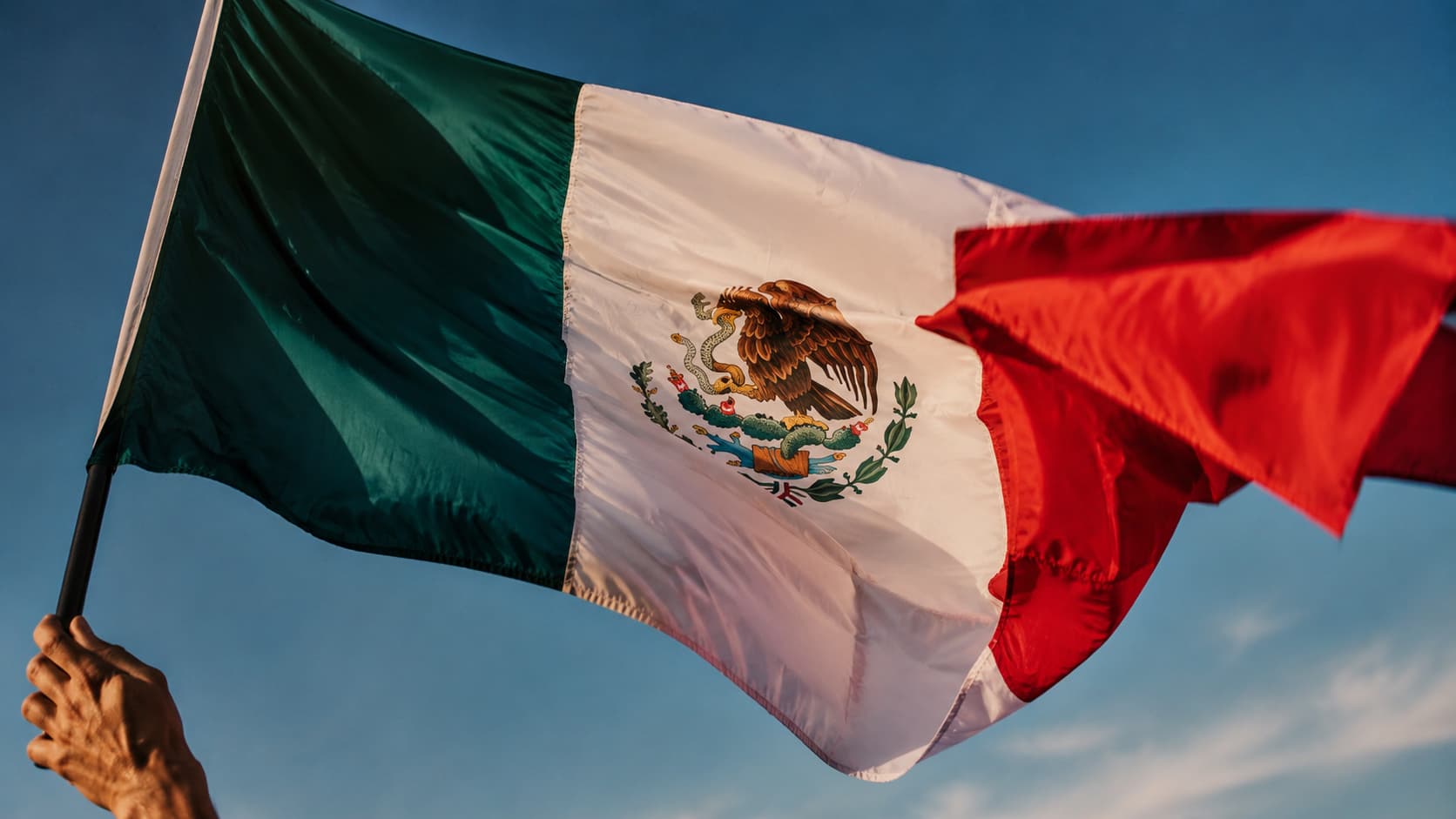
On June 1, 2026, riot police in Mexico City fired tear gas into a crowd of thousands of striking teachers marching toward the Zócalo. The capital's central square had been ringed with tall metal barricades for weeks, protecting FIFA's World Cup "Fan Fest" setup from the city it was built in. Ten days before Mexico's opening match at Estadio Azteca, the message from the teachers was blunt: "If there isn't a solution, the ball won't roll."
The standoff made international headlines. But for anyone who knows Mexico's education system, the surprise wasn't the protest. It was that it took this long.
To understand why thousands of teachers marched on one of the most scrutinized sporting events on the planet, you have to go back roughly 80 years. The story involves Latin America's largest union, a dissident faction born in a Chiapas gymnasium, ghost employees, a black market for teaching jobs, a woman who ran a union like a personal empire, and a series of reforms that each government has called a solution but that none has fully delivered.
Two Unions, One System
Mexico's public school teachers belong to one of two organizations, and the difference between them matters enormously.
The SNTE (Sindicato Nacional de Trabajadores de la Educación, or National Union of Education Workers) was created in 1943 under President Manuel Ávila Camacho. With roughly 1.4 million members, it is the largest union in Latin America. For most of its history the SNTE functioned as a corporatist institution tightly bound to the long-ruling PRI party, a tool for political patronage as much as labor representation. Membership was effectively mandatory: no union card, no classroom.
The CNTE (Coordinadora Nacional de Trabajadores de la Educación) is something else entirely. Founded on December 17, 1979, in Tuxtla Gutiérrez, Chiapas, it began as a dissident caucus inside the SNTE, a grassroots rebellion against what members called "charrismo," the Mexican term for corrupt, sellout union leadership. Marxist-influenced and committed to internal democracy, the CNTE has always been strongest in the poor, predominantly Indigenous southern states: Oaxaca (home to its powerful Section 22), Chiapas, Guerrero, and Michoacán. It claims more than 200,000 active members, and its history includes what it describes as the assassinations of over 200 of its members across its 46 years of existence.
These are not two factions of the same movement. The SNTE negotiates; the CNTE marches. The SNTE has generally worked with whatever government is in power; the CNTE has fought every government, including the current one.
The "Plaza" System and the Ghost Employees
To understand what the CNTE is fighting against, and what it has at times been complicit in, you have to understand the "plaza" system.
For decades, a teaching position in Mexico was not just a job. It was property. Plazas, as these positions were known, were bought, sold, rented, and inherited, often with union officials acting as brokers and taking a cut of each transaction. According to Mexico's Education Secretary at the time, positions changed hands for anywhere between 100,000 and 600,000 pesos, depending on grade level, location, and subject. In Oaxaca, one of the CNTE's strongholds, an estimated 36% of teachers had directly inherited their position from a family member.
Then there were the aviadores. The name comes from the verb "to fly," referring to people who collected a government paycheck without ever landing in a classroom. Federal audits documented the problem at a staggering scale. A 2017 audit by the Auditoría Superior de la Federación (ASF) found 141,265 absent or unidentified workers on the education payroll, representing roughly 1.4 billion pesos in irregular payments, a 71% increase from the previous year. A separate SEP audit that same year identified 44,076 paid positions with no one in the classroom, costing approximately 5 billion pesos annually. A 2019 analysis by the think tank México Evalúa estimated that corruption in the education payroll had drained some 6 billion pesos between 2008 and 2019, with as many as 100,000 teachers receiving pay without teaching.
The system persisted for so long partly because it served everyone with power. The union extracted loyalty and fees. State governments used teaching positions as patronage. And rank-and-file teachers, many of whom were genuinely underpaid and working in difficult conditions, found themselves caught between corrupt leadership above and a dysfunctional system below.
Elba Esther Gordillo: "La Maestra"
No figure embodies the contradictions of the SNTE more than Elba Esther Gordillo.
Gordillo became SNTE secretary-general in 1989 and, over the next two decades, transformed herself into one of Mexico's most powerful political operators. She cultivated alliances across party lines, engineered the SNTE's pivot away from the PRI when it suited her, and effectively declared herself president for life of the union. Her personal spending became legendary: French luxury goods, plastic surgery, a lifestyle utterly disconnected from the teachers she represented.
On February 26, 2013, just days after President Enrique Peña Nieto signed his landmark education reform into law, Gordillo was arrested at Toluca airport. Prosecutors alleged she had embezzled roughly 2 billion pesos from the SNTE, with investigators pointing to millions in transfers routed to accounts in Switzerland and Liechtenstein, and nearly US$3 million spent at Neiman Marcus between 2009 and 2012, against a declared four-year income of about 1.1 million pesos.
She spent roughly five years in detention and house arrest. In August 2018, she was acquitted. Walking out, she declared: "I recovered my freedom, and the education reform has collapsed." She was not wrong about the second part.
Peña Nieto's Reform and the Nochixtlán Massacre
The 2013 education reform under Peña Nieto was the most ambitious attempt to overhaul Mexico's public schools in decades. It introduced standardized teacher evaluations, centralized hiring through the state rather than the union, and created the FONE payroll system to cut the SNTE and state governments out of the payroll pipeline. The stated goals were accountability and quality. The political goal, many observers noted, was to break union power.
The CNTE saw it as a declaration of war. Protests erupted across the southern states. In Oaxaca, teachers occupied the capital and blocked highways for weeks. Thousands of children lost months of school, sometimes entire academic years in the most affected areas.
The conflict reached its deadliest point on June 19, 2016, near the town of Asunción Nochixtlán, in Oaxaca, when federal and state police moved to clear a teacher blockade of the Mexico City–Oaxaca highway. Accounts of what happened vary: official figures cited six dead and over 100 injured; other tallies from the public prosecutor and press reached as high as twelve killed. The clash followed the arrest of two CNTE leaders on financial charges just days earlier. Nochixtlán became a national symbol of state violence against the teacher movement, and it effectively discredited Peña Nieto's reform in the court of public opinion even as it remained on the books.
AMLO's Reversal, and Its Limits
When Andrés Manuel López Obrador won the 2018 election in a landslide, one of his clearest campaign promises was repealing what he called the "punitive" education reform. He delivered, partially.
In 2019, his government abolished the mandatory teacher evaluation system, dismantled the INEE evaluation institute, and repealed the General Law of the Professional Teaching Service. Education Secretary Esteban Moctezuma declared that teachers were "now considered agents of change" rather than employees under surveillance.
But AMLO kept the FONE centralized payroll system that had been designed to eliminate ghost employees. He kept state hiring authority with the SEP, not the unions. The CNTE won the end of punitive evaluations but not a full restoration of union control over hiring and promotions. Critics on both sides were unsatisfied: reformers argued the accountability mechanisms had been gutted; the CNTE argued it had been given cosmetic victories while the structural issues went unresolved.
Among those unresolved issues was the 2007 ISSSTE pension law, passed under President Felipe Calderón, which had converted public-sector pensions from a solidarity system to individual private accounts. The CNTE had been demanding its repeal for nearly two decades.
Why Are Teachers Protesting During the World Cup?
The June 2026 confrontation at the Zócalo did not come out of nowhere. In May 2025, over 20,000 CNTE teachers had struck and occupied Mexico City's central square for weeks. On May 23, 2025, protesters blockaded Mexico City's international airport, disrupting flights and stranding travelers. Mexico News Daily reported that travelers faced significant delays as teachers blocked access roads to the terminal.
The CNTE's core demands going into 2026 were straightforward: a 100% salary increase, and the repeal of the 2007 ISSSTE pension law. President Claudia Sheinbaum's administration offered a 9% raise (retroactive to January), plus an additional 1% in September, extra leave, and housing loan relief, a package reportedly costing more than 19 billion pesos. The CNTE rejected it.
The numbers explain part of the frustration. AFP reported the monthly starting gross salary for a Mexican public school teacher at roughly US$967, a figure that has barely kept pace with inflation over the past decade, in a country where the cost of living in major cities has risen sharply alongside the influx of remote workers and expats.
On the pension, the CNTE argues that workers' AFORE savings now total roughly 8.2 trillion pesos, and that the money exists but flows to private fund managers and government debt rather than to retiring teachers. Sheinbaum, who had campaigned on repealing the 2007 law, says it is now financially impossible.
The timing of the protests was not accidental. The World Cup gave the CNTE a global megaphone. When CNTE leader Filiberto Frausto told AFP that the tournament "will have to be suspended" and that the teachers' cause was "far more important than a little bit of distraction and fun," he was making a political calculation: the eyes of the world were on Mexico City, the government had invested enormously in its World Cup image, and a teachers' strike was the most disruptive possible protest at the most visible possible moment.
On June 2, protesters used ropes to pull down and burn giant football-player statues along Paseo de la Reforma, representations of players from Belgium, France, and Spain. Police did not intervene. President Sheinbaum described the protest as "peaceful" and called for a resumption of dialogue.
The Bigger Picture: Mexico's Education System
The teachers' grievances don't exist in a vacuum. Mexico's public education system has struggled for decades, and the data reflects it. On the OECD's PISA 2022 assessment, Mexican students scored around 395 in mathematics, roughly 77 points below the OECD average and 14 points below Mexico's own 2018 result. Only about one in three Mexican 15-year-olds reached basic mathematics proficiency, compared to roughly two in three across OECD nations.
Meanwhile, Mexico continues to underfund its schools. For 2026, Congress approved roughly 1.13 trillion pesos for education, approximately 2.9% of GDP by some measures, still below the UNESCO-recommended floor of 4–6%. Per-capita education spending in real terms remains about 11% lower than it was in 2015.
Against that backdrop, Mexico granted FIFA a sweeping tax exemption for the 2026 tournament, broader than the concessions made by co-hosts the United States and Canada. The government announced roughly 6 billion pesos in World Cup-related infrastructure investment across the three Mexican host cities. That contrast, more than any single policy dispute, is what brought teachers to the Zócalo: the sense that the country's most powerful institutions move quickly and spend generously when the audience is foreign, and slowly and grudgingly when the audience is Mexican.
What This Means for Expats and Travelers
If you're living in or visiting Mexico during the summer of 2026, here's what's worth knowing.
CNTE protests cluster geographically. The capital-city demonstrations center on the Zócalo, the surrounding historic center, and Paseo de la Reforma. Beyond Mexico City, the most affected states are Oaxaca, Chiapas, Guerrero, and Michoacán, all CNTE strongholds. These areas have seen school closures, highway blockades, and disruption to normal commerce during periods of major strike action.
The CNTE's tactics have historically included blockades of the Mexico City international airport (as in May 2025) and of major highway arteries, particularly the Mexico City–Oaxaca corridor. If you're driving in Mexico, keep that in mind and check local news before setting out on that route.
These protests are political, not anti-tourist. The CNTE's grievance is with the federal government, not with foreigners. The toppling of the World Cup statues was a statement about government priorities, not about visitors. Most expats living in the affected cities report that demonstrations, while disruptive to traffic and commerce, are not directed at the international community.
If you're spending time in Mexico long-term, the broader dynamics here are worth understanding. The cost of living in Mexican cities has increased significantly in recent years, and the political tension over who benefits from that growth, and who is left behind, runs through debates about wages, pensions, education, and public investment. The teachers' strike is one visible expression of something much wider. Our piece on feminism in Mexico touches on similar tensions around institutional reform and social movements that expats find helpful context for understanding life here.
Stay aware, monitor local news during periods of labor unrest, and build flexibility into your plans if you're traveling through southern Mexico or transiting the capital during active strike periods.
Conclusion
The scene at the Zócalo on June 1, 2026, looked chaotic: tear gas, barricades, teachers and riot police squared off in the shadow of a FIFA Fan Fest. But it was the product of eight decades of accumulated frustration: a corporatist union built for political control, a dissident movement born in a Chiapas gymnasium, a black market in teaching jobs that auditors couldn't fully unwind, reforms that were ambitious and reforms that were gutted, and a question that no Mexican government has managed to definitively answer: who does the public education system actually serve?
The World Cup will end. The underlying issues won't.
FAQ
What is the CNTE? The CNTE (Coordinadora Nacional de Trabajadores de la Educación) is a dissident teachers' union founded in 1979 in Chiapas as an opposition faction within Mexico's larger official teachers' union, the SNTE. It is strongest in Mexico's poor southern states and is known for its militant protest tactics.
Why are Mexican teachers protesting during the 2026 World Cup? The CNTE is demanding a 100% salary increase and the repeal of a 2007 pension law that replaced traditional retirement pensions with private investment accounts. They chose to escalate protests during the World Cup to maximize visibility at a moment when global attention is on Mexico City.
What are "aviadores" in the Mexican education system? "Aviadores" are ghost employees who collect government salaries without ever working in a classroom. Federal audits have repeatedly found tens of thousands of such phantom positions on Mexico's education payroll, costing billions of pesos annually.
Who was Elba Esther Gordillo? Gordillo was the longtime leader of Mexico's SNTE teachers' union, effectively from 1989 until her 2013 arrest for alleged embezzlement of approximately 2 billion pesos in union funds. She was acquitted in 2018.
Will CNTE protests disrupt travel during the 2026 World Cup? CNTE protests have historically disrupted traffic in central Mexico City and, in some cases, access to the international airport. Travelers should monitor local news and build flexibility into transportation plans, especially if traveling through the historic center or the southern states of Oaxaca, Chiapas, Guerrero, and Michoacán.
How does Mexico rank in education internationally? On the OECD's 2022 PISA assessment, Mexican students scored around 395 in mathematics, roughly 77 points below the OECD average of 472, and below Mexico's own 2018 results. About one-third of Mexican 15-year-olds met basic math proficiency standards, compared to two-thirds across OECD countries.
Planning to live or spend extended time in Mexico? Browse our guides on the cost of living, moving to Mexico, and retiring in Mexico. If you have questions about expat health coverage, get a free quote here or book a consultation with one of our advisors.
Justin Barsketis
Insurance Expert & Writer
Justin is an insurance guru that loves digital marketing. As our founder Justin manages our business development programs and MGA network. Please don’t hesitate to contact him if you are not getting the attention you deserve.
