

February 4, 2026
•
5 min read
Remote Work Productivity: A Practical Guide for Expats and Digital Nomads
A real-world guide to remote work productivity for expats and digital nomads - covering routines, workspace setup, time zone management, and burnout prevention.
Justin Barsketis
Insurance Expert
Working remotely as an expat or digital nomad isn't just about changing your scenery; it's about building a life that's designed for focus and high performance, no matter where your laptop is. This guide lays out a real-world framework for building resilient routines, creating workspaces that actually work, and handling the realities of cross-cultural communication. Think of it as your blueprint for crushing your professional goals while living abroad.
Your Framework for Productive Work Abroad
Let's move beyond the generic "find good Wi-Fi" advice. Thriving as a remote worker on the international stage demands a structured approach. It's about creating a personal operating system that supports your career ambitions while leaving room to actually enjoy the expat experience. This means building a foundation that can handle fluctuating time zones, cultural nuances, and the ever-present need for serious self-discipline.
A solid framework is built on a few core pillars. Getting these right is what separates the expats who flourish from those who burn out.
- Routine and Habit Formation: You need consistent daily bookends. A morning walk before logging on or an evening ritual to shut down your work brain creates a critical separation between your professional and personal life.
- Workspace and Connectivity: A dedicated, ergonomic space isn't a luxury; it's a necessity for focus. The same goes for a rock-solid internet plan (and a backup!).
- Communication and Boundaries: Mastering asynchronous communication and being crystal clear about your working hours is your best defense against the "always-on" culture that will absolutely drain you.
- Wellbeing and Contingency Planning: You have to proactively manage your mental health, know how to access local healthcare, and have a plan for emergencies. These are the safety nets you can't afford to ignore.
To give you a clearer picture of how these elements fit together, here's a quick overview of what this guide covers.
Core Pillars of Remote Work Productivity for Expats
| Pillar | Core Strategy | Expected Outcome |
|---|---|---|
| Routines & Habits | Establish clear "start" and "end" of day rituals. | A sustainable work-life balance and reduced burnout. |
| Workspace & Connectivity | Create an ergonomic, dedicated workspace with redundant internet. | Increased focus, professionalism, and uninterrupted workflow. |
| Time Zones & Schedules | Use time-blocking and asynchronous tools to manage global teams. | Improved collaboration and personal schedule control. |
| Communication & Boundaries | Set explicit expectations about availability and response times. | Reduced stress and stronger professional relationships. |
| Tools & Workflows | Standardize your software stack and create templates for recurring tasks. | Greater efficiency and less time spent on administrative work. |
| Wellbeing & Burnout | Schedule regular breaks, digital detoxes, and physical activity. | Maintained mental and physical health for long-term success. |
| Contingency Planning | Secure proper insurance and understand local emergency resources. | Peace of mind and preparedness for unexpected situations. |
This table maps out the journey ahead. Each pillar is a critical piece of the puzzle for building a productive and fulfilling life as a remote professional abroad.
The Proven Value of Remote Productivity
This shift to remote work isn't just a lifestyle trend - it's backed by hard data. A well-known Stanford study by economist Nicholas Bloom found a 13% productivity boost among employees who worked from home full-time. The gains came from fewer breaks, fewer sick days, and a quieter work environment that helped people focus.
For the international worker, this data is empowering. It confirms that with the right structure, you can deliver exceptional value while building a life you love in one of the best cities for digital nomads. The secret sauce is being intentional about every piece of your professional setup.
This guide will walk you through creating a system that puts these principles into action. We'll get into the nitty-gritty of everything from designing your ideal workspace to sorting out insurance and healthcare, giving you a complete roadmap for success.
Building a Resilient Remote Work Routine

For expats and digital nomads, the lack of a daily commute is a double-edged sword. Without that built-in separation, the line between your work life and your actual life can blur into nonexistence. This isn't about clocking more hours; it's about structuring your day to protect your focus and energy, all while being flexible enough to handle the surprises of life in a new country.
When your workday doesn't have a clear beginning or end, burnout is waiting right around the corner.
The secret is to create intentional, psychological barriers between your professional and personal time. I'm a big fan of the "bookend" method. By starting and ending each day with a consistent, non-work ritual, you signal to your brain when it's time to switch on - and, just as importantly, when it's time to switch off. It's a practical defense against the "always-on" culture that can quickly sabotage the freedom you moved abroad for.
Design Your Daily Bookends
Think of these routines as your new commute, but instead of a traffic jam, it's a mindful transition. These rituals are the opening and closing ceremonies for your professional day.
- Morning Bookend: Before you even think about checking email, dedicate 30-60 minutes to an activity that grounds you. This could be as simple as a walk to a neighborhood café, a quick yoga session, or just sipping coffee on your balcony (sans phone).
- Evening Bookend: This is your official shutdown sequence. Close the laptop for good. Mute the work notifications. Then, shift gears completely. Cook a meal, call home, get lost in a good book, or go explore a new part of your city. The specific activity is less important than its consistency.
This kind of structure has a proven impact on focus. Remote work has exploded since 2020, and the data consistently shows that intentional routines make all the difference. Many remote workers report finding it easier to concentrate at home than in an office, largely because they can control their environment and minimize interruptions. You can discover more about how working from home has evolved.
Master Your Schedule with Time Blocking and Theming
With your bookends in place, it's time to structure the day itself. Two of my favorite techniques for this are time blocking and day theming.
Time blocking is exactly what it sounds like: you schedule your entire day in advance, assigning specific blocks of time to specific tasks. Your vague to-do list becomes a concrete action plan on your calendar. A block from 9-11 AM might be "Draft Project Proposal," followed by a 30-minute block for "Clear Team Emails." It's a simple but effective way to stop multitasking in its tracks.
Day theming takes this concept to the next level. You assign a specific "theme" to each day of the week, which helps you batch similar tasks and slash the mental cost of switching contexts.
| Day of the Week | Theme Example | Activities |
|---|---|---|
| Monday | Planning & Admin | Team meetings, weekly goal setting, inbox cleanup. |
| Tuesday | Deep Work | Major project focus, writing, coding (no meetings). |
| Wednesday | Client & Comms | Client calls, follow-ups, networking. |
| Thursday | Deep Work | Continued focus on high-priority project tasks. |
| Friday | Growth & Wrap-Up | Professional development, financial review, weekly report. |
This rhythm creates a sense of predictability, which is a lifesaver when your surroundings are new and unpredictable. You could even use your "Admin" day to tackle practical expat tasks, like figuring out how to open a foreign bank account or researching the best cell phone plans for living in Mexico.
Key Takeaway: Your routine is your anchor. In the dynamic life of an expat or nomad, a structured day provides the stability needed for consistent high performance and personal wellbeing.
Staying Motivated with Micro-Goals and Rewards
Let's be honest: self-motivation can feel impossible when a vibrant new city is calling your name from just outside the window. The trick is to break massive projects into bite-sized, achievable micro-goals. Don't aim to "Finish report." Instead, make your first goal "Complete the introduction section."
Every time you tick off a micro-goal, give yourself a small, immediate reward. Take a 15-minute walk around the block, make a nice cup of tea, or just listen to your favorite song. This creates a positive feedback loop, training your brain to associate focus with a little hit of dopamine, which keeps you going for the long haul.
Designing Your Optimal Workspace Anywhere
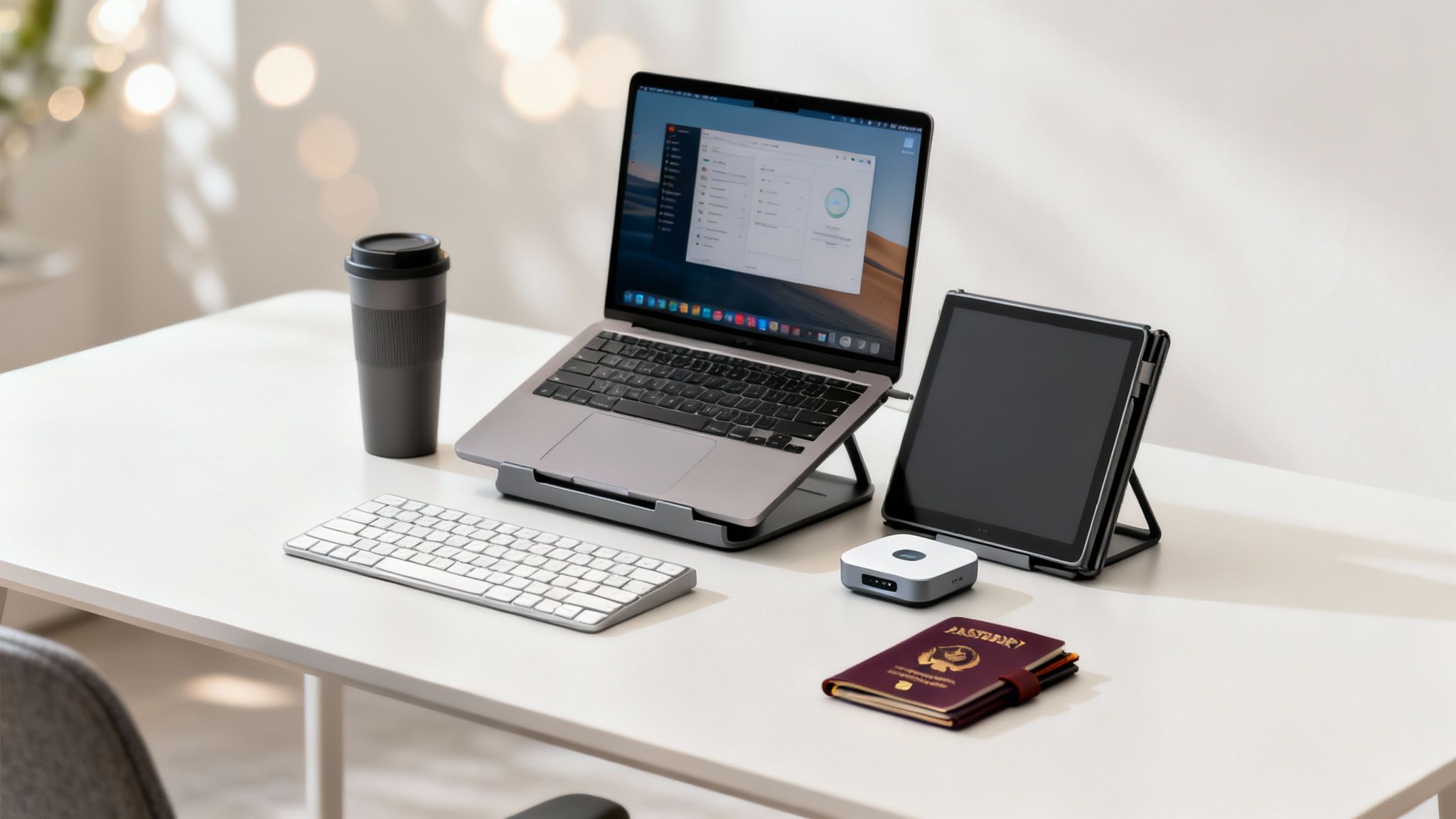
Let's be honest: your physical environment is one of the biggest factors in whether you have a productive day or a frustrating one. A cluttered, uncomfortable, or distracting space is a direct hit to your focus and energy.
That's why creating an intentional workspace - your own productive bubble - is non-negotiable. This is true whether you're a long-term expat settling into a new apartment or a digital nomad bouncing between temporary rentals.
This isn't about trying to replicate a sterile corporate office. It's about engineering a space that sends a clear signal to your brain: it's time for deep work. The simple act of dedicating a specific area to your job, no matter how small, creates a powerful psychological boundary. It helps you switch on in the morning and, just as importantly, completely switch off when the day is done.
Ergonomics for Every Expat and Nomad
Your body keeps the score. I've seen it time and time again - working for hours hunched over a laptop on a plush couch might feel cozy for a day, but it's a fast track to chronic back pain and repetitive strain injuries.
Prioritizing ergonomics isn't a luxury; it's a fundamental investment in your long-term health and your ability to keep working effectively. Your approach will just depend on your lifestyle. A long-term expat with a permanent base can invest in more substantial gear, while a digital nomad has to prioritize portability without sacrificing support.
-
For the Settled Expat: If you're staying put for six months or more, a high-quality, adjustable ergonomic chair is your single best investment. Don't skimp here. Pair it with an external monitor set at eye level to prevent that all-too-common neck strain. This simple two-piece setup is the gold standard for a sustainable remote work posture.
-
For the Digital Nomad: Luggage space is prime real estate, I get it. Your go-to kit should include a lightweight, collapsible laptop stand and a separate portable keyboard and mouse. This simple trio elevates your screen to the proper height and allows you to maintain a healthy wrist position, preventing the dreaded "laptop hunch."
Research consistently shows that when people can customize their environment, their focus and efficiency improve. This is especially true for remote workers, who often report fewer distractions compared to a traditional office. Your ergonomic setup is the first and most critical customization you can make.
Building Connectivity Resilience
A shaky internet connection is the ultimate productivity killer. For anyone working across time zones, a dropped video call or a failed file upload can completely derail a day's work. You absolutely need a primary connection and at least one reliable backup. This isn't paranoia; it's just professional preparedness.
Think of it as creating your digital safety net. When your primary Wi-Fi inevitably goes down (and it will), you can switch to your backup seamlessly without missing a beat - or a deadline.
Your Connectivity Resilience Checklist
Before settling into a new location, run through this quick checklist. It will save you from being offline when it matters most.
-
Vet Your Accommodation's Wi-Fi: Don't just ask if it has Wi-Fi - ask for a speed test screenshot. Anything less than 25-30 Mbps download speed could spell trouble for video calls and big file transfers. If you can, read reviews from other remote workers.
-
Secure a Local SIM Card Immediately: As soon as you land in a new country, make getting a local SIM card with a generous data plan your top priority. This is your most reliable backup. A little research beforehand on providers with the best coverage in your region goes a long way.
-
Invest in a Portable Mobile Hotspot: For an even more robust solution, a dedicated mobile hotspot device is a game-changer. It lets you use local data SIMs without draining your phone's battery and provides a stable, private network for all your devices.
-
Scout Local Co-working Spaces: Even if you prefer working from home, identify a few nearby co-working spaces with day passes. They often have enterprise-grade internet and are an excellent emergency option if both your home Wi-Fi and mobile data fail you.
By thoughtfully designing your physical and digital workspaces, you build a solid foundation for sustained focus. This control over your environment empowers you to deliver high-quality work consistently, no matter where your journey takes you.
Mastering Communication Across Time Zones
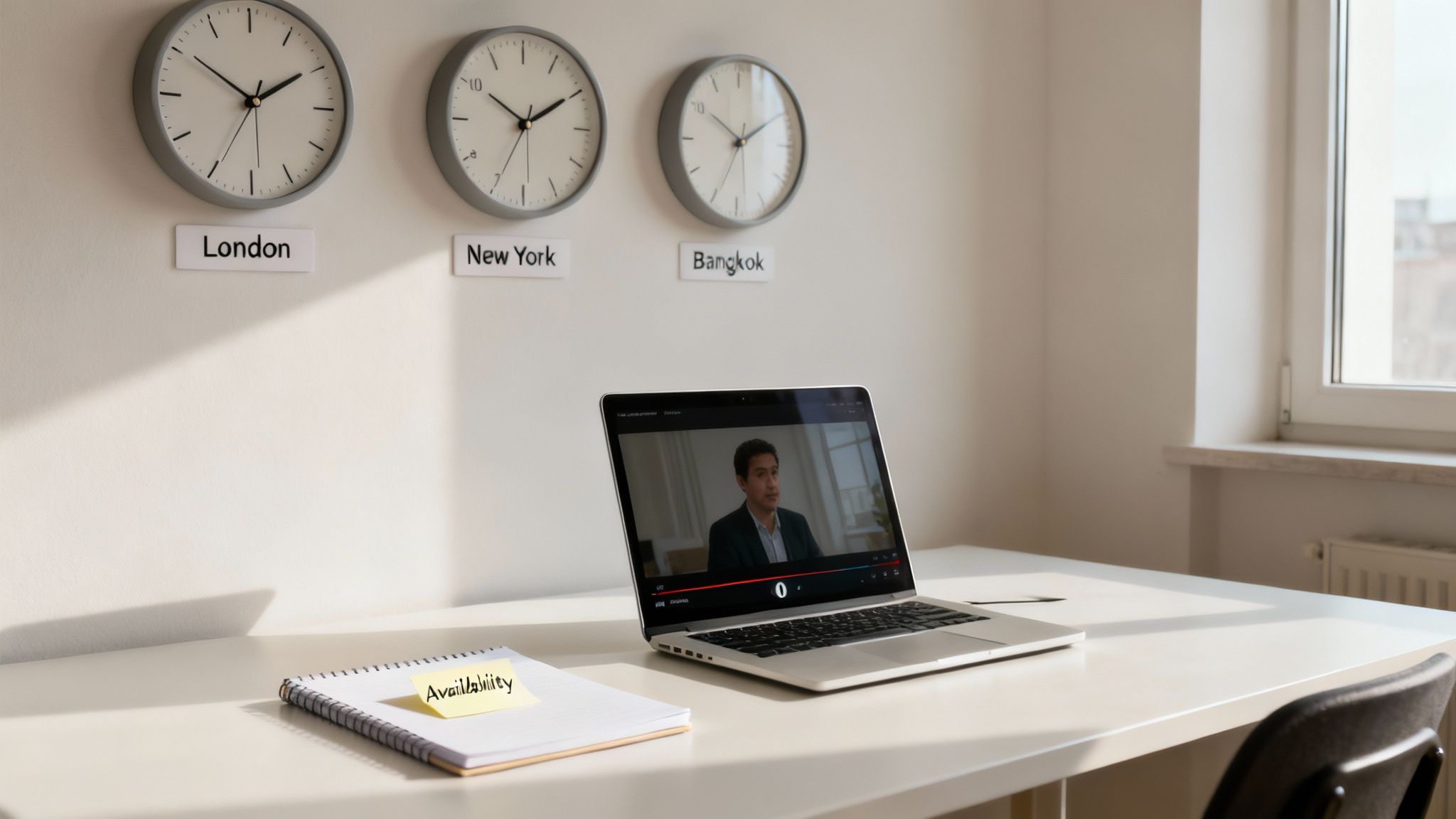
When your team is scattered across the globe, communication stops being a simple task and becomes a core operational strategy. That constant pressure to be online for a "quick chat" is one of the biggest threats to deep, focused work. For expats and digital nomads, it's a fast track to burnout.
Productivity in a remote, international team isn't about more meetings. It's about making every single interaction count, especially when real-time collaboration just isn't practical.
The secret? You have to get good at asynchronous communication. This is the art of moving projects forward without needing everyone to be online at the same time. It's a game-changer because it respects everyone's individual schedules and lets them contribute during their peak hours, not forcing them to conform to a timezone halfway around the world.
The Art of the Asynchronous Update
A truly effective async update is clear, concise, and gives the next person all the context they need to pick up where you left off. The whole point is to kill the endless back-and-forth that eats up hours and creates frustrating delays.
So, instead of a vague message like, "Hey, can you look at this when you get a chance?" your updates need to be self-contained and action-oriented. Always include links to the right documents, explain the current status, and be crystal clear about what you need next.
Imagine you're handing off a project at the end of your day. A message in your project management tool should look something like this:
Project Handoff Example
- Project: Q3 Client Report
- My Update: First draft is done and saved in our shared drive [link]. I've pulled in the latest sales data and worked through the feedback from last week's notes.
- Next Steps: Could you please review the "Executive Summary" on page 2? I've left a comment where I think the wording could be punchier. Once your edits are in, please tag Sarah for the final design review.
- Deadline: We need this out to the client by EOD Thursday your time.
This kind of handoff gives your colleague everything they need to jump in without a single follow-up question. It's a foundational skill for any high-functioning distributed team.
Setting Boundaries to Protect Your Focus
One of the toughest challenges for remote workers is setting and defending their work hours. It's so easy to slip into the "always-on" mentality when your colleagues are just starting their day as you're trying to wind down. This is where setting professional boundaries becomes non-negotiable.
Your availability needs to be clearly stated and consistently reinforced. This isn't about being difficult; it's about managing expectations so you can actually perform at your best.
Here's a simple script you can adapt to communicate your hours clearly:
- "To make sure I can stay focused on my key projects, my working hours are from 9 AM to 5 PM [Your Timezone]. I'll get back to any messages received outside this window first thing the next morning."
It's also crucial to use your status in tools like Slack or Microsoft Teams properly. Don't just set it to "Away." Customize it to give people useful info, like "Offline until 9 AM CEST - will reply then." This simple act prevents misunderstandings and helps normalize async work patterns.
Choosing the Right Tool for the Job
Not all communication is created equal. Knowing which platform to use for which type of message is key to keeping a remote environment calm and productive. A clear protocol prevents urgent issues from getting lost in an email chain and stops non-urgent chatter from derailing deep work.
For international teams, having a clear guide for which tools to use is essential. Here's a breakdown of how we see it.
Asynchronous vs Synchronous Communication Tools
| Tool | Communication Type | Best Use Case for Expats |
|---|---|---|
| Slack/Teams | Synchronous & Asynchronous | Quick questions, social banter, and urgent, time-sensitive alerts. |
| Asynchronous | Formal communication with external clients or official internal announcements. | |
| Project Management (Asana, Trello) | Asynchronous | Project updates, task assignments, and clear handoffs with all context included. |
| Video Calls (Zoom, Google Meet) | Synchronous | Complex brainstorming sessions, sensitive feedback, and virtual team building. |
By defaulting to asynchronous methods and being firm with your boundaries, you can create a work environment that champions deep focus and respects personal time - no matter how many time zones separate you from the rest of your team.
If you're already working remotely from another country, you know firsthand how important these communication habits are.
Protecting Your Wellbeing and Preventing Burnout
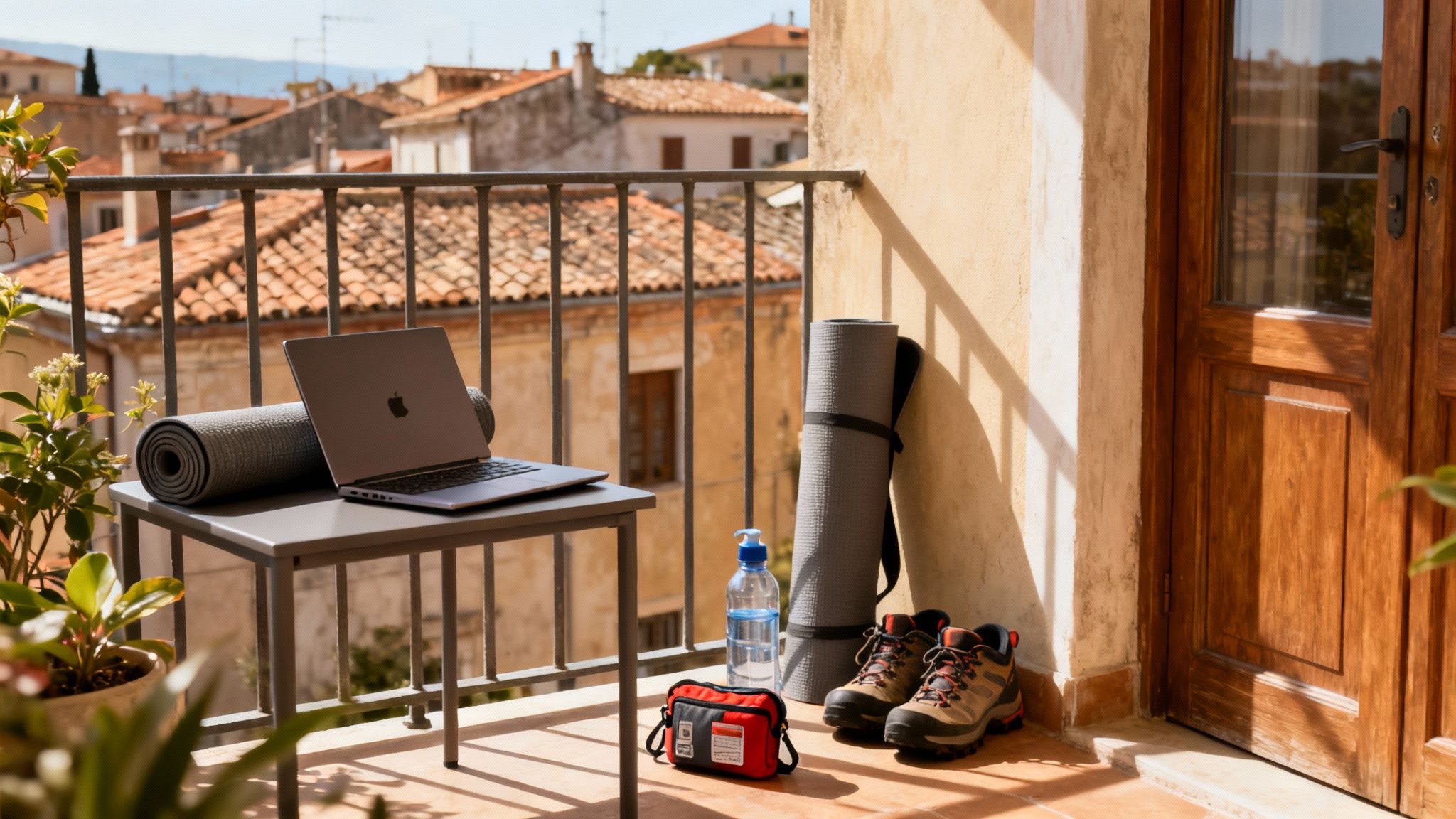
The freedom that comes with working remotely from anywhere in the world is incredible, but it has a hidden risk: the complete erosion of the line between your work and your life. Without an office to physically leave, your workspace is always there, tempting you to answer just one more email or finish one more task.
This "always-on" culture is a fast track to burnout. It's a serious threat to your long-term remote work productivity and, more importantly, your overall happiness.
Proactively protecting your wellbeing isn't some fluffy, optional extra. It's a core operational necessity for any successful expat or digital nomad. It takes a conscious effort to schedule real downtime, build social connections in a new country, and learn to spot the early signs of exhaustion before they take you down.
Recognizing the Early Signs of Burnout
Burnout doesn't just show up one morning. It's a slow burn, often disguised as just another "busy period" until it feels completely overwhelming. Learning to spot the initial red flags gives you the power to hit the brakes and make a change before your health (both mental and physical) starts to suffer.
Keep an eye out for these subtle but significant changes:
- Chronic Fatigue: This isn't just feeling tired after a long day. It's a deep, bone-weary exhaustion that a full night's sleep doesn't seem to fix.
- Increased Cynicism: You might start feeling totally detached from your work, questioning why you're even doing it, or getting unusually irritable with colleagues and clients.
- Reduced Performance: Tasks that used to be easy now feel like climbing a mountain. You find it hard to concentrate, your creativity is gone, and everything takes twice as long.
- Physical Symptoms: Don't ignore the physical signs. Frequent headaches, stomach problems, or catching every cold that goes around can all be your body screaming for a break.
If any of this sounds familiar, take it as a clear signal to step back and reassess how you're balancing work and life. Immediately. For a deeper dive into the emotional side of living abroad, check out our article on expat mental health.
Building a Social and Personal Life Abroad
Isolation is one of the biggest challenges for remote workers living abroad. Sure, video calls keep you connected to your team, but they can't replace genuine, in-person human connection. Building a local social network is absolutely crucial for fighting off loneliness and creating a life that feels fulfilling outside of your job.
Don't wait until you feel lonely to start. Make it a priority from day one.
- Engage in Local Hobbies: Join a local sports club, take a language or cooking class, or find a hiking group. Shared interests are the fastest way to build real friendships.
- Use Connection Apps: Apps like Meetup are fantastic for finding events and groups centered around your passions, from board games to tech talks.
- Become a Regular: Find a favorite local café or restaurant and actually go there often. Becoming a familiar face can lead to organic conversations and help you feel like you belong.
The effort you put into building a community will pay huge dividends for your mental health.
While remote work can boost overall happiness and satisfaction, surveys consistently show that a significant portion of remote workers end up working longer hours than they would in an office. For expats, this highlights the critical need to balance productivity with personal wellbeing.
Creating Your Contingency Plan
True peace of mind comes from knowing you're prepared for the unexpected. A solid contingency plan reduces that low-level background anxiety, freeing up your mental energy to focus on your work and actually enjoy your life abroad. Think of this as the practical side of wellbeing.
Your safety net should include three key components:
- Understand Your Health Insurance: Don't just buy a policy - actually read it. Know what's covered, what your deductible is, and keep both digital and physical copies of your policy info handy. Check out our detailed guide on health insurance for digital nomads to make sure you have the right coverage.
- Know How to Access Local Healthcare: Before you ever need it, research the local healthcare system. Identify the nearest reputable hospital, clinic, and pharmacy. Save their addresses and contact numbers in your phone right now.
- Establish an Emergency Protocol: Have a clear plan for what to do in a crisis. This means knowing the local emergency number (it's not always 911!), having the contact info for your embassy, and ensuring a trusted person back home has copies of your important documents.
Putting these practical measures in place is an act of self-care. It ensures that if a crisis does hit, you can react calmly and effectively, protecting both your health and your career.
Your Remote Work Productivity Questions Answered
Working abroad throws a unique set of questions your way. How do you actually get work done when your office is also your living room in Lisbon? What are the absolute must-have tools for collaborating across a twelve-hour time difference?
This section jumps right into those common problems. We're skipping the basics to give you clear, practical answers that will help you master your productivity, no matter where you are.
Is Remote Work Actually More Productive?
This is the big one, and the data is largely positive: yes, when set up well, it absolutely can be. The old idea that working from home hurts output has been challenged by a growing body of research. The reality is, many remote workers consistently get more done than their office-based colleagues, provided they have the right environment and habits.
The most widely cited evidence comes from Stanford economist Nicholas Bloom, whose landmark study of a large Chinese travel company found a 13% productivity increase among employees who worked from home. The gains were attributed to a quieter environment and fewer interruptions.
It's worth noting that these results can vary based on job type, management quality, and individual circumstances. But the overall picture is clear: with the right structure, remote work is not a productivity compromise - it's an upgrade.
What Are the Biggest Productivity Killers for Remote Workers?
While the potential for high output is huge, remote work has its own unique set of traps. The most common issues aren't about bad Wi-Fi; they're almost always about boundaries, communication, and a lack of routine.
The two biggest dangers I see are scope creep and context switching. Scope creep is that slow bleed of work into your personal time, often driven by an "always-on" culture. Context switching is the mental price you pay every time you jump from a deep-focus task to answer a quick chat notification - it absolutely shatters your concentration.
Here are the top offenders you need to watch out for:
- Fuzzy Boundaries: When there's no clear start or end to your workday, it's easy for work to expand and fill every available moment. This is a direct path to burnout.
- Constant Notifications: Every ping from Slack or email is a tiny interruption that yanks you out of deep work. The cumulative effect is devastating for your focus.
- Sloppy Communication: Vague, open-ended messages that need five back-and-forth replies create huge delays and mental clutter.
- Isolation: A lack of genuine social connection can tank your motivation and mental health, which are the fuel for productivity.
Getting a handle on these challenges is the real secret to mastering remote work productivity. It takes a deliberate, proactive approach to structuring your day and how you interact with your team.
Your ability to control your environment and your schedule is your greatest asset. The most productive remote workers are ruthless in protecting their time and focus from these common drains.
How Can I Stay Visible and Connected to My Team?
A common fear for remote workers is becoming "out of sight, out of mind." When you're thousands of miles and several time zones away, how do you make sure your contributions are seen and that you still feel like you're part of the team? The key is to be intentionally visible.
This isn't about making a lot of noise in Slack. It's about being clear, reliable, and proactive in your communication to build trust.
Here are a few simple strategies to maintain strong connections:
- Over-communicate your progress. Post regular, concise updates on your work in shared channels or project tools. This shows you're engaged and moving things forward without anyone having to ask.
- Become a master of async work. When you leave comments or hand off a task, give your colleagues all the context they need to pick it up without questions. This makes you an incredibly valuable teammate.
- Schedule intentional social time. Be the one to suggest a virtual coffee chat or start a non-work channel. These small moments are vital for building the relationships that make teamwork effective.
- Turn your camera on. During video calls, being visually present makes a huge difference in building rapport and creating a sense of shared purpose.
Focusing on these habits will help you build a strong professional presence and stay deeply connected with your team, no matter the distance.
What Tools Are Essential for a Remote Expat?
While everyone's perfect tech stack is a little different, there are a few core tools that are non-negotiable for any serious remote professional, especially one working internationally. These tools are the backbone of your digital office, making collaboration, organization, and communication feel seamless.
Your toolkit should be built around reliability, security, and anything that makes asynchronous work easier.
| Tool Category | Example Tools | Why It's Essential for Expats |
|---|---|---|
| Communication | Slack, Microsoft Teams | Keeps project conversations organized in dedicated channels and out of your overflowing inbox. |
| Project Management | Asana, Trello, Notion | Provides a single source of truth for tasks, deadlines, and progress - a lifesaver for async collaboration across time zones. |
| Cloud Storage | Google Drive, Dropbox | For secure, accessible file sharing that guarantees everyone has the latest version of important documents, wherever they are. |
| Video Conferencing | Zoom, Google Meet | For those essential face-to-face meetings, brainstorming sessions, and team-building moments that need a real-time connection. |
| Time Zone Converter | World Time Buddy | An absolute must-have for scheduling meetings without the mental gymnastics of calculating who is where and when. |
Putting money into the right tools isn't just for convenience; it's about being a professional. A solid toolkit removes friction and lets everyone on the team focus on doing their best work.
At Expat Insurance, we understand that true productivity comes from peace of mind. While you focus on building a successful remote career abroad, we focus on providing the comprehensive health and life insurance that protects you and your family. Get a personalized quote today and build the safety net you need to thrive anywhere in the world. Learn more at https://www.expatinsurance.com.
Justin Barsketis
Insurance Expert & Writer
Justin is an insurance guru that loves digital marketing. As our founder Justin manages our business development programs and MGA network. Please don’t hesitate to contact him if you are not getting the attention you deserve.
