

July 29, 2026
•
5 min read
Inside America's Historic Cartel Court Cases: El Mayo, Caro Quintero, Maduro, and the 92 Prisoners Mexico Sent North
Mexico sent 92 prisoners to US courts. Inside the historic cartel cases: El Mayo sentencing, Caro Quintero going to trial, and Nicolas Maduro in Manhattan.
Adam Smith
Insurance Expert
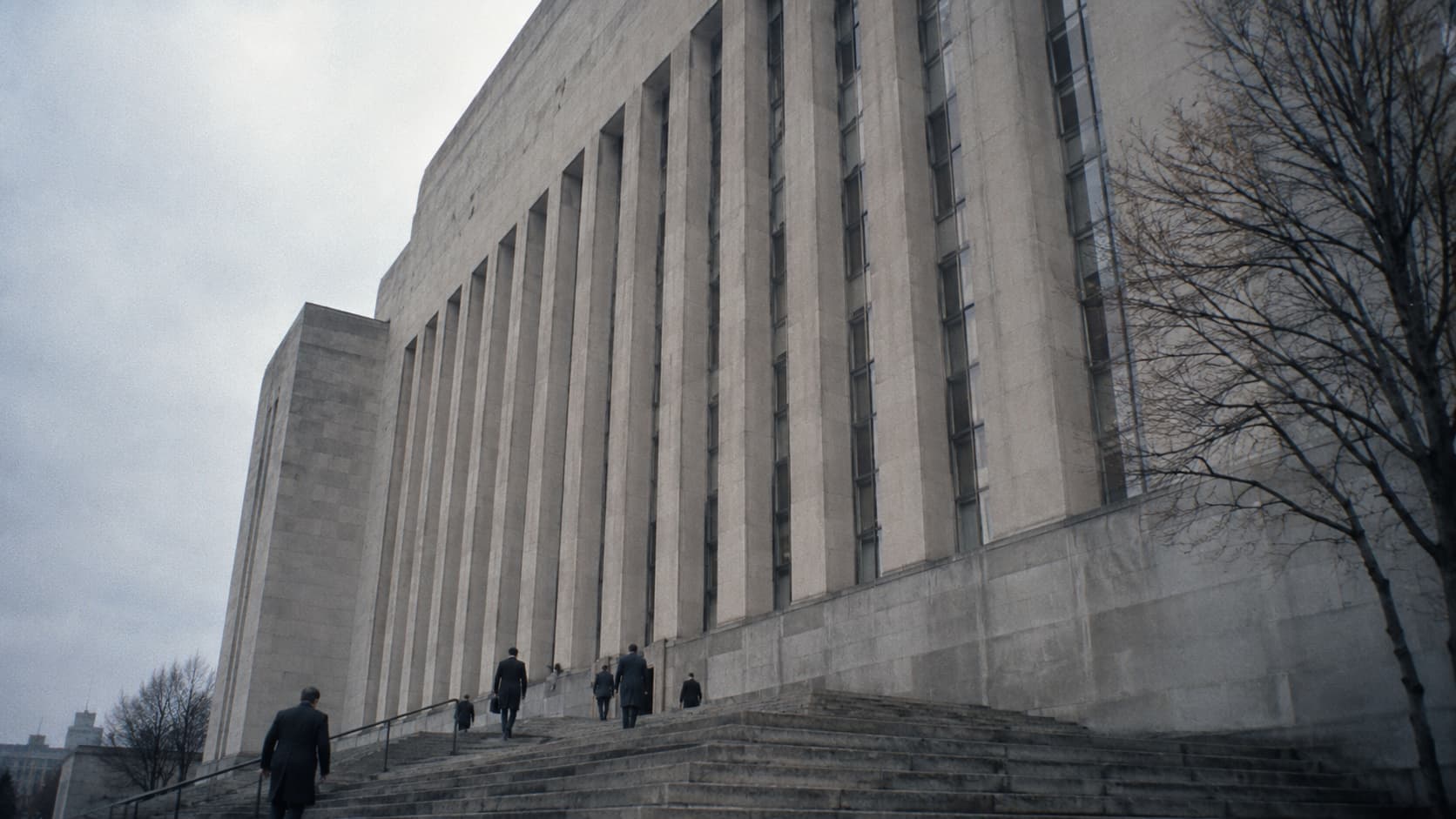
Something unprecedented is happening in American federal courtrooms. Over the past eighteen months, Mexico has handed 92 alleged cartel figures to the United States, a deposed head of state was flown to Manhattan in handcuffs, and the man accused of murdering a DEA agent in 1985 is sitting in a Brooklyn jail cell awaiting trial. We wanted to lay out what is actually happening, case by case, because the reporting on it has been scattered across a dozen jurisdictions and two languages.
Interested in expat health insurance? Click here for a 1-minute quote!
Introduction
Historic Cartel Court Cases – Introduction
This is a news explainer, not a safety guide. We are not going to tell you that any of this changes your afternoon in Oaxaca, because it probably doesn't. What it does change is the legal architecture of the drug war, and that story is genuinely historic. Half a dozen of the most significant organized crime prosecutions in American history are running simultaneously right now, in Brooklyn, Manhattan, Chicago, Washington, and Los Angeles.
A note before we start: throughout this article you will see internal links in blue text, which connect to our other coverage. Everyone named here who has not pleaded guilty is presumed innocent, and an indictment is a set of allegations, not proof.

How 92 Prisoners Ended Up in American Courtrooms
Historic Cartel Court Cases – The Transfers
The cases all trace back to three seperate days.
On February 27, 2025, Mexico sent 29 prisoners north. On August 12, 2025, it sent 26 more. On January 20, 2026, it sent 37, the largest group yet, flown on seven Mexican military aircraft to Washington, Houston, San Antonio, San Diego, New York, and Pennsylvania. Mexican Security Minister Omar García Harfuch put the total at 92 people.

The legal mechanism matters more than the numbers. These were not extraditions. Mexico did not use the 1978 extradition treaty with the United States, and no Mexican judge signed an extradition order. The government expelled these men by executive action under Mexican domestic law, arguing they were national security threats who were still running their organizations from inside Mexican prisons. The US Department of Justice has described them as expulsions.
That distinction is not academic. Treaty extradition carries the rule of specialty, which limits prosecutors to the charges listed in the extradition request. Whether men expelled outside the treaty get that protection is an open question, and defense lawyers have started asking it. As of June 2026, thirteen of the 92 had formally asked Mexico's foreign ministry for consular assistance to be returned home and tried in Mexico.
The context is also not subtle. The February 2025 transfer landed while Mexican officials were in Washington trying to talk Donald Trump out of 25 percent tariffs on Mexican goods. Mexican officials insisted the handovers were not part of tariff negotiations. In exchange, the DOJ agreed not to seek the death penalty against anyone transferred, a concession that likely reduced the chance of violent retaliation.
Brooklyn Has Quietly Become the Cartel Courthouse
Historic Cartel Court Cases – The Eastern District of New York
If there is a center of gravity, it is a federal courthouse in Brooklyn.
The Eastern District of New York convicted Joaquín "El Chapo" Guzmán in February 2019 after an eleven week trial. Judge Brian Cogan sentenced him that July to life plus 30 years and ordered $12.6 billion in forfeiture. He is now in the Supermax at Florence, Colorado.
The same court convicted Genaro García Luna, Mexico's Secretary of Public Security from 2006 to 2012, in February 2023. He remains the highest ranking Mexican official ever convicted in the United States. Prosecutors wanted life. In October 2024, Cogan gave him 460 months, just over 38 years, plus a $2 million fine, saying the former official deserved some light at the end of the tunnel while noting he had lived a double life.
Caro Quintero and Vicente Carrillo Fuentes, the former Juárez Cartel leader known as El Viceroy, were arraigned in the same building. So was El Mayo. The concentration is not coincidental: once a court builds the cooperating witnesses, the translated evidence, and the institutional memory for one cartel prosecution, the next one follows.
El Mayo Zambada: Sentenced to Life
Historic Cartel Court Cases – Ismael Zambada García
This was the case with a clock on it, and the clock ran out on July 20.
Ismael "El Mayo" Zambada García co-founded the Sinaloa Cartel and ran it for decades alongside El Chapo, staying out of prison the entire time. He was arrested in New Mexico in July 2024 after landing on a private plane with Joaquín Guzmán López, one of El Chapo's sons. Zambada says he was ambushed, hooded, tied up, and flown across the border against his will.
On August 25, 2025, he pleaded guilty in Brooklyn to leading a continuing criminal enterprise and to racketeering conspiracy. The continuing criminal enterprise count carries a mandatory minimum of life.
His sentencing was postponed four times: from January 13 to April 13, then to May 18, then to July 20, 2026. His lawyer Frank Pérez cited difficulty gathering documents and witness letters given the violence in Sinaloa.
The filings in the weeks beforehand were revealing. On July 6, Pérez sent Judge Cogan a sentencing letter conceding what everyone knew, that his 76 year old client would die in an American prison. The ask was narrower: that Cogan recommend a federal medical facility rather than the Supermax where El Chapo sits, given Zambada's advanced diabetes. Pérez argued that his client spared the government an eleven week trial, thirty cooperating witnesses, and millions in security costs, and that landing him in the same place as the man who fought would send the wrong signal to future defendants. The letter stated plainly that Zambada did not provide substantial assistance and was not seeking a reduction. On July 13, prosecutors responded by asking for life and $15 billion in forfeiture.
On July 20, 2026, Judge Cogan, who sentenced both El Chapo and García Luna, imposed the mandatory penalty: life in prison without the possibility of parole. He also ordered $15 billion in forfeiture, one of the largest financial penalties in the history of American drug prosecutions and the exact figure prosecutors had requested. The hearing in Brooklyn ran about 35 minutes.
Cogan gave the defense the one thing it had actually asked for. He said he would recommend that Zambada serve his sentence in a federal prison medical facility rather than the Supermax in Florence, citing a set of progressive illnesses and a mental state the judge described as drifting toward cognitively impaired. He ordered Zambada's medical records sealed. The recommendation is only that. The Bureau of Prisons makes the final placement decision, and prosecutors had cautioned that Zambada still maintains contacts capable of posing a security risk.
Zambada, 76, entered the courtroom limping and read a short statement in Spanish. He apologized to those who had suffered because of what he had done, urged young people not to follow the path he took, and called for an end to the violence, telling the court that no one wins this war. It was the outcome his own lawyer had forecast weeks earlier: the same life term as the partner who took his case to trial, separated only by where each man will serve it.
Rafael Caro Quintero: The Kiki Camarena Case
Historic Cartel Court Cases – Rafael Caro Quintero
The Guadalajara Cartel founder is 73 and has been in the Metropolitan Detention Center in Brooklyn since February 2025, held under Special Administrative Measures that keep him almost entirely isolated. His lawyers have told the court the conditions are degrading his health and his ability to help prepare a defense.
He faces four charges tied to drug trafficking, including engaging in a continuing criminal enterprise and a cocaine importation conspiracy. Underneath them sits the case that made him famous: the 1985 kidnapping, torture, and murder of DEA Special Agent Enrique "Kiki" Camarena in Guadalajara. He pleaded not guilty in February 2025. His nephew, Ismael Quintero Arellanes, is a co-defendant in the same case.
In August 2025, the DOJ confirmed it would not seek the death penalty. On March 19, 2026, Judge Frederic Block set a jury trial for March 8, 2027.
Two things are worth watching. First, despite the trial date, the case is not certain to go to trial. At that same March hearing, defense lawyer Elizabeth Macedonio told the court that both sides were still discussing a resolution short of trial. Reporting since has been contradictory on how live those talks are, though as of June 2026 the defense confirmed the plea discussions were continuing.
Second, prosecutors have asked for an anonymous and partially sequestered jury, with jurors' identities withheld and US Marshals driving them to and from court. The defense objected in July 2026, arguing that treating jurors as though they need protection from the defendant creates a perception of guilt before any evidence is heard. Block has not ruled, and has set the question down for a hearing on October 1, 2026.
If it does reach trial, it will be the first full public airing of the Camarena case in an American courtroom in forty years.
Nicolás Maduro: Manhattan
Historic Cartel Court Cases – Nicolás Maduro
On January 3, 2026, US forces captured Nicolás Maduro and his wife Cilia Flores in a nighttime operation in Caracas. Two days later they were arraigned in the Southern District of New York, across the river from Brooklyn, before Judge Alvin Hellerstein.
Maduro pleaded not guilty and told the court he had been kidnapped and was a prisoner of war. He faces four counts: narco-terrorism conspiracy, cocaine importation conspiracy, possession of machine guns and destructive devices, and conspiracy to possess them. The indictment was originally filed in March 2020 and alleges he began trafficking cocaine into the United States as early as 1999, working with Colombian armed groups, providing traffickers with diplomatic passports, and moving product through the Caribbean and Central America. He is held in a high security section of the Metropolitan Detention Center in Brooklyn.
This is the most legally fragile of the major cases, and also the most politically loaded.
The evidence problem is straightforward: proving corruption in the Venezuelan military is one thing, and proving Maduro personally directed and profited from it is another. Prosecutors have cooperators positioned to help. Hugo Carvajal, Venezuela's former military intelligence chief, pleaded guilty in this case in June 2025 after extradition from Spain. General Cliver Alcalá pleaded guilty in June 2023. Cooperating witness testimony has historically drawn credibility attacks, and the García Luna trial showed both what it can accomplish and how much weight it has to carry.
There was also a funding fight. Maduro's lawyer Barry Pollack, who previously represented Julian Assange, moved to dismiss on the grounds that US sanctions blocked his client from paying for a defense. In March 2026, Hellerstein rejected it flatly, saying he was not going to dismiss the case. That dispute has since resolved. In April 2026, the Treasury Department's Office of Foreign Assets Control began allowing Maduro and Flores to receive money from Venezuela to pay their attorneys, and the defense withdrew the motion.
At a hearing on July 22, 2026, Hellerstein tentatively set the trial for June 1, 2027, and laid out a schedule that takes up the defense's next move first. Pollack has signaled he will argue that Maduro cannot be prosecuted at all, on the grounds that he was a sitting head of state when he was captured. The court will consider that sovereign immunity claim through pretrial motions beginning in early September. That, and no longer the funding question, is now the fight that could decide whether this case ever reaches a jury.
Los Chapitos: The Cooperation Track in Chicago
Historic Cartel Court Cases – The Guzmán López Brothers
Two of El Chapo's sons took the other road.
Ovidio Guzmán López, known as El Ratón, pleaded guilty in Chicago on July 11, 2025 to four counts spanning indictments from Illinois and the Southern District of New York, admitting to a fentanyl operation prosecutors called staggering. He agreed to cooperate fully with future investigations.
His brother Joaquín Guzmán López pleaded guilty on December 1, 2025 to drug conspiracy and continuing criminal enterprise. He admitted in his plea agreement that he lured Zambada to a meeting in Sinaloa in July 2024 and delivered him to American authorities. Prosecutors agreed to recommend less than life, but not less than ten years.
Ovidio's status hearing, where Judge Sharon Johnson Coleman is expected to weigh his cooperation and set a sentencing date, has proven hard to pin down. It slid from January to July 10, then to July 27, and on July 16, 2026 the judge cancelled the July date and reset it for October 28, 2026, the third postponement this year. No reason appeared on the docket, though the delays track with the time it takes prosecutors to gauge how useful a cooperating witness has actually been. Until that hearing happens, his sentence stays undefined.
Two brothers, Iván Archivaldo Guzmán Salazar and Jesús Alfredo Guzmán Salazar, remain fugitives with a $10 million reward on them, reportedly watching how their siblings' deals turn out.
President Claudia Sheinbaum has publicly criticized the incoherence of an American policy that designates cartels as foreign terrorist organizations while cutting plea deals with their leaders. It is a fair point, and it goes to the heart of what these cases are.
Los Zetas: A Trial That May Not Start Until 2029
Historic Cartel Court Cases – The Treviño Morales Brothers
Miguel Ángel and Omar Treviño Morales, Z-40 and Z-42, led Los Zetas and then, according to prosecutors, kept running the organization from Mexican prisons after renaming it Cartel del Noreste. They were part of the February 2025 transfer and pleaded not guilty in Washington, DC before Judge Trevor McFadden on March 14, 2025. The DOJ dropped the death penalty in September 2025.
On July 10, 2026, prosecutors told the court there will be no plea agreement. This one is going to trial.
The scale is the story. Defense lawyers told McFadden the discovery runs to nearly five million files, including 1.5 million recordings, drawn from multiple DEA divisions. The judge proposed September 2028 as a start date. The defense said that is not workable and asked for 2029. McFadden indicated he would not wait for the defense to finish reviewing everything. The next hearing is September 10, 2026.
Ryan Wedding: Los Angeles
Historic Cartel Court Cases – Ryan Wedding
The outlier. Ryan Wedding is a Canadian who competed in parallel giant slalom at the 2002 Winter Olympics in Salt Lake City and, prosecutors say, spent the following decade running cocaine.
He was taken into custody in Mexico City on the night of January 22, 2026 and flown to Ontario, California the next morning. The circumstances are disputed. American officials said he surrendered at the US Embassy after weeks of negotiation. His lawyer Anthony Colombo says he was arrested, not surrendered, and was living in Mexico rather than hiding there. Colombo has raised the question of whether the apprehension was lawful, drawing an explicit comparison to the Maduro operation.
Wedding pleaded not guilty in Santa Ana on January 26 to 17 charges across two indictments, including continuing criminal enterprise, murder in connection with a drug crime, and witness tampering by completed murder. Prosecutors allege his network moved as much as 60 tons of cocaine under Sinaloa Cartel protection, and that he ordered the killing of a federal witness who was gunned down in a restaurant in Medellín, Colombia.
Judge Sherilyn Peace Garnett found the prosecution unusual and complex enough to defy normal timelines, and in April 2026 pushed the trial from July 28 to December 1, 2026, consolidating Wedding with two co-defendants into a single December trial. A status conference is set for November 18.
The Pattern Worth Noticing
Historic Cartel Court Cases – Trials Versus Deals
Look at the whole board and a logic emerges.
The men who can trade information are trading it. Ovidio and Joaquín Guzmán López are cooperating and expect to serve something short of life. The men who cannot offer anything the government wants, or who are wanted for something the government will not trade away, are going to trial or to a mandatory life sentence. El Mayo, at 76, had nothing left to sell. The Treviño brothers are charged with dozens of murders. Caro Quintero has a dead DEA agent attached to his name, and the DEA has spent forty years waiting.
There is a second pattern. Almost every one of these prosecutions rests on cooperating witnesses, which is to say on the testimony of criminals who have their own reasons to talk. That worked in the El Chapo trial and in the García Luna trial. Whether it works against a former head of state, in a case where the political stakes are this high and the jury pool is this polarized, is the real open question of the next two years.

Frequently Asked Questions
Historic Cartel Court Cases – FAQ
Were the 92 prisoners extradited?
No. Mexico expelled them by executive action under its own domestic law, not through the 1978 extradition treaty. No Mexican judge signed an extradition order. The Justice Department calls them expulsions.
Why did the US drop the death penalty in these cases?
It was a condition of the transfers. Mexico abolished capital punishment and has long refused to hand over defendants who might face it. The DOJ agreed not to seek it against anyone transferred, which analysts also credit with reducing the risk of violent retaliation.
Where is El Chapo now?
He is serving life plus 30 years at the Supermax facility in Florence, Colorado, following his 2019 conviction in Brooklyn.
Why are so many of these cases in Brooklyn?
The Eastern District of New York has prosecuted Mexican trafficking cases for decades and built the cooperating witnesses, evidence, and expertise to do it. El Chapo, García Luna, El Mayo, and Caro Quintero all ran through the same courthouse.
Can Maduro be tried in a US court at all?
He has been arraigned and has pleaded not guilty, and in March 2026 the judge refused to dismiss the case. The funding dispute that dominated the early hearings has since been resolved, and in July 2026 the judge set a tentative trial date of June 1, 2027. His lawyers are now expected to argue that Maduro had sovereign immunity as a head of state when he was captured, a question the court will weigh before trial. The prosecution is proceeding.
Does any of this affect daily life in Mexico?
Not directly. These are American court proceedings. If you want our actual assessment of conditions on the ground, we cover that separately in our safety in Mexico and is it safe to live in Mexico articles, which are honest about crime rates rather than reassuring.
Conclusion
Historic Cartel Court Cases – Conclusion
For forty years the standard complaint about the drug war was that the powerful never faced consequences. That complaint is harder to make now. The founder of the Sinaloa Cartel has been sentenced to life. The founder of the Guadalajara Cartel has a trial date. Mexico's former top cop is doing 38 years. A sitting head of state was pulled out of his palace and arraigned in Manhattan.
Whether any of it reduces the amount of cocaine and fentanyl crossing the border is a separate question, and the honest answer is that nothing in the historical record suggests it will. The Sinaloa Cartel did not stop when El Chapo went to Florence. It split in two and went to war with itself.
What is changing is the venue. The most consequential decisions about Mexican organized crime are increasingly being made by American judges in American courtrooms, under American rules, with Mexican sovereignty a secondary consideration. That is the actual story of these cases, and it is only getting started.
We will update this piece as each case moves.
Related Articles:
- Safety in Mexico
- Is It Safe to Live in Mexico?
- Mexican Immigration Law: Mexico's Immigration Policy
- Will Mexico Slow Its Immigration Crackdown?
- Is Mexico Still Cheap?
Adam Smith
Insurance Expert & Writer
Adam Smith is a long time expat and investigative journalist. He splits his time between the Carribbean and Florida, chasing the warm weather.
