

June 30, 2026
•
5 min read
World Cup in Mexico 2026
The 2026 World Cup is in Mexico. What it means for expats living here, the hotel price surge, host cities, El Tri's run, and why travel insurance matters now.
Justin Barsketis
Insurance Expert
Traveling to the final, hosting friends who are still in town, or just confirming your coverage now that the dust has settled? Our brokers can walk you through coverage that actually works in Mexico. Book a free consultation here.
A lot of our staff live in Mexico, so this is also our take on what the tournament felt like on the ground. We have placed links throughout this article (wherever you see blue text, which often says "click here") to connect you to information that will help you prepare. Click on them, because the lessons from the last five weeks are worth carrying into whatever you have planned next.
For the first time since 1986, the World Cup came home to Mexico. The 2026 FIFA World Cup is the biggest edition ever staged, and for those of us who live here, it turned everyday life into something closer to a month-long national holiday. Mexico's part in the tournament is now finished. The last match on Mexican soil was played on July 5, El Tri are out, and the final goes ahead on Sunday, July 19, at MetLife Stadium in the New York and New Jersey area. Here is how it went, what it actually did to prices and daily life, and what expats and travelers should take from it.
The World Cup Came to Mexico
The World Cup in Mexico – The World Cup Came to Mexico:
This was a World Cup of firsts. It was the first co-hosted by three nations, with the United States, Mexico, and Canada sharing the tournament across 16 host cities. It was also the first to feature 48 teams rather than 32, which meant a record 104 matches packed into roughly five and a half weeks, from June 11 through the final on July 19.
For Mexico, the milestone was even bigger. Having hosted in 1970 and again in 1986, Mexico became the first country to host or co-host the World Cup three times. That history mattered here. Plenty of locals and longtime expats remember 1986, and you could feel that sense of continuity in how the country embraced this one.
Eleven host cities sit in the United States, two in Canada, and three in Mexico. Mexico's three cities carried 13 matches between them, the same number as Canada, while the United States staged 78. That imbalance is worth sitting with, because it shaped almost everything that followed. Mexico hosted the opening match, a healthy block of group games, and two knockout ties. After the Round of 16 finished at the Azteca on July 5, every remaining match moved north to the United States.
Mexico's Host Cities and Stadiums
The World Cup in Mexico – Mexico's Host Cities and Stadiums:
Three cities did the hosting on Mexican soil, and each one offered a different experience for fans and residents alike.
– Mexico City –
The capital opened the entire tournament on June 11 at the storied Estadio Azteca, the same ground that hosted the finals in 1970 and 1986. It carried the heaviest load of any Mexican venue with five matches: the opener, three group games in total including two of Mexico's, a Round of 32 tie on June 30, and the Round of 16 match on July 5 that ended Mexico's tournament. If you live in Mexico City, you already know how the metro and traffic behave on a normal day. Those five dates multiplied it.
– Guadalajara –
Jalisco's capital hosted four group-stage matches at Estadio Akron in nearby Zapopan, including Mexico's second game against Korea Republic on June 18. Guadalajara was the easiest of the three for logistics and lodging, and the city's deep soccer culture made it one of the most atmospheric places to watch, ticket or no ticket.
– Monterrey –
The industrial powerhouse of the north staged four matches at Estadio BBVA, three in the group stage plus a Round of 32 tie on June 29. It was the only Mexican venue that did not host El Tri, but for fans coming down from Texas it was the most accessible host city by road and short flight, and it ended up being the cheapest of the three to sleep in.
How El Tri's Tournament Ended
The World Cup in Mexico – How El Tri's Tournament Ended:
Mexico's tournament was the best in 40 years, and it still ended in heartbreak. That combination is very Mexican, and if you live here you watched the whole country ride it.
El Tri won all three group games: 2 to 0 over South Africa at the Azteca on opening night, 1 to 0 over Korea Republic in Guadalajara, and 3 to 0 over Czechia back in the capital. Topping Group A sent them into the Round of 32, where they beat Ecuador 2 to 0 on June 30 through first-half goals from Julián Quiñones and Raúl Jiménez, breaking a four-decade drought in the knockout stage. It was the same scoreline and the same stadium as the only previous time Mexico got through a knockout round, against Bulgaria in 1986, and it made Mexico the first Concacaf side to eliminate a CONMEBOL team in a World Cup knockout match. The celebrations along Reforma went most of the night.
Then came England. Mexico fell 3 to 2 at the Azteca on July 5 in a Round of 16 match that will be replayed in this country for years, which meant no quarterfinal for the first time in 40 years. Manager Javier Aguirre confirmed afterward that it was his last game in charge. Quiñones finished with three goals, second only to Luis Hernández and Javier Hernández in Mexican World Cup history, and 17-year-old Gilberto Mora announced himself to the world. For anyone who wants to understand the passion behind all this, our guide to the Mexican soccer league is a good primer on the domestic game that feeds the national team, and the story of the Chiquitibum cheer explains the chant that echoed through every plaza for a month.
The tournament itself is nearly done. England play France in the third-place match in Miami on Saturday, July 18, and Spain meet defending champions Argentina in the final at MetLife Stadium on Sunday, July 19.
What It Was Like Living in Mexico During the World Cup
The World Cup in Mexico – What It Was Like Living in Mexico During the World Cup:
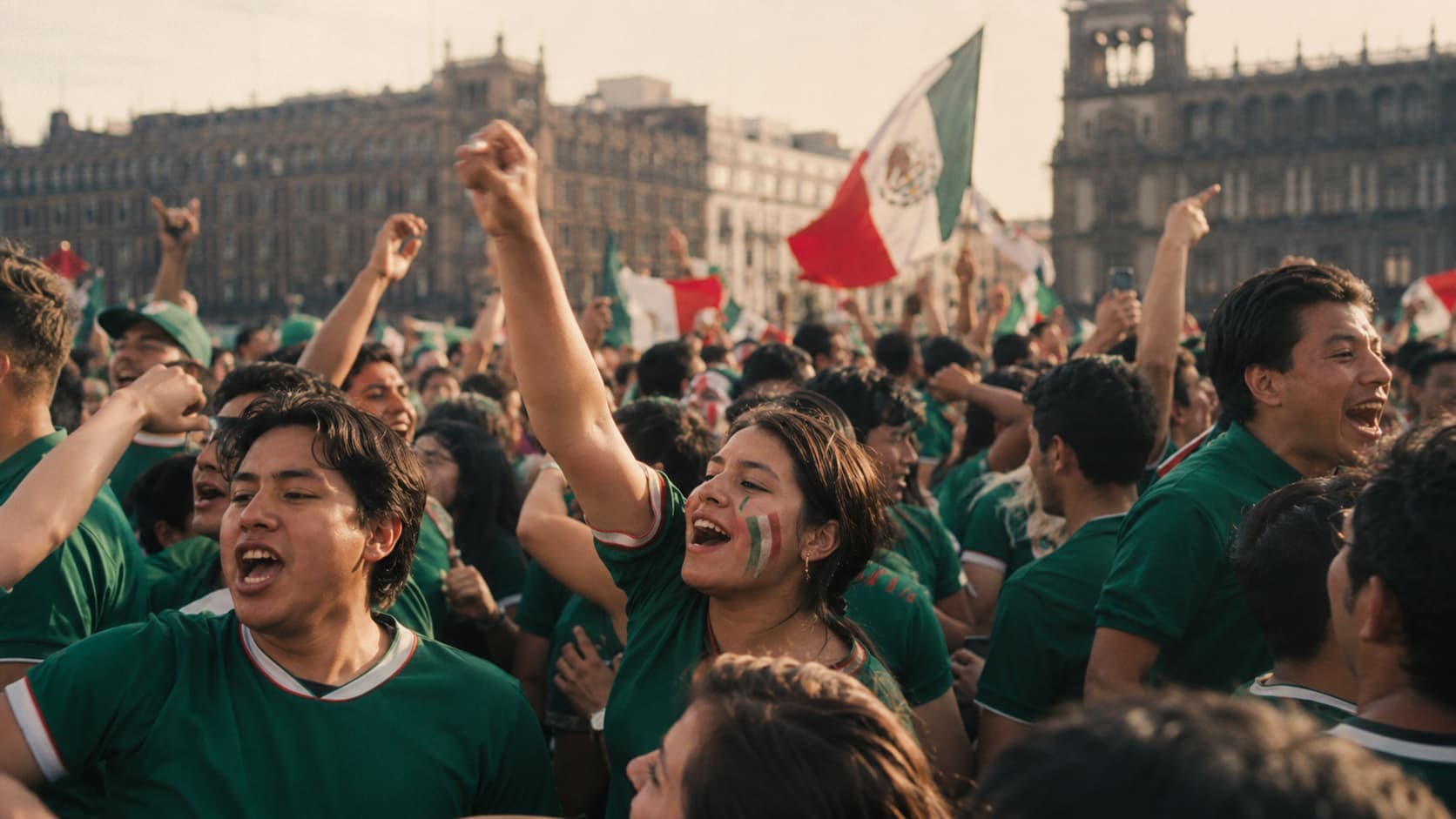
If you are an expat here, you got something most fans never will, which is a home World Cup as part of daily life rather than a once-in-a-lifetime trip. On match days, the rhythm of the whole country shifted. Restaurants set up screens, offices emptied out early, and the streets went quiet during kickoff before erupting at every Mexican goal.
The three host cities ran official fan zones, with the Zócalo in Mexico City among the largest gathering points for fans without tickets and Fundidora Park anchoring Monterrey. You did not need a seat in the stadium to feel the tournament. Some of the best atmosphere was in the watch parties, neighborhood bars, and public squares, and that is where a lot of the actual spending happened.
The traffic and transit crush was real but shorter than people expected. Once Mexico went out on July 5, the host cities emptied of visiting fans almost immediately. If you were putting off errands, appointments, or a trip, the back half of July is the easy window.
What Actually Happened to Prices
The World Cup in Mexico – What Actually Happened to Prices:
This is the part worth reading carefully, because the story most outlets told before the tournament is not the story the numbers told after it.
Going in, Mexico's host cities were projected to see the steepest accommodation increases of any markets in the tournament. Analyses from firms like Lighthouse put year-over-year room-rate jumps in the triple digits, with Guadalajara posting one of the single largest of all 16 host markets and some hotels near the Azteca quoting many times their normal rate. Those forecasts were built on an expectation of a flood of visitors. Federal tourism officials spent two years talking about 5.5 million additional arrivals.
The flood never came. Preliminary figures show the matches in Mexico did not increase the flow of international tourists into Mexico City, Guadalajara, or Monterrey at all, and the head of the national tourism business council, Antonio Cosío, put the real number closer to 850,000 rather than the government's five million. Hotel occupancy actually fell year over year in all three host cities during June. Mexico City came in around 56.5 percent, down two points; Guadalajara around 56 percent, down seven; and Monterrey around 53.5 percent, down 5.8 points, according to research from CNET and the Anáhuac University tourism center. The sector's own explanation is that business travelers, who normally fill those rooms, postponed their trips expecting congestion and disruption from the matches.
Hotels still made money, because rates went up between roughly 39 and 47 percent depending on the city. That is the honest summary: rooms got meaningfully more expensive, but nowhere near the apocalyptic numbers forecast, and there were more empty beds in June 2026 than in June 2025. If you are weighing whether the country is still affordable overall, our look at whether Mexico is still cheap puts all of this in longer context.
For residents, the practical takeaway is that the squeeze is over. Rates in the host cities are normalizing now that the matches have moved north, and if you have visitors coming in the back half of the year, you are booking into a market that is hungrier for business than it was in May.
Health and Safety During a Mega-Event
The World Cup in Mexico – Health and Safety During a Mega-Event:
Mexico is far safer than its reputation often suggests, and the same common-sense habits that serve you well year-round applied here too. Our full breakdown on safety in Mexico covers the fundamentals, but a few points from the last five weeks are worth keeping.
Large crowds attract opportunistic petty crime. Pickpocketing and phone snatching rise wherever big groups gather, which is why fan zones, transit stations, and stadium approaches were the places to keep your valuables close. Heat was a bigger factor than most visitors planned for, and dehydration, sun exposure, and long days on your feet sent more people to seek care than you would expect. Altitude did its usual work on anyone arriving in Mexico City, which sits well above 2,000 meters and tires visitors faster than they anticipate. And the tournament ran straight into rainy season, with the Mexico versus Ecuador match delayed a full hour by a thunderstorm over the Azteca.
Food-related illness remains the most common complaint among travelers, and it is easily managed with sensible choices. If something does go wrong, our guide on what to do if you get sick or hurt in Mexico walks through your options, and it is worth knowing how the emergency number 911 works in Mexico before you need it. Mexico's private hospitals in the host cities are excellent, but treatment is paid for at the point of care, which brings us to the part most fans forget.
Why Insurance Still Matters Right Now
The World Cup in Mexico – Why Insurance Still Matters Right Now:
None of the three host countries required travel insurance to enter, and plenty of people rolled the dice. For anyone still traveling on the back of this tournament, that is a gamble that can get expensive fast.
The single most important thing to understand is that most home-country health plans, including standard US insurance and Medicare, provide little or no coverage once you are inside Mexico. A visiting relative who assumes their plan from back home will cover a clinic visit in Guadalajara is often wrong, and they will be paying out of pocket. That is exactly what travel medical insurance for Mexico is built for, covering new illnesses and injuries that come up during the trip. If you are unclear on how that differs from a standard trip policy, our explainer on the difference between health insurance and travel insurance in Latin America breaks it down.
For those of us who already live here, the tournament was a good prompt to confirm your existing international health plan is current and that you understand what it covers. If you have not done that check yet, do it now rather than at the next big event. And for any serious emergency, medical evacuation coverage is the piece people overlook until they need a transfer to a major facility or back home, which can run into tens of thousands of dollars without it.
There is also the financial side of the trip itself. If you are one of the people heading north for the final in New Jersey, tickets, flights, and lodging at this stage are largely non-refundable, and a single disruption can trigger a cascade of losses. Trip cancellation and interruption coverage protects that investment if a covered reason keeps you from traveling or cuts the trip short. Airports and roads on the US side are at their busiest of the entire tournament this week, and that is precisely when this coverage earns its keep.
Frequently Asked Questions
The World Cup in Mexico – Frequently Asked Questions:
– Are there still World Cup matches in Mexico? –
No. Mexico's last match was the Round of 16 tie between Mexico and England at the Azteca on July 5. All remaining fixtures, including the third-place match in Miami on July 18 and the final at MetLife Stadium on July 19, are in the United States.
– How did Mexico do? –
Better than in 40 years. El Tri won all three group games, topped Group A, then beat Ecuador 2 to 0 to win their first knockout match since 1986 before losing 3 to 2 to England in the Round of 16. Javier Aguirre stepped down as manager afterward.
– Which Mexican cities hosted matches, and how many? –
Mexico City at Estadio Azteca hosted five, Guadalajara at Estadio Akron hosted four, and Monterrey at Estadio BBVA hosted four, for 13 in total. That is the same number Canada hosted, while the United States staged 78.
– Were hotels really that expensive? –
Rates went up sharply, roughly 39 to 47 percent depending on the city, but the predicted triple-digit surge and the promised wave of five million visitors did not materialize. Occupancy in all three host cities was actually lower this June than last June. Prices are settling back down now that the matches have left.
– I already live in Mexico. Does any of this apply to me? –
The pricing chaos mostly affected visitors, and it is largely over. What still applies is the coverage lesson. If the last five weeks reminded you that you were not sure what your international health plan covers, that is worth resolving now.
Conclusion
The World Cup in Mexico – Conclusion:
A home World Cup is a rare gift, and for the expat community in Mexico it turned an ordinary summer into something unforgettable. El Tri gave the country its best tournament since 1986 and still found a way to break hearts at the Azteca, which is somehow the most fitting ending possible. The visitor numbers disappointed the people who had built spreadsheets around them, but the month itself did not disappoint anyone who lived through it. What remains is the practical part. If the tournament surfaced any gaps in your health or travel coverage, whether you are heading north for Sunday's final or just settling back into normal life here, close them now while it is still fresh. Then go enjoy the quietest, cheapest few weeks Mexico's big cities have seen all year.
Ready to protect your travel or confirm your coverage as a resident? Get a free 1-minute quote here. You can also book a 15-minute call with one of our brokers to talk through exactly what you need.
Justin Barsketis
Insurance Expert & Writer
Justin is an insurance guru that loves digital marketing. As our founder Justin manages our business development programs and MGA network. Please don’t hesitate to contact him if you are not getting the attention you deserve.
