

November 23, 2026
•
5 min read
Can You Retire in Mexico on Social Security Alone? The Budget and Residency Reality
Can you retire in Mexico on Social Security alone? The average $2,071 check covers the budget but not the $4,400 residency bar. Here is how people qualify.
Justin Barsketis
Insurance Expert
A quick note before we start: whether Social Security is enough depends on your benefit amount, your savings, your health, and which consulate you apply through. If you want a second set of eyes on your numbers, book a free 15-minute call with one of our brokers.
This is one of the questions we hear most from Americans in their early sixties: can we move to Mexico and live on the Social Security check, with nothing else coming in?
The answer has two halves, and they point in opposite directions. On the budget side, yes. The average check covers a modest, comfortable life in much of Mexico. On the paperwork side, no. That same check is less than half of the income Mexico now asks for before it will give you a resident card.
Most articles on this topic only cover the first half. We cover both below, along with the routes that people living on Social Security actually use to get residency.
*NOTE! Wherever you see blue text in this article, we have linked you to another one of our articles or to an official source. Click through to dig deeper, because the details are where these plans succeed or fail.
The Short Answer
Retire in Mexico on Social Security – The Short Answer:
Here are the numbers side by side. Social Security figures are the 2026 amounts published by the Social Security Administration. Residency figures are based on the 2026 UMA of 117.31 pesos per day and vary a little by consulate.
| Monthly amount (USD) | |
|---|---|
| Average retired worker benefit | $2,071 |
| Average couple, both receiving benefits | $3,208 |
| Maximum benefit at full retirement age | $4,152 |
| Comfortable budget, single, mid-priced city | $1,200 to $1,800 |
| Comfortable budget, couple | $2,000 to $2,500 |
| Temporary residency by income, one person | about $4,400 |
| Temporary residency by income, couple | about $5,800 |
Read the table from top to bottom and the problem is plain. The average benefit covers the cost of living. It does not come close to the residency line. Even the maximum benefit at full retirement age falls short at most consulates.
So the real question is how to qualify for residency some other way, and whether life without residency is workable. We take those in order.
The Budget
Retire in Mexico on Social Security – The Budget:
– What the Check Is Worth in Pesos –
At early October's exchange rate of roughly 18 pesos to the dollar, $2,071 converts to about 37,500 pesos a month. For context, Mexico's general minimum wage in 2026 is 315.04 pesos a day, or roughly 9,600 pesos a month. The average Social Security check is close to four times that.
That is why the budget side works. You are not rich in Mexico on $2,071, but you are well above what most local households live on.
– A Sample Month for One Person –
This is an illustrative budget for a single retiree renting in a mid-priced inland city, in a regular neighborhood. It is built from the ranges in our cost of living in Mexico guide.
| Expense | Monthly (USD) |
|---|---|
| Rent, one-bedroom apartment | $650 |
| Electricity, gas, water, internet, cell phone | $110 |
| Groceries | $300 |
| Local transportation | $90 |
| Eating out and leisure | $200 |
| Healthcare: public IMSS coverage plus out-of-pocket visits and prescriptions | $200 |
| Household, clothing, and everything else | $120 |
| Set aside for residency renewals and a trip home | $150 |
| Total | $1,820 |
That leaves about $250 a month from the average check. It is a real budget, and it is tight. Two things can erase the cushion quickly. The first is keeping Medicare Part B, which costs $202.90 a month in 2026 and comes straight out of your benefit. The second is private health insurance, which we cover further down.
A couple on the average combined benefit of $3,208 has more room. Our guides to Lake Chapala and Mérida both put a comfortable couple at $2,000 to $2,500 a month.
– Where the Math Works and Where It Doesn't –
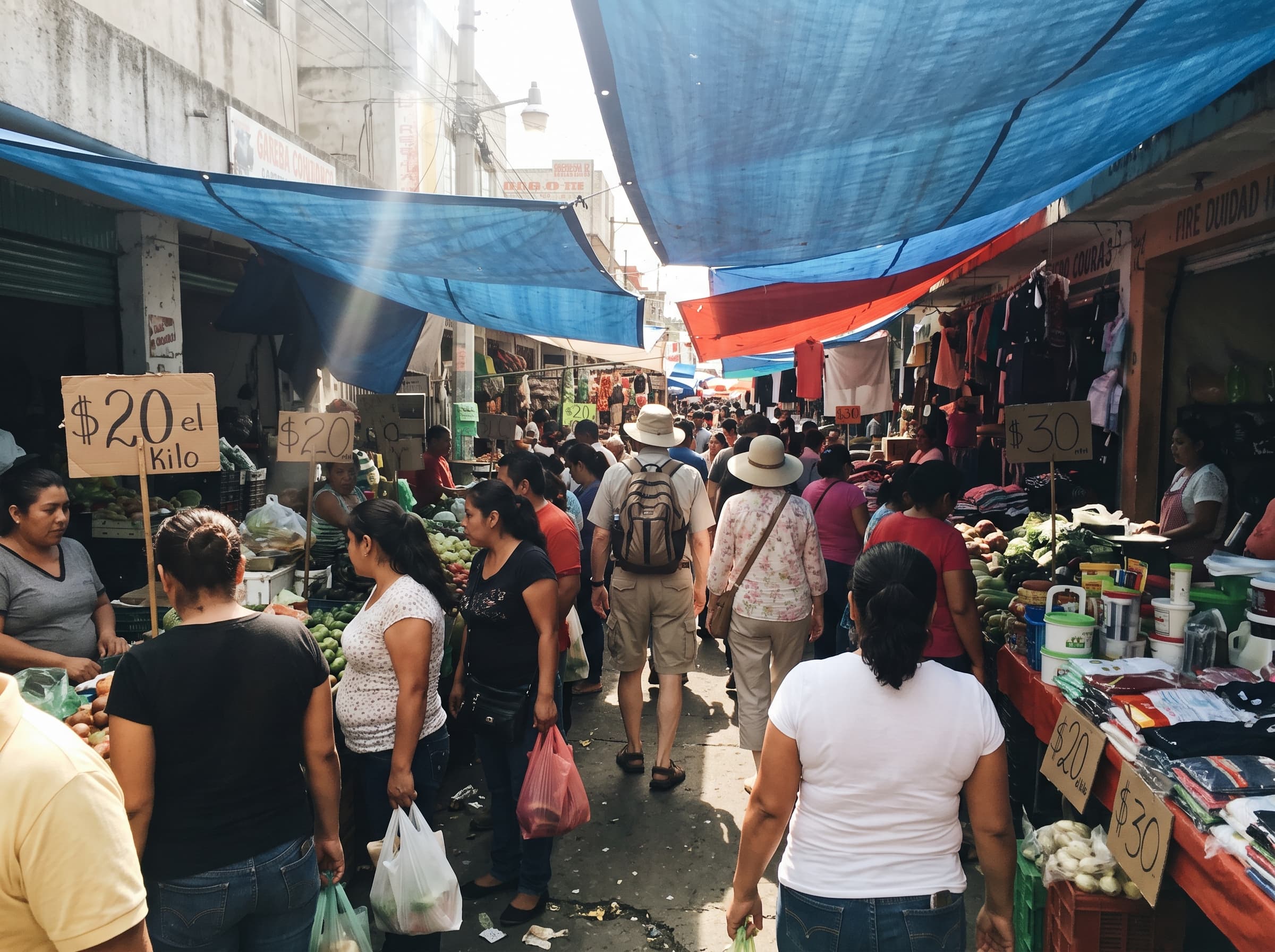
Location decides most of this. Inland cities and regular neighborhoods fit a Social Security budget. Beach resorts and the famous expat districts mostly do not. A one-bedroom in central San Miguel de Allende, Playa del Carmen, Los Cabos, or the Roma and Condesa neighborhoods of Mexico City can take most of the check by itself.
We go into this in detail in Is Mexico Still Cheap? and in our list of the best places to live in Mexico.
Health coverage is the one line in this budget that can change everything. Get a free quote here so you are planning with a real number.
The Residency Problem
Retire in Mexico on Social Security – The Residency Problem:
– What Mexico Asks For –
To get temporary residency on financial grounds, you show a Mexican consulate either steady income or savings. You cannot combine them. Since the July 2025 guidelines, both are calculated in multiples of the UMA.
For 2026, the income route is 680 times the daily UMA, which is 79,771 pesos a month, or roughly US$4,400. Each consulate converts that at its own exchange rate, so published figures run from about $4,100 to $4,650. A spouse applying as your dependent adds another 25,808 pesos, roughly $1,430.
The average retired worker's benefit is 47 percent of the single-applicant figure. The average couple's combined benefit is about 55 percent of what a couple needs.
This is a recent change. As recently as 2022, many consulates set the bar in the low-to-mid $2,000s, and a healthy Social Security check cleared it. That is where the idea that you can retire in Mexico on Social Security comes from, and it is why so much advice online is out of date. Our breakdown of Mexico's 2026 residency requirements covers what changed, including the government fees that doubled this year.
Permanent residency directly from abroad is still open to retirees and pensioners, but it requires roughly $7,400 a month in pension income or about $295,000 in savings. Social Security alone will not get you there.
– Why a Visitor Permit Is Not a Retirement Plan –
Some people skip residency and live on a visitor permit, leaving and re-entering every six months. That used to work. It is now a gamble.
Immigration officers decide how many days you get, and 180 is no longer the default. With digital entry records, they can see every prior stay. People who are clearly living in Mexico on visitor permits are being given 30 or 60 days, and some are turned around. We cover this in Yes, Mexico Is Cracking Down on Visas.
– What You Give Up Without a Resident Card –
Beyond the risk at the border, living as a visitor costs you money. Without residency you cannot enroll in IMSS, Mexico's public health system. You cannot get the INAPAM senior card, which is free for residents aged 60 and over and gives discounts on things like intercity buses and pharmacy purchases. Opening a Mexican bank account is also much harder.
For someone on a Social Security budget, those are the exact tools that make the numbers work.
How Retirees on Social Security Actually Qualify
Retire in Mexico on Social Security – How Retirees Actually Qualify:
– The Savings Route –
This is the route most Social Security retirees use. Instead of income, you show an average balance of 11,460 times the UMA across the previous twelve months. For 2026 that is about 1.34 million pesos, or roughly US$74,000.
Retirement and investment accounts generally count, including 401(k)s and IRAs, though each consulate has its own rules on which statements it accepts. Home equity does not count. You do not have to spend the money or move it to Mexico. You only have to show it.
Consulates read the twelve-month rule strictly. If the balance dips below the line for one month, expect a problem. Plan on being asked about solvency again at renewal, so do not spend down the balance that qualified you in year one.
– Family Ties –
If you have a Mexican spouse, a Mexican child, or a Mexican parent, you apply under Family Unit rules instead. Where solvency is asked for, the bar is 220 times the UMA, roughly $1,430 a month. The average Social Security check clears that easily. Many of these cases can be filed inside Mexico.
If one of your parents is Mexican, you may not need residency at all. You may already be entitled to Mexican nationality through your parents.
– Couples –
Only one of you needs to qualify. If one spouse meets the savings threshold, the other can join as a dependent. This is usually the cheapest way for a couple to do it, and Family Unit applicants can qualify for a 50 percent discount on the 2026 government fees.
– What No Longer Works –
Two things are often repeated in expat forums and should be ignored. The first is the old regularization program for people with expired visitor permits. It was narrowed in March 2025 and now covers only people who entered in 2022 or earlier and never left. It is closed to new arrivals.
The second is the idea that you can enter as a visitor and switch to residency from inside Mexico using your savings. You cannot. Outside of family cases, the application starts at a consulate abroad. Our guide on how to get Mexican residency walks through the process.
Healthcare
Retire in Mexico on Social Security – Healthcare:
– Medicare Stays in the United States –
Medicare does not pay for care in Mexico. You then have to decide whether to keep paying $202.90 a month for Part B. If you drop it and re-enroll later, the premium goes up 10 percent for every full year you went without it, for life. If there is a real chance you will move back or fly home for major care, most people keep it. We explain the trade-offs in Medicare for Americans living abroad.
– IMSS –
Residents can buy into IMSS voluntarily. The 2026 annual fees are 20,600 pesos for ages 60 to 69, 21,500 pesos for ages 70 to 79, and 22,150 pesos for 80 and over. That is about $1,130 to $1,220 a year, or roughly $95 to $100 a month.
It is inexpensive, but it has limits. Voluntary enrollment excludes a list of pre-existing conditions, including cancer and chronic degenerative diseases, and applies waiting periods to others. Wait times are long, and care is in Spanish. We compare the two systems in public vs. private health insurance in Mexico.
– Private Coverage –
Routine private care in Mexico is cheap enough to pay in cash. A specialist visit often runs $40 to $60. The risk is the large event. A knee replacement at a good private hospital can cost $12,000 to $15,000, and a cardiac or cancer case costs far more.
On a Social Security budget, a comprehensive international plan usually will not fit. A high-deductible plan that covers only the large hospital bills sometimes will, depending on your age and health. This is the part of the budget where individual quotes matter more than averages, and it is easier to get accepted in your sixties than in your late seventies. Our guide to international health insurance for retirees explains how underwriting works.
Getting Paid, Taxes, and the Exchange Rate
Retire in Mexico on Social Security – Getting Paid, Taxes, and the Exchange Rate:
– Receiving Your Benefit –
US citizens can receive Social Security retirement benefits in Mexico for as long as they are eligible. You can keep direct deposit at a US bank or have the payment sent to a Mexican bank. One important exception: Supplemental Security Income (SSI) is not payable abroad and stops once you have been outside the United States for 30 days in a row. If SSI is part of your monthly income, do not count it in a Mexico budget. More detail is in our guide to Social Security benefits while living abroad.
– Taxes –
Under the US-Mexico tax treaty, US Social Security benefits are taxable only by the United States. Mexico does not tax them. On the US side, benefits become taxable only when half of your benefit plus your other income passes $25,000 for a single filer or $32,000 for a couple. If Social Security is truly your only income, you will usually owe no federal income tax on it. Confirm your own situation with a tax professional, and see our US-Mexico expat tax guide.
– The Exchange Rate and the COLA –
Your income is in dollars and your expenses are in pesos, so the exchange rate works like a monthly raise or pay cut. Between September 15 and October 2 of this year, the peso moved from 17.15 to 18.16 per dollar. For someone on the average benefit, that is about 2,100 more pesos a month. It can move the other way just as fast. We wrote about this in The Super Peso.
The cost-of-living adjustment helps a little. The 2027 COLA will be announced on October 14, and forecasts put it near 3.5 percent, around $73 a month on the average benefit. Mexican inflation was 3.45 percent in September, so the raise roughly keeps pace with prices. It will not close the residency gap, because the UMA also rises with inflation every February.
Frequently Asked Questions
Retire in Mexico on Social Security – Frequently Asked Questions:
– Can I get Mexican residency with only Social Security income? –
Through the income route, almost never. Temporary residency needs roughly $4,400 a month in 2026, and the maximum benefit at full retirement age is $4,152. Most Social Security retirees qualify through savings of about $74,000 or through a family tie instead.
– How much do I need in savings to qualify? –
About 1.34 million pesos, roughly US$74,000, held as an average balance for the twelve months before you apply. Many consulates accept retirement and investment accounts.
– Can I live in Mexico on $2,000 a month? –
Yes, in most inland cities and in regular neighborhoods, if you rent modestly. A single person can live comfortably on $1,200 to $1,800. Popular beach towns and upscale districts cost more.
– Will I lose my Social Security if I move to Mexico? –
No. US citizens keep receiving retirement benefits in Mexico. SSI is the exception and stops after 30 consecutive days outside the United States.
– Does Medicare cover me in Mexico? –
No. Medicare generally does not pay for care outside the United States. You need IMSS, private insurance, cash, or a combination.
– Does Mexico tax my Social Security? –
No. Under the US-Mexico tax treaty, US Social Security benefits are taxable only by the United States.
– Can I just stay on a visitor permit? –
You can try, but you are not guaranteed 180 days, you cannot enroll in IMSS or get an INAPAM card, and repeat entries are being flagged. We do not recommend building a retirement on it.
The Verdict
Retire in Mexico on Social Security – The Verdict:
You can live in Mexico on Social Security alone. In most cases you cannot qualify for residency on Social Security alone, and those are two different things.
For most people the plan that works has three parts. The check covers the monthly budget. Savings of about $74,000, or a family tie, covers the residency requirement. A health plan sized to your budget covers the one expense that could undo the rest.
If you have the check but not the savings, it is worth knowing that before you sell the house. If you have both, the move is very achievable, and the sooner you sort out health coverage, the more options you will have.
If you would like help working out the health coverage side of your budget, we are here for that.
Talk to a broker on the phone!
Related Articles:
Justin Barsketis
Insurance Expert & Writer
Justin is an insurance guru that loves digital marketing. As our founder Justin manages our business development programs and MGA network. Please don’t hesitate to contact him if you are not getting the attention you deserve.
